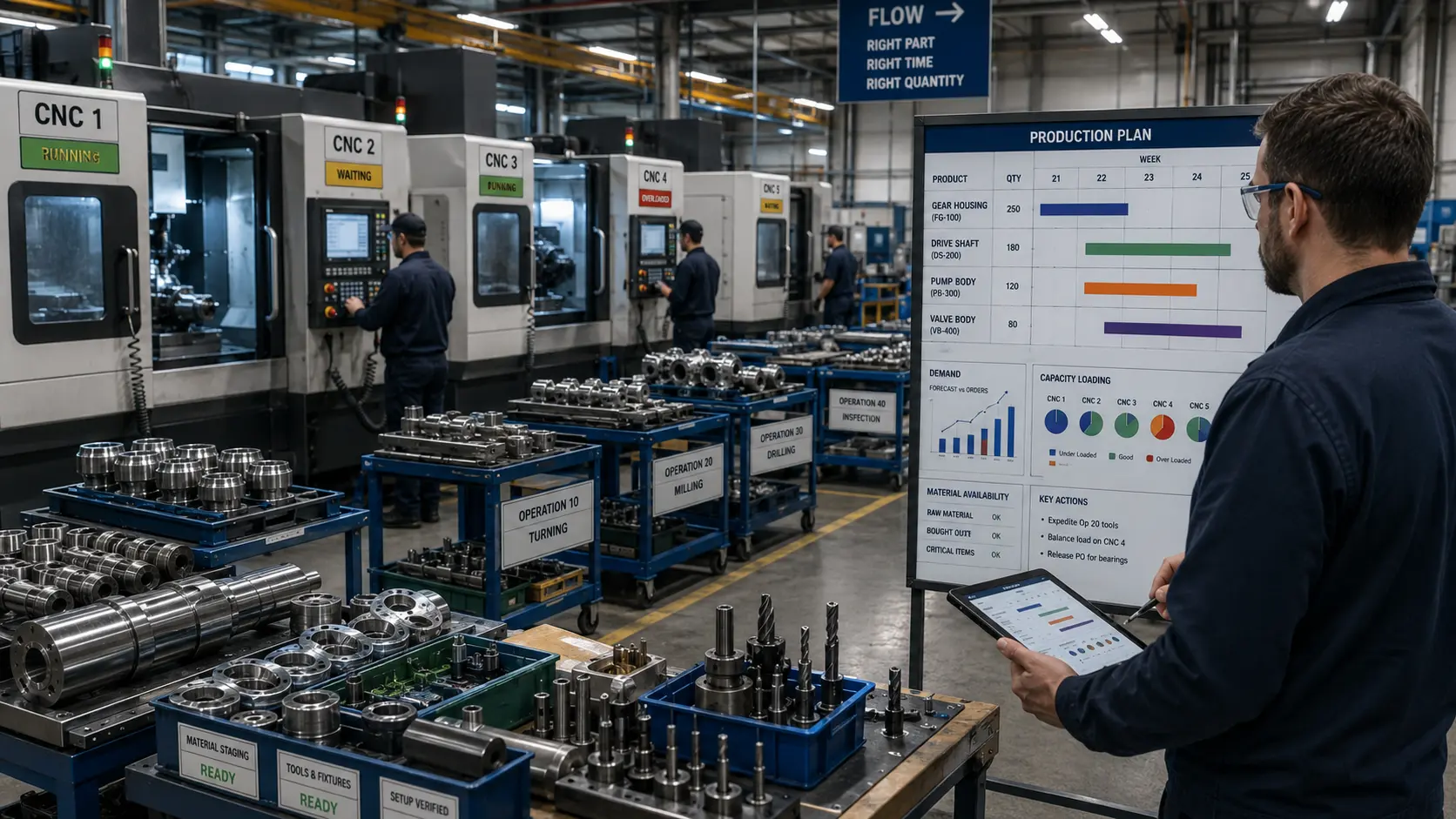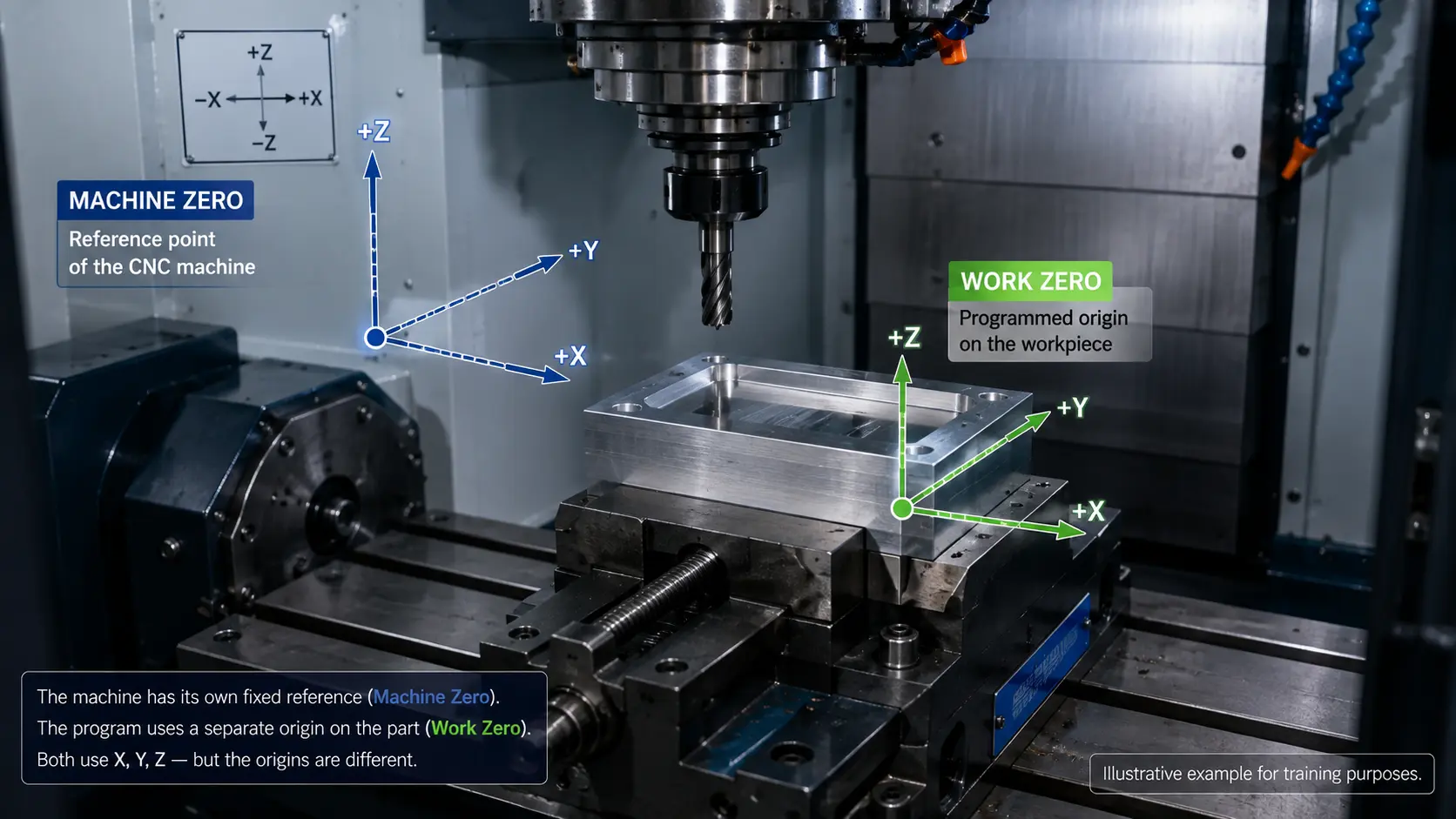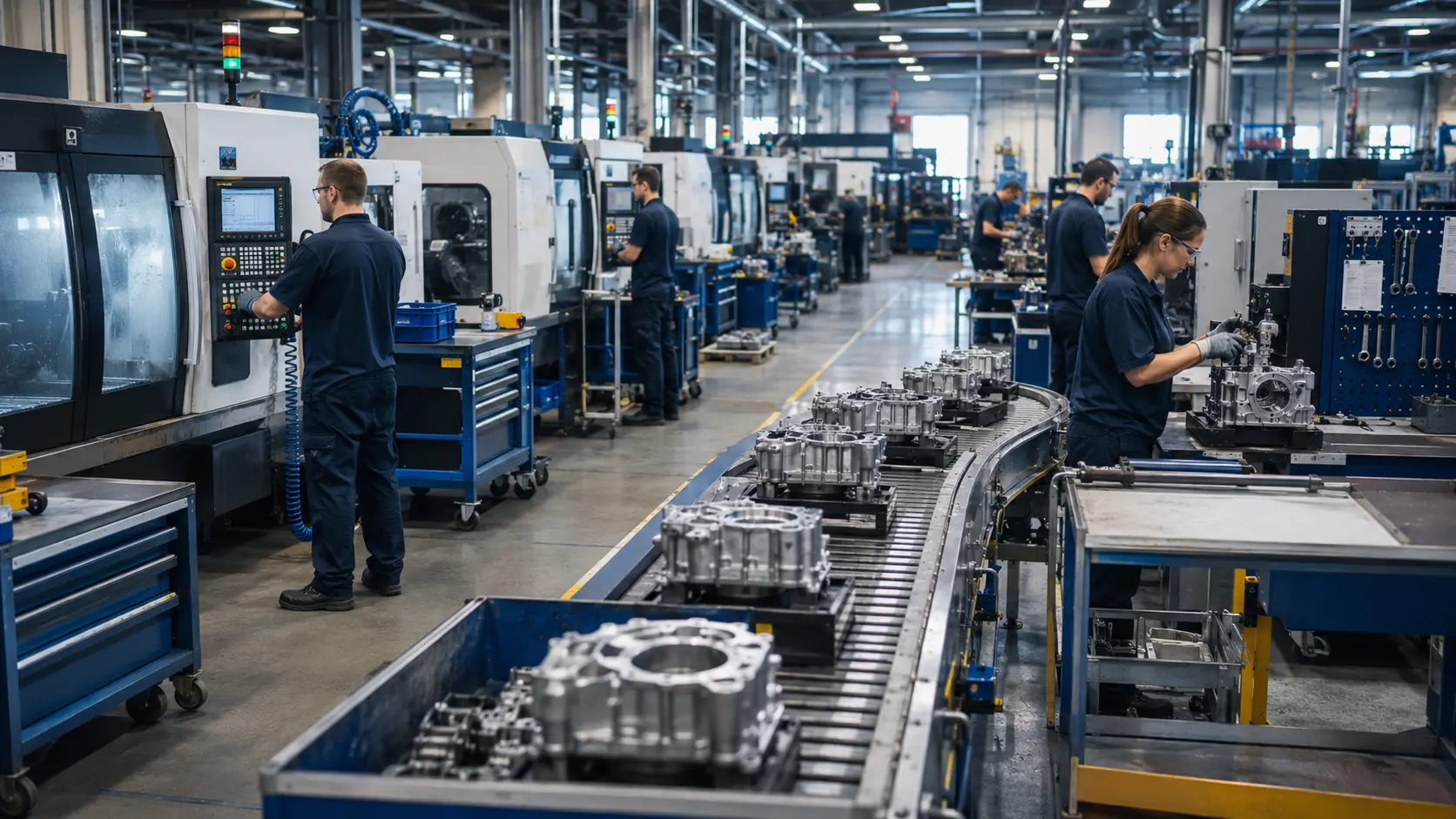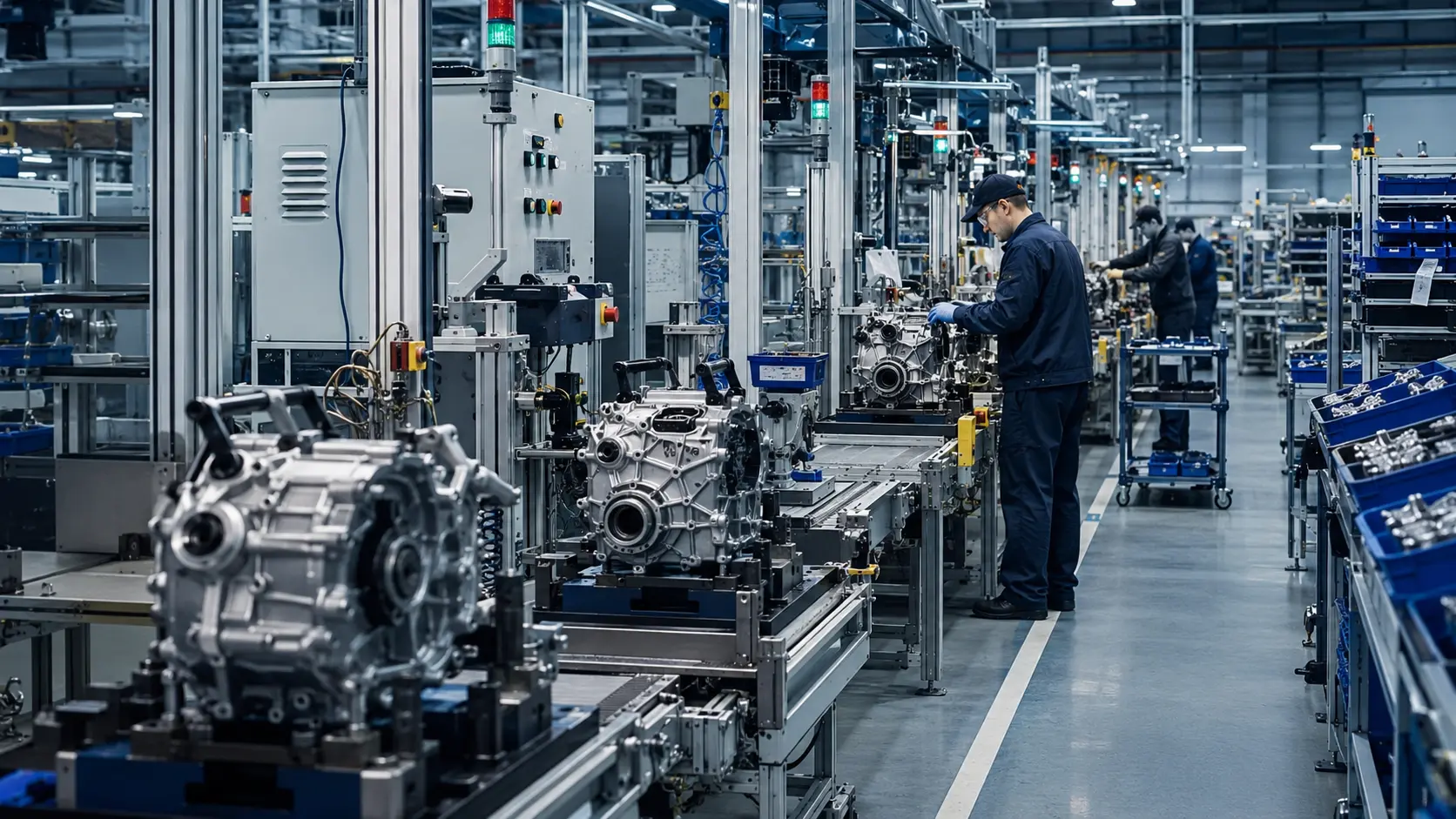
Modern manufacturing has robots, sensors, machine vision and AI that would have been unimaginable when the Toyota Production System began developing — yet the questions engineers face are remarkably familiar: why is material waiting, why are defects reaching the next process, why does one problem keep coming back.
These are not primarily digital questions. They are questions about how a production system is designed and managed.
The Toyota Production System, commonly known as TPS, became influential because Toyota developed an unusually disciplined way of answering them.
Toyota describes TPS as a system for eliminating waste and shortening lead times while producing high-quality products at low cost. Its two central pillars are jidoka and Just-in-Time.
But understanding TPS requires going beyond those two terms. TPS changed manufacturing because it encouraged engineers and managers to stop looking at individual machines as isolated sources of productivity and instead examine the flow of value through the entire production system.
That difference still matters.
TPS is more than Just-in-Time
Toyota's production system is often summarized with a few familiar concepts:
- Just-in-Time
- Kanban
- Kaizen
- Jidoka
- Waste elimination
Those concepts matter. But treating them as independent techniques misses the system underneath them.
A kanban signal has little value if the upstream process cannot replenish reliably. Low inventory becomes dangerous if machines fail unpredictably. Stopping a line when an abnormality appears achieves little if nobody investigates why the abnormality occurred. Standardized work becomes bureaucracy if improvement is discouraged.
TPS therefore works through relationships among its components. The system matters more than the tool. That is one reason copying a visible Toyota practice does not necessarily reproduce Toyota's results.
Why Toyota needed a different production system
The historical context matters.
Early automobile mass production demonstrated the power of flow and specialization, particularly through Ford's production innovations. But large-scale mass production often became associated with large batches, highly specialized equipment, high machine utilization and substantial inventories between processes.
Toyota faced different conditions. It did not initially have the enormous production volumes or resources that made American-style mass production straightforward to copy.
Lean Enterprise Institute's historical account describes how Toyota's leaders reconsidered production around flow, smaller quantities, faster setups and downstream demand rather than maximizing individual machine utilization.
This shift was profound. The question changed from:
“How do we keep every machine as busy as possible?”
to:
“How do we move the required product through the whole process with minimum interruption and waste?”
That is a systems-engineering question.
The roots of TPS began before Toyota built automobiles at scale
Toyota traces an important part of TPS back to Sakichi Toyoda, founder of the Toyota Group and inventor in the textile industry. His loom developments included mechanisms that could stop when an abnormal condition occurred rather than continuing to produce defective material. Toyota identifies this development as an important origin of the principle later known as jidoka.
The important idea was not simply automate the machine. It was give the process the ability to recognize abnormality and prevent bad output from continuing.
That distinction remains relevant more than a century later. A highly automated machine that produces defects continuously is not a good production system. Automation needs a way of recognizing when expected conditions are no longer being met.
Kiichiro Toyoda and Just-in-Time
Toyota credits Kiichiro Toyoda, founder of Toyota Motor Corporation, with developing the Just-in-Time idea. The challenge was coordinating the enormous number of parts required to build a vehicle without accumulating unnecessary quantities of everything.
Toyota's current explanation describes JIT around making only what is needed, when it is needed and in the amount needed, while synchronizing the processes required to produce the vehicle.
This is more sophisticated than keep inventory low. The real concern is flow and synchronization. If Process B requires five units, Process A should be able to replenish those five units appropriately. The objective is not to produce fifty units simply because Process A has unused capacity.
Taiichi Ohno and the development of TPS
The production system developed substantially after the Second World War. Taiichi Ohno played a central operational role in turning the concepts into a working manufacturing system.
Toyota credits Ohno, with support from Eiji Toyoda, with establishing the basic framework of Just-in-Time within TPS. Lean Enterprise Institute similarly identifies Ohno as the primary operational developer who brought many of the production practices together into an integrated system.
This history matters because TPS was not invented as one finished blueprint. It developed through experimentation, observation and repeated improvement. That is itself consistent with one of TPS's most important principles: kaizen.
The two pillars of TPS
Toyota continues to present TPS around two fundamental pillars.
- Jidoka. Build quality into the process by detecting abnormalities and stopping rather than continuing to produce defective output.
- Just-in-Time. Synchronize production so the required items are made at the required time and in the required quantity.
These pillars solve different problems. Jidoka addresses how do we prevent abnormalities from being hidden inside continued production. Just-in-Time addresses how do we make production flow according to actual need rather than uncontrolled accumulation.
Together they create a system where both quality and flow become visible.
Jidoka: do not allow abnormality to travel downstream
Imagine a production line where a machine begins producing an incorrect dimension. One approach is: continue producing, inspect later, separate defective products. The process remains apparently productive. But more bad parts are being created.
Jidoka takes a different approach. Toyota describes both equipment and workers as being able to stop production when abnormalities occur so defects do not continue flowing to the next stage.
This changes quality from detect defects after production toward detect abnormality within production. The distinction matters because every additional operation performed on a defective component creates more waste. If the defect is recognized immediately, the process can be corrected closer to its source.
Stopping production can improve productivity
At first, deliberately stopping a production line sounds inefficient. Surely production should continue whenever possible.
But imagine that continuing produces 200 defective parts. The line may appear active while generating:
- Scrap
- Rework
- Wasted machine time
- Wasted energy
- Additional inspection
- Delayed delivery
The stoppage exposes a problem. Once the cause is addressed, future production can become more reliable.
So the short-term objective, keep producing, can conflict with the longer-term objective, produce correctly. This is one of TPS's most important shifts in thinking.
Jidoka and modern manufacturing
The technology available for abnormality detection has changed dramatically. Modern factories may use machine sensors, vision systems, automated inspection, process monitoring, condition monitoring and AI anomaly detection.
But the TPS principle remains relevant. Technology can tell us something abnormal has occurred. The production system still needs to answer what should happen now.
Detection without a response strategy creates information. Jidoka turns abnormality detection into process control and learning.
Just-in-Time is about synchronized production
JIT is frequently misunderstood as having almost no stock. Toyota's actual description is more careful.
The aim is to make what is required, when it is required and in the required amount while coordinating the production processes accordingly. Toyota explicitly describes a minimum quantity of parts being held and replenished as downstream processes consume them.
So JIT does not literally mean zero inventory everywhere. It means inventory should have a clear purpose in supporting controlled flow rather than existing simply because upstream processes produced more than downstream processes required.
Push and pull production
A useful way of understanding JIT is through the distinction between push and pull.
- Push. Production is driven primarily from an upstream schedule or forecast. Material is produced and sent forward. The next operation may not yet need it. Work-in-process accumulates.
- Pull. The downstream process consumes material. That consumption generates a replenishment requirement. The upstream process produces the quantity needed to replace what has been used.
Toyota's plant explanation describes this principle directly: the following process pulls the parts it needs from the preceding process, with kanban helping communicate replenishment.
The logic reverses information flow. Material moves downstream. Demand information travels upstream.
Kanban is a control mechanism, not the whole system
Kanban has become one of the most visible lean tools. But kanban should not be confused with TPS itself.
Its purpose is to help signal what is needed, how much is needed and when replenishment is required. That supports pull.
But imagine implementing kanban where equipment breaks down unpredictably, defects are frequent, changeovers take hours and production schedules fluctuate wildly. The cards themselves do not solve those problems. They may simply make them more visible.
This is a recurring lesson in TPS:
“A tool cannot compensate indefinitely for an unstable process.”
Lower inventory exposes problems
Inventory can perform a useful buffering function. If one machine stops temporarily, downstream production may continue from existing inventory. But that buffer can also hide instability.
Imagine two processes separated by several days of inventory. The upstream process has quality problems, unstable cycle time and frequent breakdowns. The downstream process may continue operating without immediately feeling those problems.
Reduce the inventory buffer and suddenly the instability becomes visible. This is uncomfortable. But visibility creates an opportunity for improvement.
A useful way of expressing the TPS logic is:
“The objective is not simply to remove inventory. It is to remove the reasons excessive inventory became necessary.”
That is a much stronger interpretation of JIT.
Low inventory requires reliable processes
This also explains why simply copying JIT can fail. A company removes inventory rapidly. Then one machine fails, material stops flowing, customers wait. The conclusion becomes lean does not work here.
But the deeper problem may be that inventory was removed before addressing machine reliability, setup time, supplier capability, quality stability and scheduling variation.
This gives us another useful principle:
“A capable production system makes lower inventory possible. Lower inventory does not automatically create a capable production system.”
Muda: non-value-adding activity
Waste elimination is central to TPS. The Japanese term muda is commonly used for activities that consume resources without creating the value required by the customer. Examples can include:
- Waiting
- Unnecessary movement
- Defects
- Excess transport
- Excess inventory
- Unnecessary processing
- Overproduction
But focusing only on muda can produce another oversimplification. Toyota's production-system explanations also emphasize mura and muri. These concepts help explain where waste comes from.
Mura: unevenness
Mura refers broadly to unevenness or irregularity. Imagine production demand swinging dramatically across a week — low one day, extremely high the next, moderate after that.
Equipment and workers now have to respond to unstable requirements. Material flow becomes difficult to coordinate. Queues form. Other processes may wait. Unevenness creates conditions that generate additional waste.
Muri: overburden
Muri refers to unreasonable overburden placed on people, machinery or processes. Examples may include demanding an unsustainable cycle rate, excessive manual handling and repeatedly pushing equipment beyond sensible operating conditions.
Overburden can create failure, quality problems, fatigue and safety risk.
This gives us an important systems relationship: mura can create muri, which can generate muda. Waste therefore cannot always be solved simply by telling people to work more efficiently. The instability producing the waste may exist somewhere else in the system.
Why overproduction is especially damaging
Consider a machine capable of producing 1,000 parts. The downstream process currently needs only 600. A traditional utilization mindset may say: run the machine, it is wasteful to leave capacity idle. So 1,000 parts are produced.
The extra 400 require storage, handling, tracking and working capital. If a quality problem is discovered later, there may now be hundreds of suspect parts.
Overproduction can therefore create other forms of waste. TPS shifts the question from can this machine produce more to does the production system need more. That distinction remains extremely important in modern manufacturing.
Machine utilization is not the same as system performance
This connects directly to why high machine utilization does not necessarily mean better system performance, and to how overall equipment effectiveness gets measured and interpreted.
An individual machine can show excellent utilization while the manufacturing system performs poorly. Imagine Machine A feeds Machine B. Machine B is the bottleneck. Machine A produces twice as fast as Machine B can consume.
Maximizing Machine A's utilization increases inventory between A and B. It does not necessarily increase customer output. This is one reason manufacturing metrics should not be optimized independently.
TPS encourages the engineer to look at flow through the complete process rather than judging every resource as though it were an isolated factory. Lean Enterprise Institute summarizes this historical shift as moving manufacturing-engineering attention away from individual-machine utilization toward the flow of product through the total process.
Standardized work does not mean refusing to change
Standardization is sometimes interpreted as bureaucracy: this is the procedure, never change it. That is inconsistent with continuous improvement.
A stronger interpretation is: this is the best known method we currently have. That creates a reference point. Now a proposed improvement can be compared with the current method. Did it reduce time, improve safety, reduce variation or improve quality?
If yes, the improved method can become the new standard. This produces a cycle: standard, observe, improve, new standard, improve again. Standardization and improvement therefore reinforce each other.
Kaizen: improvement as continuous work
Kaizen is commonly translated as continuous improvement. Toyota describes incremental daily improvement as part of TPS practice across the organization.
But kaizen should not be reduced to employees putting suggestions in a box. The deeper principle is ongoing problem solving:
- Why is this operator walking repeatedly between stations?
- Why does this machine stop every shift?
- Why does material accumulate here?
- Why do defects recur after changeover?
These small questions can produce substantial improvements when solved repeatedly. Continuous improvement turns manufacturing from a fixed design into a learning system.
TPS makes problems visible
This may be one of the most important lessons in the entire Toyota Production System.
Organizations often learn to live with problems. A factory may compensate for unreliable machinery with extra inventory, quality problems with extra inspection, long setup times with larger batches and unstable schedules with overtime. The customer still receives the product. So the process appears to work. But the underlying problem remains.
TPS frequently does the opposite. It makes abnormalities difficult to ignore. Jidoka stops the process. Pull exposes missing capability. Lower inventory exposes instability. Standard work exposes deviation. Visual management exposes status.
The objective is not to create a factory where problems never occur. It is to create one where problems become visible enough to be solved.
“TPS is not a system for hiding problems efficiently. It is a system designed to expose them.”
People are part of the production system
A poor interpretation of lean manufacturing is fewer workers, faster work. Toyota's current TPS explanation explicitly emphasizes making work easier for workers and using human wisdom alongside automation.
This matters for jidoka. The operator is not merely expected to keep the line moving. They can identify abnormality and trigger a response. People therefore contribute through observation, judgement, problem solving and improvement.
This is a fundamentally different view from treating the worker as an interchangeable extension of the machine.
TPS did not simply automate people out of manufacturing
Sakichi Toyoda's loom development provides an interesting early example. If a machine can automatically recognize a thread problem and stop, the operator does not need to stand continuously watching that one machine. Human effort can move toward higher-value work.
This remains relevant to modern automation. The useful question is not how many people can technology remove. It is which repetitive or monitoring activity can technology handle reliably so that people can concentrate on work requiring judgement. That connects surprisingly well with where manufacturing AI actually adds value in industrial settings today.
How TPS differed from traditional mass-production thinking
The distinction should not be exaggerated into mass production bad, TPS good. Mass production created extraordinary manufacturing productivity. TPS built on and modified earlier production ideas.
But TPS placed stronger emphasis on small-lot flow, quick response, built-in quality, pull, flexible production, exposing problems and continuous improvement.
Lean Enterprise Institute notes that Toyota's approach shifted attention from optimizing individual machines toward the flow of the product through the overall process. That is perhaps the most important conceptual change.
From Toyota Production System to “lean production”
TPS eventually attracted extensive international attention. The term lean production became widely associated with Toyota's manufacturing approach through research connected to MIT's International Motor Vehicle Program.
Lean Enterprise Institute identifies John Krafcik as having coined the term in the late 1980s, and broader recognition accelerated with the 1990 publication of The Machine That Changed the World.
This distinction is worth preserving. TPS refers specifically to Toyota's production system. Lean manufacturing became the broader body of thinking inspired substantially by TPS and adapted across many organizations. They overlap strongly. They are not necessarily identical in every implementation.
Why copying Toyota tools often fails
Imagine a factory visiting a successful lean plant. The team sees kanban boards, visual controls, marked floors and standard-work sheets. They return home and install the same tools. Six months later, little has changed.
The reason may be simple: they copied the visible artefacts without copying the management and problem-solving logic.
Consider an andon system. It is useful only if abnormality is identified, somebody responds, the problem is investigated and recurrence is reduced. Without that response process, the light is decoration.
Similarly: kanban without stable replenishment becomes shortage management. Standard work without kaizen becomes rigid procedure. JIT without reliability becomes production interruption.
This is why TPS should be understood as a system. Copying TPS tools without reproducing the problem-solving relationships underneath them creates lean theatre rather than lean manufacturing.
Equipment reliability becomes more important under TPS
Imagine a plant maintaining large buffers between machines. One machine fails for 30 minutes. Downstream operations continue using inventory. Now reduce those buffers. The same breakdown becomes visible much faster.
This means JIT does not make equipment reliability less important. It makes unreliability harder to hide.
A capable TPS environment therefore benefits from disciplined maintenance, failure analysis, condition monitoring, quick restoration and recurrence prevention. This connects directly with modern reliability engineering.
TPS and preventive or predictive maintenance
A production system that depends on synchronized flow needs predictable equipment behaviour.
Preventive maintenance can reduce known time-based risks. Condition monitoring for rotating machinery can reveal developing degradation. Predictive approaches, weighed against a preventive strategy where each is the better fit, may support better intervention timing. Root cause analysis for machine failures can address repeated failures rather than just replacing the broken part.
These are not separate from the production system. They support its ability to flow.
The lesson is: JIT places pressure on reliability because unreliable equipment quickly becomes a production-flow problem.
TPS and OEE
Overall Equipment Effectiveness can help expose availability losses, performance losses and quality losses. Those measurements can support TPS improvement.
But OEE can also be misused. Suppose a non-bottleneck machine has unused capacity. Management wants its OEE higher. The machine is kept running. It now produces excess inventory.
From an individual-machine perspective, performance may look better. From the production-system perspective, overproduction has increased.
That is why one of the most important principles in manufacturing performance is: do not improve the metric while damaging the system. TPS provides a useful counterbalance to local optimization.
TPS and Root Cause Analysis
TPS places strong emphasis on not allowing recurring problems to remain normal. An abnormality occurs. The process makes it visible. Now the organization should learn from it.
This connects strongly to moving beyond repeated corrective repairs and toward genuine root cause analysis. Replacing a failed component may restore production. But if the underlying reason for failure remains, the line will stop again.
TPS therefore reinforces the logic: detect, stop or contain, understand, correct, standardize improvement. The production system and maintenance system are not independent.
TPS and traditional automation
TPS is sometimes discussed as though it belongs to an earlier, pre-digital era. That interpretation overlooks jidoka's roots.
From the beginning, the production philosophy involved intelligent use of machinery to detect abnormalities and reduce the need for people to simply watch machines. Modern automation can strengthen TPS principles through automatic error detection, machine interlocks, process monitoring, traceability and rapid information flow.
But there is an important warning. Automating waste does not eliminate waste. A poorly designed process running twice as fast can create the wrong output twice as quickly. Process logic should come before technological sophistication.
TPS in the Industry 4.0 factory
Modern manufacturing adds another layer. Machines can now generate production status, quality information, condition data, energy data and process parameters. IIoT systems, including retrofits that connect legacy manufacturing equipment rather than only new machines, can connect that data. Digital twins can represent equipment or processes. AI can identify patterns that are difficult to encode directly.
These technologies can support TPS principles:
- Jidoka + machine vision. Detect quality abnormalities closer to their source.
- Jidoka + condition monitoring. Identify abnormal equipment behaviour earlier.
- JIT + connected production data. Improve visibility of actual consumption and replenishment.
- Kaizen + analytics. Make recurring losses easier to identify.
- Standardized work + digital systems. Make process changes and performance easier to compare.
But none of those technologies makes the fundamental production-system questions disappear. A factory can install thousands of sensors and still suffer poor flow, overproduction, long waiting and repeated defects. Digital waste remains waste.
“Industry 4.0 can make a production system more visible and responsive. It cannot compensate indefinitely for poor production-system design.”
TPS and Industrial AI
The same principle applies to artificial intelligence. AI may help with visual defect recognition, anomaly detection, predictive maintenance and production optimization.
But TPS offers a useful filter. What problem are we solving? Where is the waste? What causes it? Will AI change the process meaningfully?
If a simple process change eliminates the problem, building a machine-learning model may be unnecessary. TPS encourages improvement from the production problem outward — the same reasoning that separates where industrial AI is actually the right tool from where traditional deterministic automation still is. That remains sound engineering practice.
A research perspective
Studying TPS at postgraduate level reinforces the importance of understanding it as an interconnected manufacturing system rather than a list of isolated tools.
Jidoka, JIT, kanban, standardization and kaizen are easier to understand when their relationships are considered. Flow exposes instability. Instability creates problems. Jidoka makes abnormalities visible. Problem solving addresses causes. Standardized work captures improvement. Kaizen begins the next cycle.
The intellectual value of TPS lies largely in those relationships.
The TPS Manufacturing Logic
A modern manufacturer can interpret the system through eight connected questions. This sequence is an explanatory framework for reasoning through the system, not an official Toyota model.
- 1. Define customer need. What product is actually required? In what quantity? When? Production should ultimately respond to value required downstream.
- 2. Create flow. How can work move through the process with less waiting, unnecessary transport and interruption?
- 3. Pull from actual demand. Can replenishment respond to consumption rather than uncontrolled upstream production?
- 4. Build quality into the process. Can abnormalities be identified before defective output travels further downstream?
- 5. Expose instability and waste. Where are the queues, repeated failures, excess motion, rework and overburden?
- 6. Solve causes. Do not normalize the problem. Investigate it.
- 7. Standardize the improved method. Once a better process is demonstrated, make it the new reference.
- 8. Improve again — kaizen. The standard is not the finish line. It is the starting point for the next improvement.
That is why TPS is better understood as a learning production system than as a one-time efficiency project.
Common misunderstandings about TPS
- TPS means zero inventory. No. JIT seeks controlled quantities that support synchronized production. Toyota's own description discusses minimum quantities being stocked and replenished as consumed.
- Lean means eliminating workers. That is a poor interpretation. Toyota explicitly frames TPS around making work easier for workers and using human judgement as part of the system.
- Kanban creates lean manufacturing. Kanban supports pull. It does not fix an unstable process by itself.
- Standardization prevents innovation. Properly used, the standard creates the baseline from which improvement can be evaluated.
- Every machine should run continuously. Not necessarily. Producing output that the next process does not need may create overproduction.
- JIT means ignoring supply risk. No. JIT requires disciplined synchronization and capable supply and production processes.
- TPS is obsolete because factories now use AI. The technologies have changed. The fundamental production questions about flow, quality, demand, waste and reliability remain.
What modern manufacturers should learn from Toyota
The most useful lesson from TPS is probably not implement kanban. Nor reduce inventory. Nor copy Toyota's factory layout.
It is to adopt a more demanding way of thinking about manufacturing. Ask:
- Why is this material waiting?
- Why does this process produce more than the next operation needs?
- Why does this defect reach inspection instead of being stopped earlier?
- Why has this machine failure become normal?
- Why is this operator repeatedly compensating for a process problem?
Then make the problem visible enough to solve.
That mindset survives changes in technology. Whether the factory uses manual assembly, PLC automation, IIoT, digital twins or AI — the skills mechanical engineers now need span exactly this range — the production system still needs to answer the same fundamental question:
“How do we create the required value with reliable flow, built-in quality and as little unnecessary activity as possible?”
Key takeaway
The Toyota Production System changed modern manufacturing because it changed the unit of attention. Instead of optimizing individual machines in isolation, TPS focused strongly on the flow of the whole production process.
Jidoka made abnormalities visible. Just-in-Time synchronized production around actual need. Pull controlled replenishment. Standardized work created a baseline. Kaizen kept improvement continuous.
Most importantly, these were not independent tools. They formed a system.
That is why the strongest lesson from Toyota is not copy what Toyota does. It is understand why each production practice exists, how it interacts with the rest of the system and what problem it is intended to solve.
Modern manufacturing now has far more powerful technology. But technology does not remove that requirement. The factory still needs good engineering logic underneath it.
References and further reading
- Toyota Motor Corporation — Toyota Production System: Vision & Philosophy. The strongest primary source for Toyota's current description of TPS, its two pillars, origins, worker-centred philosophy, kaizen and the development of jidoka and JIT.
- Toyota Motor Corporation — Toyota Virtual Plant Tour: Toyota Production System. Useful primary explanation of jidoka, poka-yoke, JIT, pull and kanban in actual Toyota production logic.
- Lean Enterprise Institute — Toyota Production System. Useful history of Kiichiro Toyoda, Taiichi Ohno, JIT development and the international recognition of TPS.
- Lean Enterprise Institute — A Brief History of Lean. Particularly useful for understanding how TPS shifted attention from maximizing individual-machine utilization to improving flow through the overall production system.
- Lean Enterprise Institute — Lean Production. Useful historical reference for the emergence of the term “lean production” through MIT's International Motor Vehicle Program and John Krafcik's work in the late 1980s.