But none of those systems removes the physical machine underneath them.
A CNC controller can command an axis position to several decimal places. A robot can calculate a trajectory automatically. An AI model can detect unusual vibration patterns. A digital twin can reproduce aspects of machine behaviour on a screen.
The motor still has to produce torque. The structure still deflects under load. The bearing still experiences contact stresses and generates heat. The cutting tool still interacts with material. The machine can still vibrate, wear, overheat or fail.
That is why the rise of software, automation and artificial intelligence does not make mechanical-engineering fundamentals less relevant. In many cases, it makes them more useful.
NIST describes modern cyber-physical systems as combinations of interacting digital, analog, physical and human components engineered through integrated physics and logic. NASA's systems-engineering framework similarly treats a system as a combination of hardware, software, equipment, people, processes and procedures working together to provide a required capability.
“The important word is together.”
Modern engineering is increasingly software-driven. It has not stopped being physical.
What does a software-driven machine actually mean?
A software-driven machine is not necessarily a machine where software has replaced the mechanical engineering.
It is a machine where computation plays a significant role in determining:
- Commands
- Coordination
- Control
- Monitoring
- Diagnosis
- Optimization
Examples include:
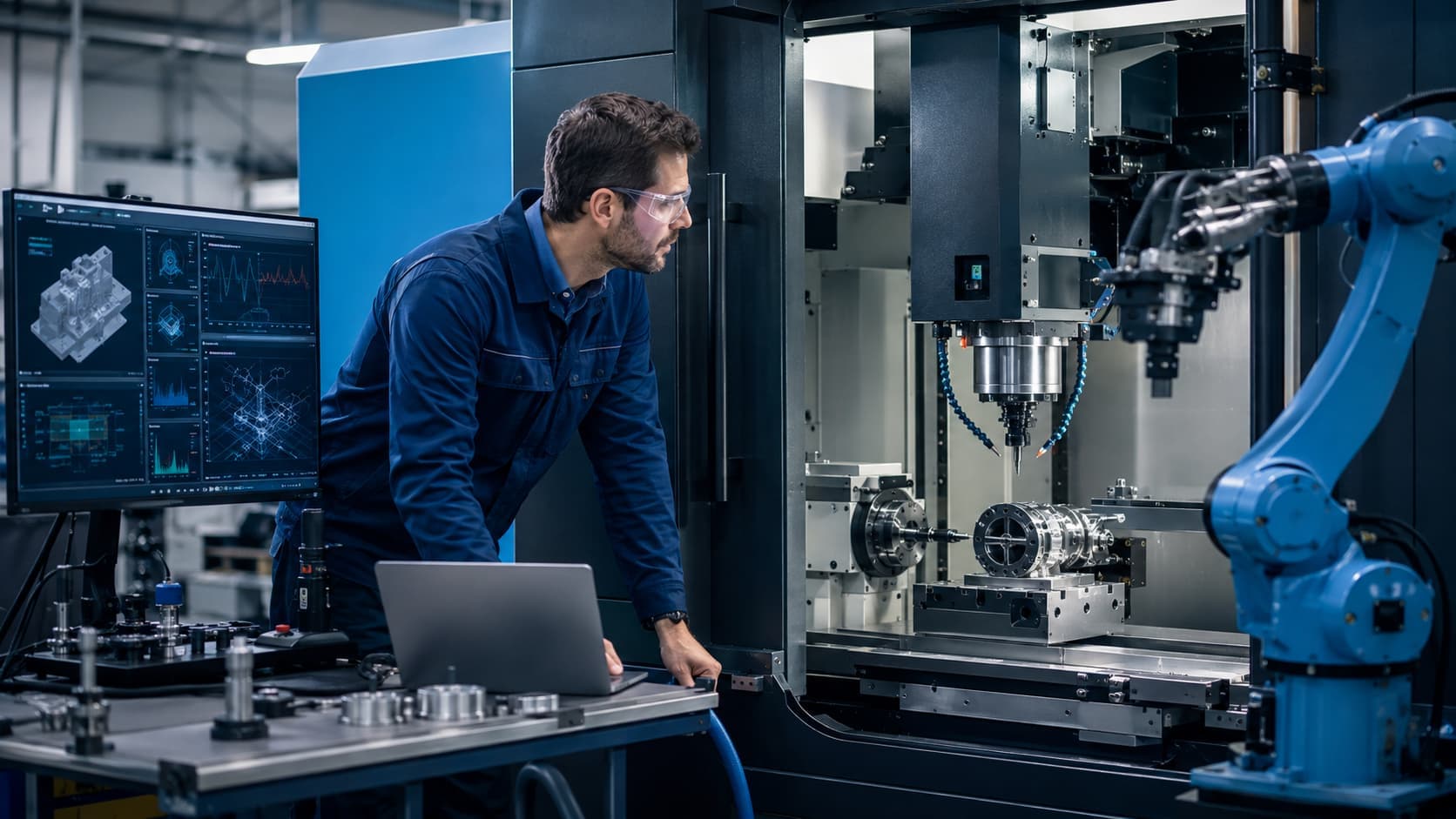
- CNC machine tools
- Industrial robots
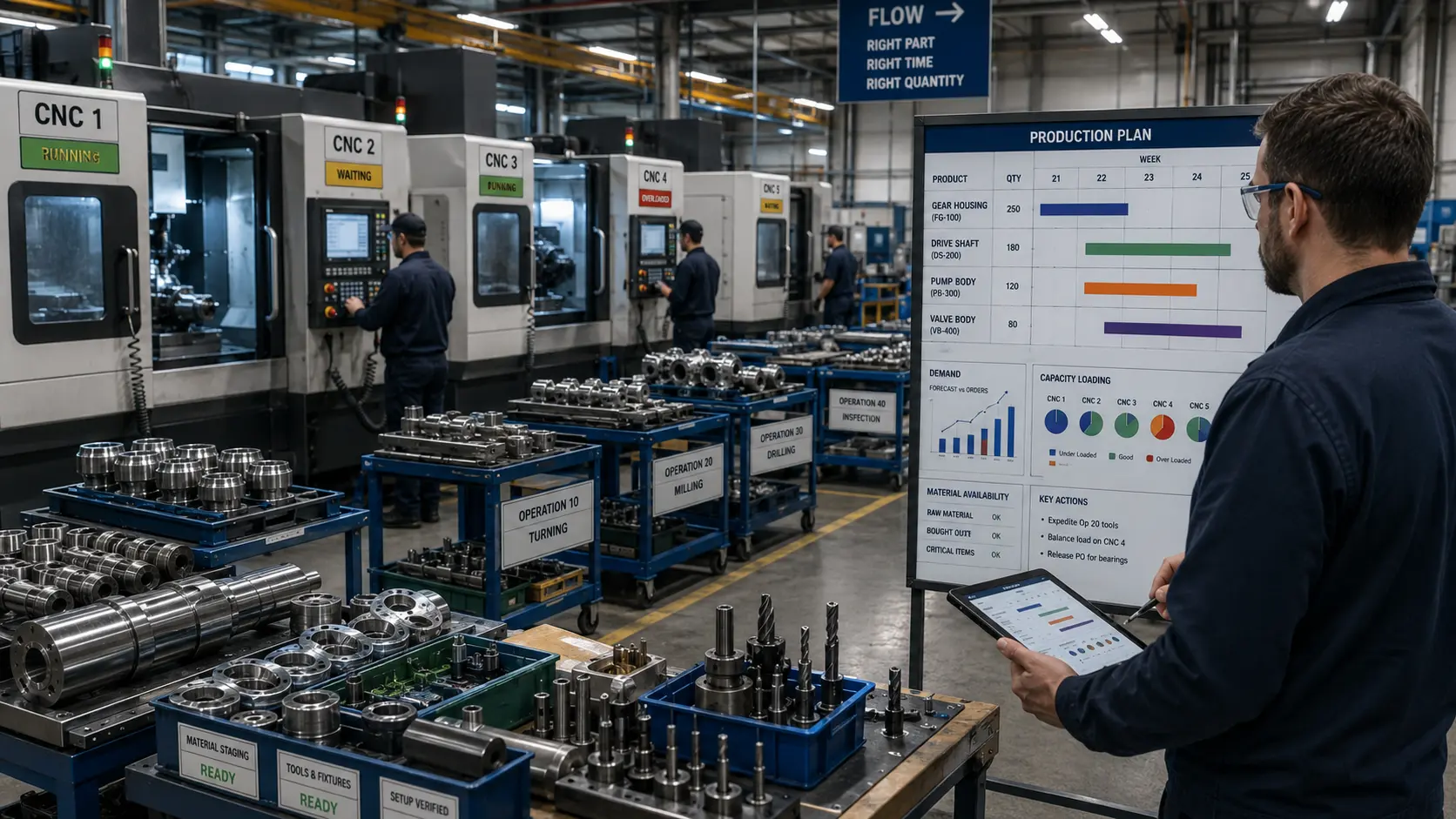
- Automated production lines
- Autonomous equipment
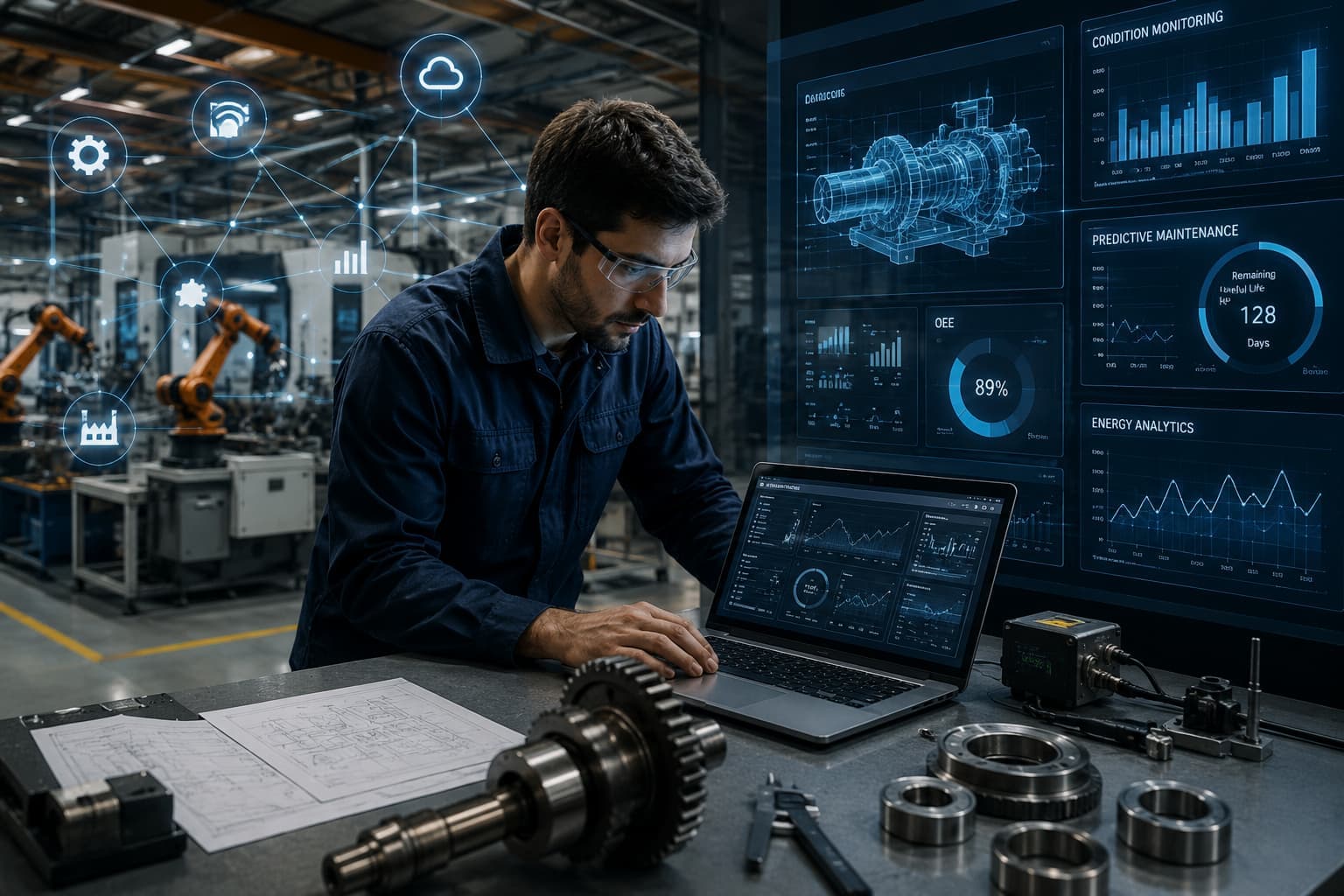
- Condition-monitoring systems
- Smart energy equipment
In a CNC system, for example, software may determine:
- Interpolation
- Position commands
- Spindle commands
- Feed
- Acceleration profiles
- Alarms
- Toolpath execution
But those commands still pass through real physical components.
The complete chain is closer to:
Software → drive/controller → motor → transmission or axis → mechanical structure → tool/workpiece interaction
The digital command is only the beginning.
Software commands; mechanics responds
Suppose a CNC program tells an axis:
“Move rapidly to this position.”
From the software perspective, that may appear to be a coordinate transformation and motion command.
The physical machine experiences something different.
The motor needs to accelerate mass. Torque must be produced. The ball screw or linear drive transfers load. Bearings react forces. The machine structure responds dynamically.
Then the system must decelerate the moving mass without exceeding its motion or control limits.
So an apparently simple digital instruction produces a chain of physical consequences.
That leads to a useful distinction:
“Software controls the command. Physics controls the consequence.”
The best software-driven systems respect both.
Forces and loads do not disappear
Mechanical loads remain fundamental whether a machine is manually operated or fully autonomous.
Take a robot carrying a payload. Software can calculate the path.
But the required actuator torque still depends on factors such as:
- Payload
- Geometry
- Gravitational loading
- Acceleration
- Inertia
A different payload can therefore make the same programmed motion mechanically different.
The same principle applies in CNC machining.
Increase the feed or depth of cut and the cutting forces can change. Increase axis acceleration and inertial loading changes. Increase spindle speed and bearing, thermal and tooling considerations can change.
A program accepting a value does not establish that the mechanical system can safely or effectively deliver it.
This is where mechanical fundamentals provide a sanity check before software commands become machine consequences.
Dynamics still determine whether motion remains stable
Mechanical structures are not infinitely rigid. They have:
- Mass
- Stiffness
- Damping
- Natural frequencies
Under dynamic loading they can:
- Oscillate
- Resonate
- Deform
- Vibrate
Software-controlled motion therefore cannot be considered independently of machine dynamics.
A controller may command an aggressive acceleration profile. But if that excitation interacts badly with the mechanical system's dynamics, the result can include:
- Vibration
- Tracking error
- Poor process quality
- Structural response
- Reduced component life
For machining systems, dynamic behaviour also matters at the cutting interface. A control system can command a feed rate.
Whether the resulting cut remains stable depends partly on the interaction among:
- Tool
- Workpiece
- Spindle
- Machine structure
- Cutting parameters
Modern control and software can help manage these effects. They cannot make the underlying dynamics irrelevant.
Thermal behaviour remains physical
Temperature is another good example. A modern machine can contain:
- Temperature sensors
- Compensation algorithms
- Cooling controls
- Thermal models
Those technologies can significantly improve performance. But they are responding to physical thermal behaviour.
Heat can originate from:
- Motors
- Bearings
- Cutting
- Friction
- Electrical systems
- Ambient conditions
The resulting thermal gradients can cause components and structures to expand.
A compensation algorithm therefore needs some understanding—explicitly or empirically—of the physical relationship between temperature and machine error.
Software may compensate for a thermal effect. It does not eliminate thermal expansion as a physical phenomenon.
This distinction matters whenever digital correction is treated as a substitute for mechanical or thermal design.
Materials still determine how components fail
Machine components are made from physical materials. Their behaviour remains governed by mechanisms such as:
- Elastic deformation
- Yielding
- Fatigue
- Wear
- Fracture
- Corrosion where relevant
A predictive-maintenance system might detect evidence associated with a developing mechanical fault. But the failure mechanism still exists independently of the prediction software.
Consider a bearing. Software may:
- Monitor vibration
- Detect anomalies
- Estimate condition
- Schedule inspection
But understanding the system also requires questions such as:
- What load is the bearing carrying?
- What lubrication conditions exist?
- What mechanical failure mechanism is plausible?
- Could the signal be coming from another component?
AI can help identify patterns. Mechanical knowledge helps determine whether those patterns have a plausible physical interpretation.
Data tells us what changed; fundamentals help explain why
Modern engineering systems produce increasingly large amounts of sensor data. That creates an important distinction.
“Measurement is not explanation.”
Suppose a motor-current signal increases. The data tells us something changed.
Possible explanations could include:
- Increased mechanical load
- Higher cutting force
- Friction
- Different process conditions
- A drive-related issue
Likewise, higher vibration may relate to:
- Imbalance
- Bearing behaviour
- Tool engagement
- Resonance
- Process changes
- Structural excitation
The sensor does not automatically identify the cause. It reports an observable quantity.
Mechanical fundamentals provide the physical reasoning necessary to interpret that quantity.
That is especially important in condition monitoring and predictive maintenance, where correlation can easily be mistaken for mechanism.
Models are only as useful as their assumptions
Engineering software is full of models. Examples include:
- Finite-element models
- Machine dynamics models
- Thermal compensation models
- Robot kinematic models
- Digital twins
- Predictive-maintenance models
A model is always a representation of the real system. It necessarily simplifies something.
The engineering question is:
“What was simplified, and does the simplification remain acceptable for this problem?”
For example, a simulation might assume:
- Rigid components
- Constant material properties
- Ideal boundary conditions
- Negligible friction
- Steady-state behaviour
Those assumptions may be appropriate in one study and unacceptable in another. A more sophisticated software package does not automatically produce a more physically valid result.
The user still needs to understand:
- The assumptions
- The boundary conditions
- The operating range
- The physical meaning of the result
This is one of the reasons fundamentals remain valuable even as engineering tools become easier to use.
Software can compensate for physical limitations—but not abolish them
Software can provide impressive compensation. It can:
- Correct
- Filter
- Predict
- Optimize
- Coordinate
- Monitor
But compensation has limits.
A controller can reduce the effects of structural flexibility. It cannot turn a physically inadequate structure into one with infinite stiffness.
Thermal compensation can reduce position error. It cannot prevent components from generating heat.
Condition monitoring can warn about bearing degradation. It cannot restore a damaged bearing.
An intelligent lubrication-monitoring system can identify a problem. It cannot make an unlubricated mechanical interface stop wearing.
The more useful engineering position is therefore:
“Software should complement good physical design, not become an excuse for poor physical design.”
The interface between digital and mechanical systems is where many decisions happen
Modern machines can be viewed as layers.
Higher-level software / analytics ↕ embedded control ↕ sensors and actuators ↕ mechanical plant
The performance of the complete system depends on the interfaces between those layers.
ISO/IEC/IEEE 15288:2023 provides a systems life-cycle framework covering complete systems from conception through development, production, utilization, support and retirement.
This systems perspective matters because optimizing one layer independently may not optimize the complete machine.
For example, a software algorithm might demand faster response. That could require:
- Faster sensing
- More actuator capability
- Different control tuning
- Greater mechanical stiffness
Conversely, improving the mechanical system can make the control problem easier. Digital and physical design influence one another.
Digital twins make physical understanding more important
Digital twins are sometimes presented as though the digital representation eventually becomes more important than the physical asset. That framing misses the point.
A useful digital twin depends on some relationship between the physical and digital systems.
In smart manufacturing, NIST describes cyber-physical manufacturing systems as environments where data-enabled decision mechanisms are coupled to actual production resources.
The digital model may represent:
- Geometry
- Operating state
- Dynamics
- Temperature
- Degradation
- Production behaviour
But its usefulness depends on whether the model represents the relevant physical behaviour well enough for the intended decision.
Digital engineering therefore does not eliminate physical understanding. It creates another reason to understand what the model is representing.
Example: a CNC controller commands a faster process
Consider a CNC machining centre. Suppose production needs to be increased.
The software parameters allow changes to:
- Axis acceleration
- Feed rate
- Spindle speed
It might appear to be a software-configuration problem. But examine each change.
Higher axis acceleration
The engineer should consider:
- Required motor torque
- Inertia
- Servo response
- Structural dynamics
Higher feed
The engineer should consider:
- Cutting forces
- Tool load
- Process stability
- Surface finish
- Chip formation
Higher spindle speed
The engineer should consider:
- Bearing behaviour
- Vibration
- Heat generation
- Tooling limits
- Process stability
The controller may accept the numbers. Mechanical engineering determines whether those numbers represent a credible operating condition.
Then sensors may return:
- Vibration
- Load
- Temperature
- Position error
The software can use that feedback to adapt or alert.
The resulting system is not mechanical or digital. It is mechanical and digital.
Predictive maintenance still needs mechanical reasoning
This becomes particularly clear in AI-based predictive maintenance.
A machine-learning model might discover that certain vibration patterns are associated with particular condition states. That can be useful.
But several physical questions remain:
- Why should the signal change?
- Could operating conditions explain it?
- Which component could produce the pattern?
- Does the failure mechanism develop in the way the model assumes?
- Is the prediction physically plausible?
My own work with software and engineering systems has reinforced this connection.
The more I work with Python, software and AI in engineering applications, the less I see mechanical fundamentals as background knowledge that can simply be left behind.
They provide context for deciding:
- What should be measured
- What calculations mean
- Which constraints matter
- Whether a software output is physically credible
That is also why predictive maintenance is better understood as an engineering-system problem rather than merely a machine-learning problem.
Engineering fundamentals protect against plausible but impossible outputs
Modern software can generate impressive results quickly.
AI tools can produce calculations and technical explanations. Simulation tools can produce detailed plots. Optimization programs can produce precise numerical solutions.
But precision of presentation is not proof of physical correctness.
A mechanical engineer should still be able to ask basic questions.
- Does the force magnitude make sense?
- Can the motor realistically produce that torque?
- Does the energy balance close?
- Is that temperature plausible?
- Can that structure actually support the assumed load?
- Is the flow behaviour consistent with the pressure conditions?
Those simple questions can expose problems that sophisticated-looking outputs hide.
Fundamentals therefore act as an engineering sanity check.
Calculation and engineering judgment are different
Computers are exceptionally good at:
- Repeated calculation
- Data processing
- Optimization
- Pattern recognition
- Automation
- Simulation
Those capabilities should be used. Engineering judgment solves a different problem.
It asks:
- Which assumptions are appropriate?
- Which constraints matter?
- What failure mode is credible?
- Which output should we trust?
- Does the result make physical sense?
- Which trade-off is acceptable?
A useful way to put it is:
“Computation answers the problem you gave it. Engineering judgment asks whether you gave it the right problem.”
That distinction becomes more important as increasingly powerful tools make calculations easier to produce.
What software genuinely adds
Mechanical fundamentals matter, but that should not become an argument against software.
Software gives engineers capabilities that physical design alone cannot provide easily. It can support:
- High-speed control
- Complex coordination
- Automatic optimization
- Fault detection
- Digital simulation
- Condition monitoring
- Adaptive processes
- Large-scale data analysis
The Software Engineering Institute similarly treats architecture as important for achieving system qualities such as availability, security and modifiability rather than reducing software engineering to code implementation alone.
The goal should therefore be integration. A modern engineer does not need to choose:
“Mechanical fundamentals or computational capability.”
The stronger combination is:
“Mechanical fundamentals + computational capability.”
What this means for engineering education
Engineering education increasingly includes:
- Programming
- Simulation
- AI
- Data analysis
- CAD/CAE
- Automation
- Digital twins
That is appropriate. But the digital tools should be taught alongside the physical principles they represent.
For example, students should not only learn:
“Run a finite-element analysis.”
They should also understand:
- Stress
- Strain
- Boundary conditions
- Material behaviour
- Load paths
- Whether the result is plausible
They should not only learn:
“Train a predictive-maintenance model.”
They should understand:
- Degradation
- Sensors
- Vibration
- Machine operating conditions
- Failure modes
They should not only learn:
“Generate a CNC program.”
They should understand:
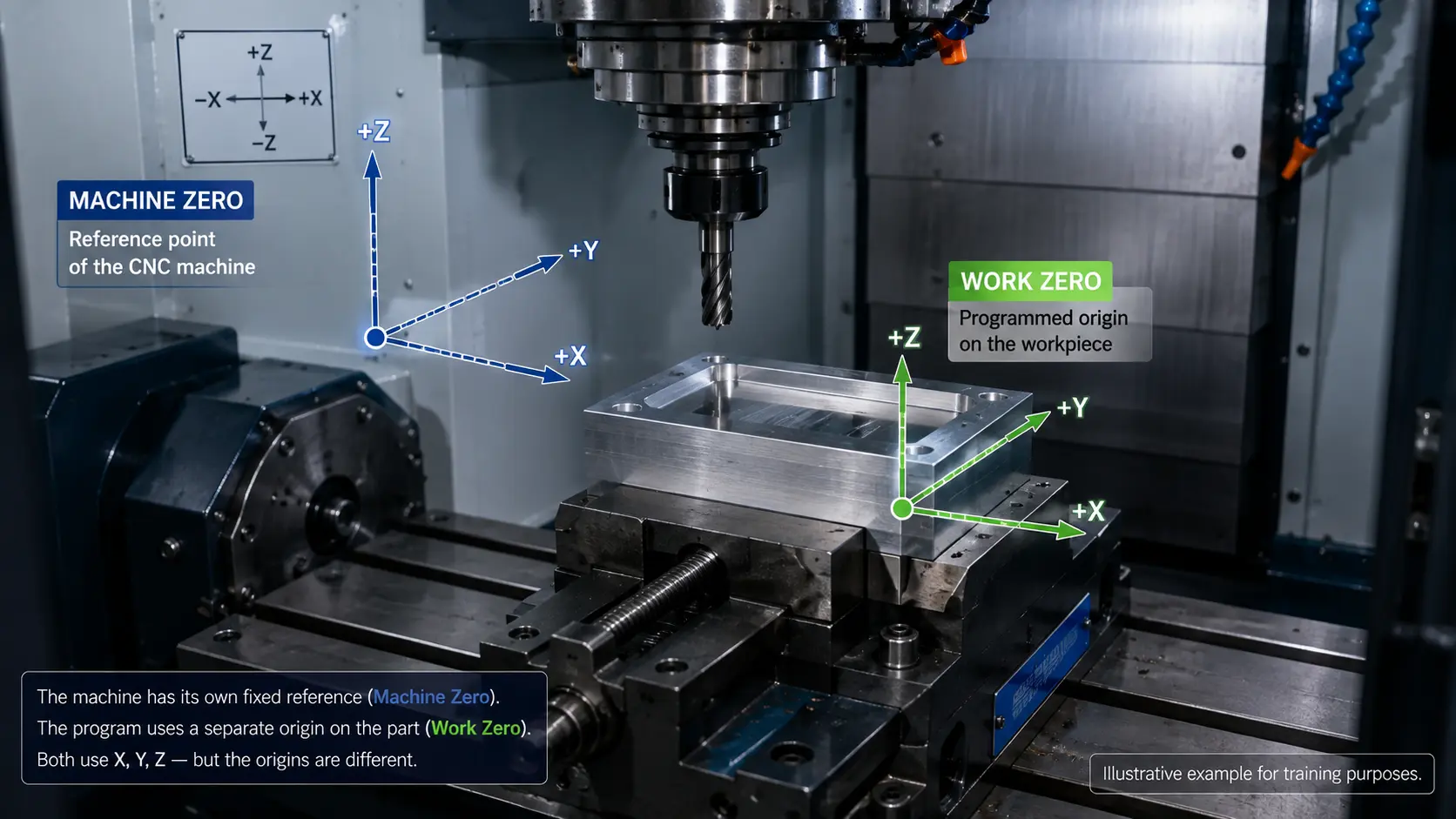
- Coordinates
- Cutting forces
- Tooling
- Motion
- Machine limits
That is how computational tools become engineering tools rather than black boxes.
The engineer of a software-driven future still needs physics
Software will continue to become more capable. AI will increasingly participate in:
- Design
- Monitoring
- Simulation
- Maintenance
- Automation
That changes engineering practice. But if software acts on physical systems, physical understanding remains part of the engineer's responsibility.
The future mechanical engineer may write more code. They may work with more data. They may build more AI-enabled systems. They may spend more time in simulation.
None of those changes makes mechanics, dynamics, thermodynamics, materials or manufacturing irrelevant.
Instead, the fundamentals provide the reference frame needed to decide whether increasingly sophisticated digital outputs correspond to a physically credible system.
Key takeaway
Software can determine:
- What a machine is commanded to do
- How its motion is coordinated
- How its condition is monitored
- How its operation is optimized
Mechanical engineering determines:
- What loads appear
- How the structure responds
- What heat is generated
- How the machine vibrates
- Where components wear
- What ultimately limits performance
Modern engineering therefore should not be framed as:
“Mechanics versus software.”
It is:
“Mechanics expressed, observed and increasingly controlled through software.”
The stronger the software becomes, the more important it is to understand the physical system underneath it.
“Software controls the command. Physics controls the consequence.”
References and further reading
- NIST — Cyber Physical Systems and Internet of Things Program. Describes CPS/IoT as integrated systems involving interacting digital, analog, physical and human components.
- NASA — Fundamentals of Systems Engineering. Defines engineered systems as combinations of hardware, software, equipment, people, processes and procedures working together to provide capability.
- NASA Systems Engineering Handbook. Detailed systems-engineering guidance covering complete system design, realization and management.
- ISO/IEC/IEEE 15288:2023 — Systems and software engineering — System life cycle processes. Current international systems life-cycle framework covering conception through development, production, utilization, support and retirement.
- NIST — Digital Twin-Based Cyber-Physical Manufacturing research. Relevant to smart-manufacturing systems where digital decision mechanisms are coupled with physical production resources.
- Carnegie Mellon Software Engineering Institute — Software Architecture. Relevant to the role of software architecture in achieving system qualities such as availability, security and modifiability.