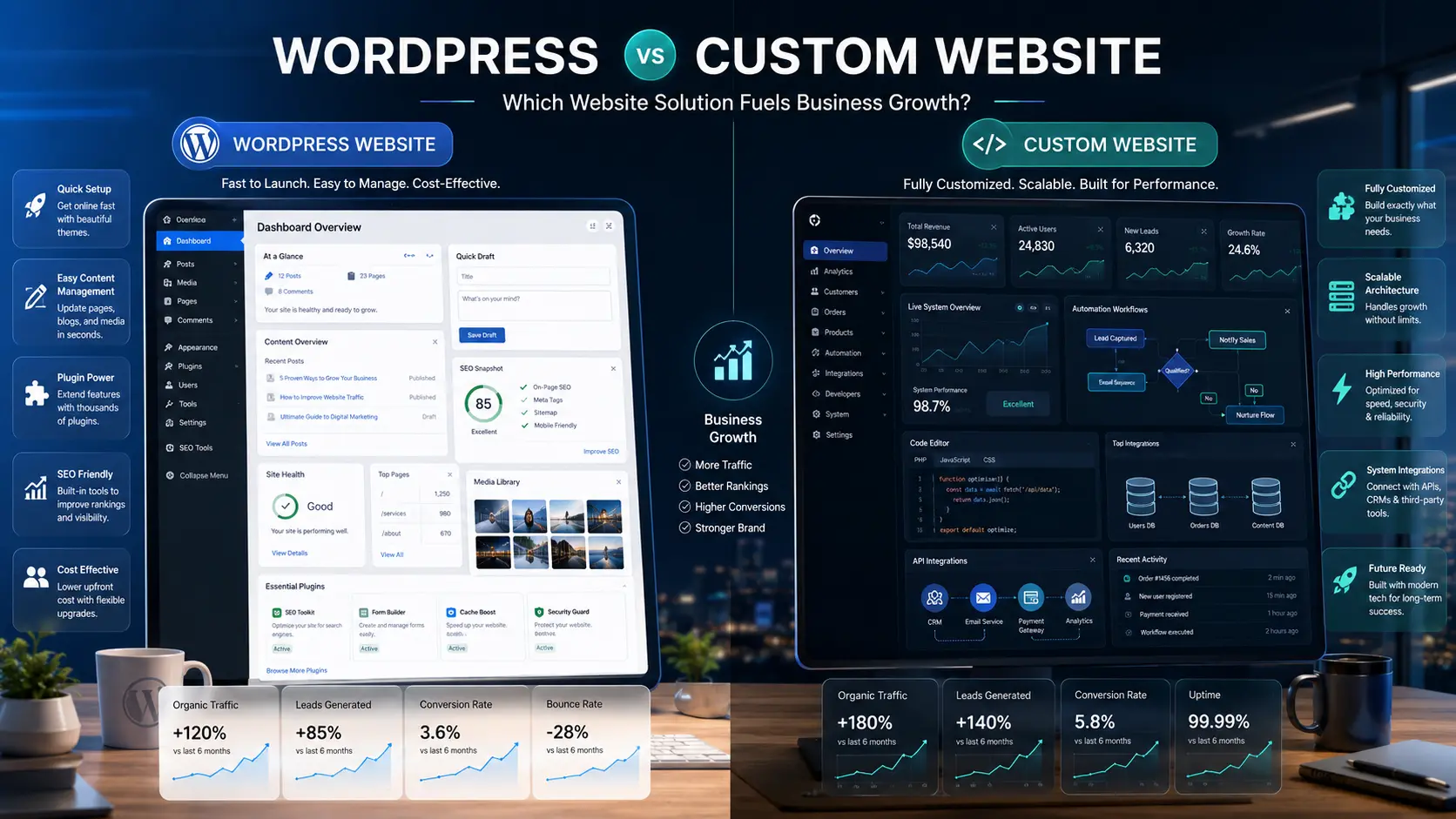
WordPress vs custom websites is one of the most important decisions a business can make before building or upgrading its online presence. Your website is not just a digital brochure. It is your brand platform, sales tool, customer education channel, and sometimes the foundation of your business operations.
However, many business owners choose a website type without fully understanding what they need.
Some choose WordPress because it is fast, flexible, and easier to manage. Others choose a custom website because they need advanced features, unique systems, or better control over performance and scalability.
In simple terms, the better option depends on your business goals, budget, timeline, technical needs, and long-term growth plan.
What Is a WordPress Website?
A WordPress website is built using WordPress, an open-source content management system used by creators, small businesses, and enterprises around the world. WordPress gives users flexible design tools, themes, plugins, and content management features without requiring every part of the website to be coded from scratch.
For example, a small business can use WordPress to create a professional company website, blog, service page, portfolio, landing page, or online store.
In addition, WordPress makes it easier for non-technical users to update content. You can add blog posts, edit pages, upload images, manage SEO plugins, and adjust basic settings from the dashboard.
Because of this, WordPress is a strong option for businesses that want a professional website without building everything from zero.
What Is a Custom Website?
A custom website is built from the ground up using code and development frameworks. Instead of depending heavily on pre-built themes or plugins, the website is designed and developed around specific business needs.
For example, a company may need a custom client portal, internal dashboard, booking system, reporting tool, automation workflow, or business management system. In that case, a custom website may offer more control.
A custom website can also be designed for unique performance, user experience, security, and integration needs.
However, it usually requires more planning, a bigger budget, and ongoing technical support.
WordPress vs Custom Websites: The Main Difference
When comparing WordPress vs custom websites, the biggest difference is flexibility versus control.
WordPress gives you flexibility, speed, and easier content management. On the other hand, custom websites give you deeper control, advanced functionality, and more room for complex business systems.
Here is a simple way to understand it:
WordPress is often better when you need a professional website, blog, service pages, SEO content, and easy updates.
Custom development is often better when you need advanced software features, automation, user dashboards, complex integrations, or a platform that works like a business system.
Therefore, the question is not which one is “better” in general. The real question is which one is better for your current business stage.
Why This Decision Matters for Business Growth
Your website affects how customers find you, trust you, and take action.
A poorly planned website can lead to slow loading pages, poor SEO, weak user experience, low conversions, and difficult maintenance. Meanwhile, a well-planned website can support visibility, credibility, sales, automation, and long-term growth.
Google Search Central explains that good SEO helps search engines crawl, index, and understand your content more effectively. Because of this, your website structure, speed, content, and technical setup matter from the beginning.
For deeper planning, you can also read this guide on business website strategy. It explains why a website should be built around goals, not just appearance.
When WordPress Is Better for Your Business
WordPress is a good choice if you want a website that is professional, affordable, scalable, and easier to manage.
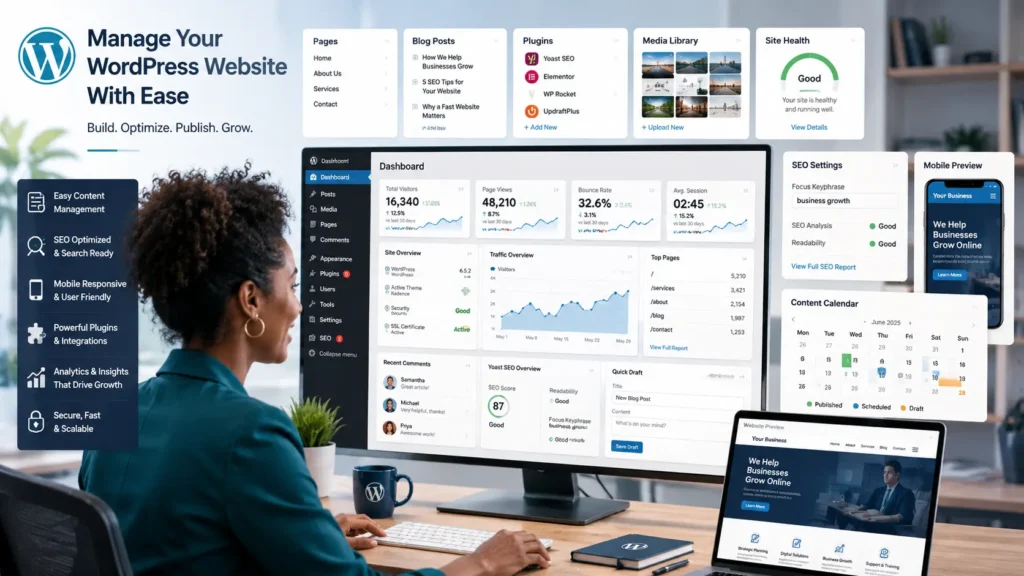
It works well for service businesses, consultants, professionals, startups, schools, agencies, personal brands, NGOs, and growing companies.
WordPress Is Good for Content and SEO
If your business depends on blogs, service pages, portfolio pages, case studies, and landing pages, WordPress can be very useful.
You can create SEO-friendly content, optimize titles and meta descriptions, add internal links, and publish regularly.
For example, a company offering digital services can use WordPress to publish helpful blogs, rank on Google, and attract leads over time.
In addition, WordPress works well with SEO plugins and content tools. However, plugins alone do not guarantee ranking. You still need good content, technical SEO, site speed, and a clear strategy.
You can learn more about visibility from this guide on SEO services.
WordPress Is Easier to Update
One major benefit of WordPress is that business owners can update content without calling a developer for every small change.
For example, you can change service descriptions, publish announcements, upload new portfolio items, or update team profiles.
As a result, WordPress is practical for businesses that want control over their content.
WordPress Can Be Cost-Effective
Compared to fully custom development, WordPress is usually more affordable at the beginning.
That makes it a good option for small businesses and growing brands that need a strong online presence without a large software development budget.
However, cheap WordPress websites can become expensive later if they are poorly built. Too many plugins, weak hosting, poor design, and bad SEO structure can affect performance.
For this reason, it is important to work with skilled website developers who understand both design and business goals.
When a Custom Website Is Better for Your Business
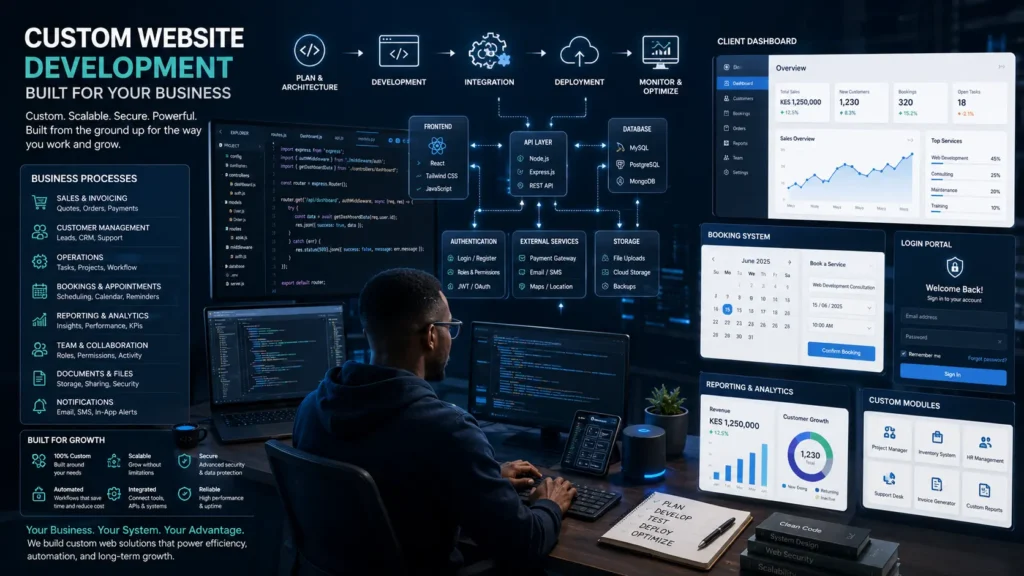
Custom websites are better when your business needs more than a standard website.
For example, if you need a customer dashboard, quotation system, reporting platform, booking system, internal workflow tool, automation system, or advanced integration, custom development may be the better path.
Custom Websites Offer More Control
With custom development, the website can be built around your exact process.
For example, a logistics business may need a delivery tracking dashboard. A training organization may need a student portal. An engineering business may need a maintenance reporting system.
In these cases, WordPress may still help with public pages, but the core system may need custom software.
Custom Websites Can Support Complex Automation
If your business wants to reduce manual work, custom systems can connect different processes.
For example, forms can feed into dashboards. Client requests can trigger automated emails. Reports can be generated from stored data. Internal teams can use one platform instead of many disconnected tools.
This is where custom development becomes powerful.
Harun Lucas helps businesses think beyond basic websites by connecting web development, software systems, automation, and digital strategy where necessary.
Custom Websites Can Be Built for Specific Performance Needs
Page speed matters because users expect fast websites. Google’s PageSpeed Insights tool helps website owners analyze performance across devices.
A custom website can be optimized carefully for speed, clean code, and specific user journeys.
However, WordPress can also be fast if it is built properly. Therefore, speed depends more on the quality of development than the platform alone.
WordPress vs Custom Websites: Which One Is Better for SEO?
WordPress vs custom websites can both perform well in SEO if they are properly planned.
WordPress is helpful because it supports content publishing, SEO plugins, internal linking, categories, tags, and blog management.
Custom websites can also rank well if developers build strong technical SEO foundations. This includes clean URLs, fast loading pages, schema markup, mobile responsiveness, good navigation, and proper indexing.
However, SEO is not automatic in either option.
A WordPress website with poor content and slow pages can fail. Meanwhile, a custom website with weak structure can also fail.
In simple terms, SEO success depends on strategy, content quality, technical setup, and ongoing optimization.
You can also read this guide on why most business websites fail and how to fix yours.
Practical Examples
A consultant who needs a home page, services page, blog, about page, contact form, and portfolio may be better with WordPress.
A company that needs a public website plus client login, payment records, staff dashboard, and automated reports may need a custom system.
A school or training brand that wants to publish articles, courses, announcements, and contact information can start with WordPress.
However, if the same school later needs a student portal, assignment tracking, attendance system, or advanced learning platform, custom development may become necessary.
In many cases, the best solution is not WordPress only or custom only. It can be a hybrid approach.
For example, WordPress can manage the public website while a custom system handles dashboards, automation, and internal workflows.
Common Mistakes to Avoid
One common mistake is choosing WordPress only because it is cheaper.
Cost matters, but the wrong setup can limit your growth. If your business needs complex features, forcing everything into plugins can create performance and maintenance problems.
Another mistake is choosing a custom website when WordPress is enough.
Custom development is powerful, but it may be unnecessary for a simple business website. If you only need pages, blogs, SEO, and service information, WordPress may be faster and more practical.
In addition, some businesses focus too much on design and forget strategy. A beautiful website that does not explain your services clearly will still struggle to convert visitors.
You should also avoid building a website without thinking about SEO, mobile users, speed, content updates, and future scalability.
How to Choose the Right Option
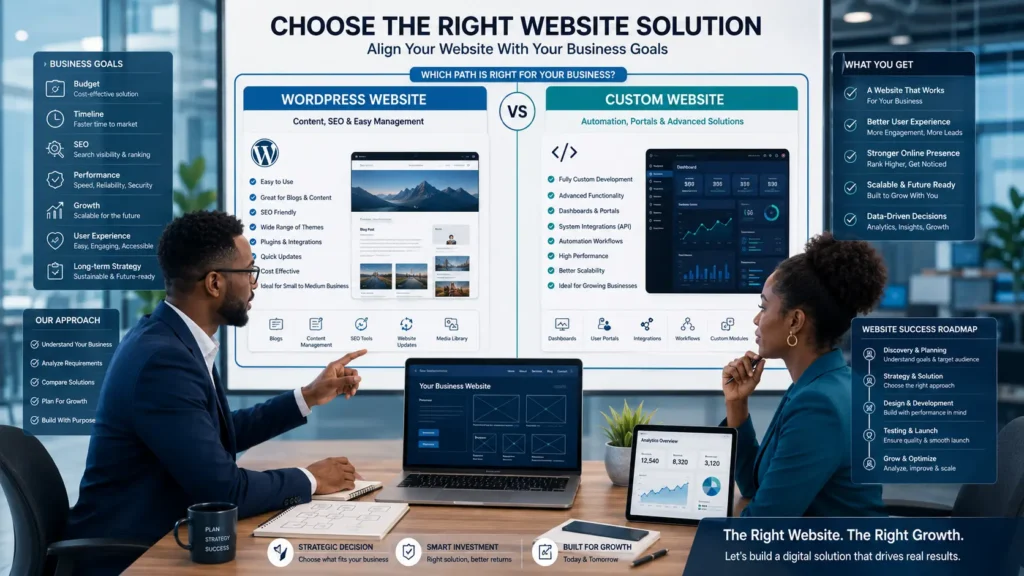
Before choosing between WordPress vs custom websites, ask yourself a few practical questions.
What is the main goal of the website?
Do you need regular content updates?
Will you publish blogs for SEO?
Do you need advanced features or user accounts?
Will the website connect to other systems?
How much control do you need over performance and functionality?
What is your budget for development and maintenance?
How fast do you need to launch?
If your answers point to content, visibility, services, and simple lead generation, WordPress may be the better choice.
However, if your answers point to automation, dashboards, portals, integrations, and advanced workflows, custom development may be better.
For businesses that are still deciding, this article on website vs social media can also help explain why a website should be treated as a long-term digital asset.
The Best Recommendation for Most Businesses
For many businesses, WordPress is the best starting point.
It is practical, scalable, SEO-friendly, and easier to manage. In addition, it allows businesses to build visibility through content and improve their digital presence gradually.
However, growing businesses should not ignore custom systems.
As operations become more complex, custom development can help reduce manual work, improve reporting, connect departments, and create better customer experiences.
Therefore, the best approach is to start with your business needs, not the platform.
If you need a professional website, WordPress may be enough. If you need software-like functionality, custom development may be necessary. If you need both, a hybrid solution can work well.
Final Thoughts
WordPress vs custom websites is not a competition where one option always wins.
WordPress is excellent for professional websites, blogs, service pages, SEO content, and businesses that need easy content management.
Custom websites are better for advanced platforms, automation, portals, dashboards, and business systems that need unique functionality.
Finally, your website should not only look good. It should support your business goals, attract the right audience, build trust, and help users take action.
Work With Harun Lucas
Choosing the right website approach can save your business time, money, and future redesign costs.
Harun Lucas helps businesses build professional websites, SEO-ready platforms, automation systems, and scalable digital solutions that support real business growth.
Whether you need a WordPress website, custom web solution, SEO strategy, or digital system for your business, you can start by visiting Harun Lucas or explore more digital solutions.
Frequently Asked Questions
WordPress is better if your business needs a professional website, blog, service pages, and easy content updates. However, a custom website is better if you need advanced features, dashboards, automation, or unique business systems.
Yes. A WordPress website can rank on Google if it has good content, fast loading speed, proper SEO structure, internal links, mobile responsiveness, and consistent optimization.
In most cases, custom websites cost more because they require more planning, coding, testing, and ongoing technical support. However, they can be worth it when your business needs complex functionality.
For many small businesses, WordPress is the better starting point because it is affordable, flexible, and easier to manage. Custom development becomes useful when the business needs advanced systems or automation.
Yes. Many businesses start with WordPress for their public website, then add custom systems later as they grow. This can be a smart and cost-effective approach