A digital platform is no longer just a nice addition to a business. It has become a powerful way for businesses to attract customers, manage operations, improve communication, and scale online. Many businesses start with a simple website, but as they grow, they need more than pages and contact forms.
A website can introduce your brand. However, a digital platform can support your entire business process.
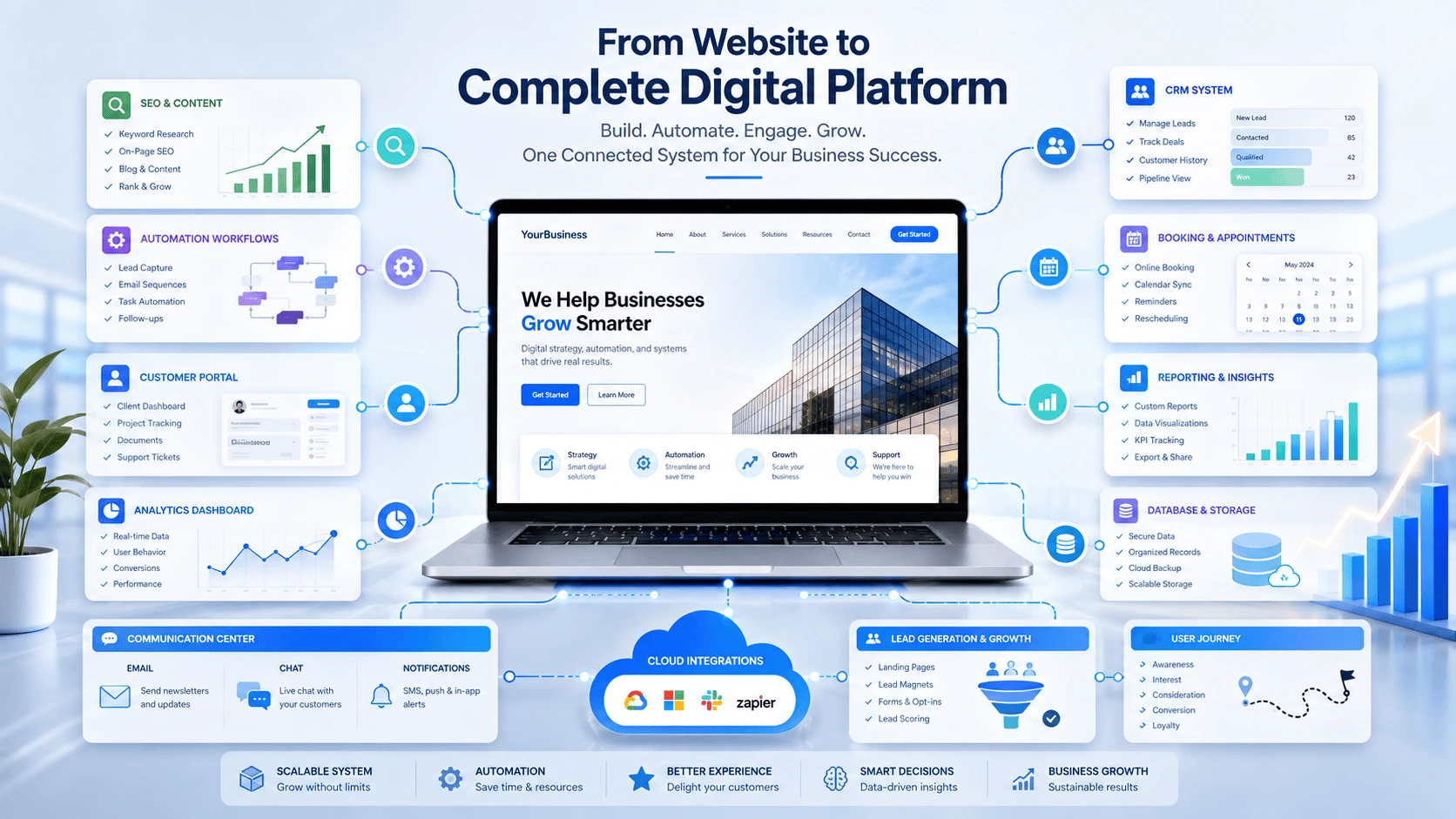
In simple terms, moving from a website to a digital platform means turning your online presence into a system that works for your business every day. It can help with lead generation, customer support, bookings, reporting, automation, content marketing, and business growth.
What Is a Digital Platform?
A digital platform is an online system that connects your business, customers, content, data, and services in one structured environment.
A basic website may show who you are, what you offer, and how people can contact you. On the other hand, a digital platform can do more. It can collect customer inquiries, automate follow-ups, manage bookings, display dashboards, publish content, track performance, and connect with other tools.
For example, a business website may have a home page, about page, services page, blog, and contact page.
Meanwhile, a digital platform may include all those pages plus a customer portal, payment system, appointment booking, email automation, reporting dashboard, CRM integration, and SEO content strategy.
Because of this, businesses that want to scale online should stop thinking about websites as static pages only.
Why Businesses Must Think Beyond a Website
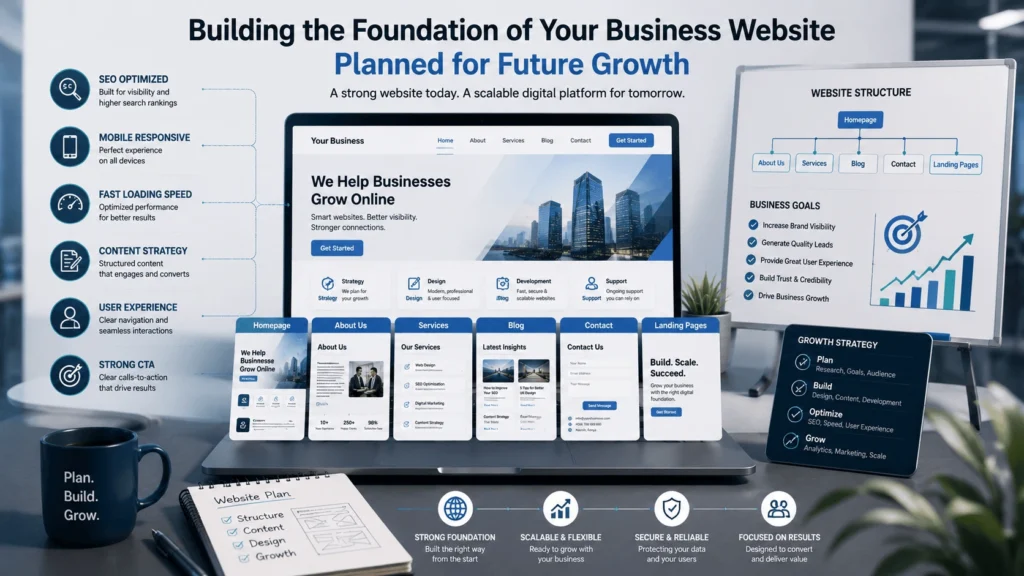
Many businesses build websites and expect customers to come automatically. However, a website without strategy, SEO, content, performance, and clear user journeys may not deliver strong results.
Google Search Central explains that SEO helps search engines understand your content and helps users find your site through search. This means your website structure, useful content, and technical setup matter from the beginning. Google Search Central is a helpful resource for understanding the basics of SEO.
A business that wants to grow online needs more than a beautiful design.
It needs a website that can attract traffic, convert visitors, support customers, and provide useful business data.
For this reason, your website should be planned as part of a bigger digital growth system.
You can also read this guide on business website strategy to understand why website planning should start with business goals, not only design.
Website vs Digital Platform: What Is the Difference?
A website mainly presents information. It tells people about your business, services, products, values, and contact details.
A digital platform does more. It helps people take action and helps your business manage those actions.
For example, a normal website may have a contact form. A digital platform may send the form details to a CRM, notify the sales team, create a lead record, send an automated email, and help track follow-up.
That is the difference.
A website informs. A digital platform supports operations.
A website gives visibility. A digital platform creates interaction.
A website can bring traffic. A digital platform can turn that traffic into organized business growth.
Key Features of a Scalable Digital Platform
A scalable digital platform should be built around your business goals. It does not need every feature at once. However, it should have the right foundation for growth.
1. Clear Website Structure
Your pages should be easy to understand. Visitors should quickly know what you offer, who you help, and what action to take next.
A good structure may include a home page, about page, services pages, project pages, blog, contact page, and landing pages.
In addition, each page should have a clear purpose. For example, a service page should explain the problem, the solution, benefits, process, and call-to-action.
This helps users and search engines understand your business better.
2. SEO-Ready Content
Content is one of the strongest ways to scale online.
When your website has useful articles, guides, service pages, and case studies, your business becomes easier to discover. As a result, potential customers can find you when they search for solutions.
For example, a web development business can publish guides about website cost, SEO, WordPress, custom websites, and digital strategy.
Harun Lucas has already shared helpful resources such as SEO services and website developers, which support businesses that want to improve their online visibility.
3. Automation and Workflow Systems
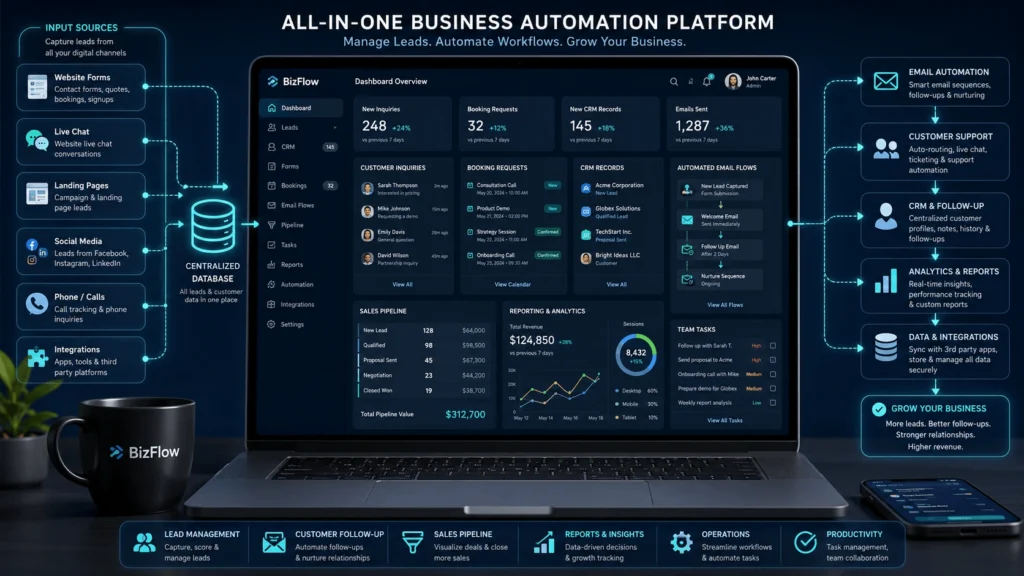
Automation helps businesses reduce repetitive work.
For example, instead of manually responding to every inquiry, a platform can send confirmation emails, assign leads to a team member, and store customer details automatically.
In addition, businesses can automate booking reminders, quotation requests, onboarding steps, reports, and customer follow-ups.
Because of this, automation saves time and reduces missed opportunities.
4. Customer Portals and Dashboards
As businesses grow, they may need private spaces where customers, employees, or partners can access information.
For example, a training company may need a student portal. A consulting firm may need a client dashboard. An engineering services company may need a maintenance reporting system.
These features turn a normal website into a more useful digital platform.
However, they require proper planning, security, and development.
5. Analytics and Performance Tracking
You cannot improve what you do not measure.
A scalable platform should help you understand where visitors come from, which pages they view, how they interact with your content, and where they drop off.
In addition, website speed affects user experience. Google PageSpeed Insights can help you test page performance and identify areas that need improvement. Google PageSpeed Insights is useful when checking speed, user experience, and technical performance.
Good analytics help businesses make better decisions instead of guessing.
How a Digital Platform Helps Businesses Scale Online
A digital platform helps growth in several practical ways.
First, it improves visibility. With strong SEO content, your business can attract people who are actively searching for your services.
Second, it improves trust. A professional website with useful content, clear service pages, case studies, and consistent branding makes your business appear more credible.
Third, it improves efficiency. Automation reduces manual tasks and helps teams focus on important work.
In addition, a digital platform improves customer experience. Visitors can find information, book services, send inquiries, access resources, or interact with your business more easily.
Finally, it supports long-term growth because it can be improved over time. You can start simple, then add features as your business grows.
Practical Example: From Simple Website to Platform
Imagine a consulting business that starts with a simple website.
At first, the website has a home page, services page, about page, blog, and contact form.
Later, the business begins publishing SEO blogs to attract new leads. After that, it adds downloadable resources, email automation, and a booking form.
As the business grows, it connects the website to a CRM. Every inquiry is recorded automatically. The team can now track leads, follow-ups, and client status.
Eventually, the business creates a client portal where customers can log in, view documents, request support, and access reports.
At this stage, the business no longer has just a website. It has a digital platform that supports marketing, operations, customer service, and growth.
Common Mistakes Businesses Make Online
One common mistake is treating a website as a one-time project.
A website should not be built and forgotten. It needs updates, SEO, performance checks, fresh content, and continuous improvement.
Another mistake is focusing only on design. A good-looking website is important, but design alone does not guarantee leads or sales.
In addition, many businesses fail because they do not have clear calls-to-action. Visitors may like the website, but they do not know what to do next.
Some businesses also ignore mobile performance. Since many users browse on mobile devices, a poor mobile experience can reduce conversions.
Another mistake is using too many disconnected tools. For example, customer messages may be scattered across WhatsApp, email, social media, and forms without proper tracking.
As a result, leads are lost and follow-ups become inconsistent.
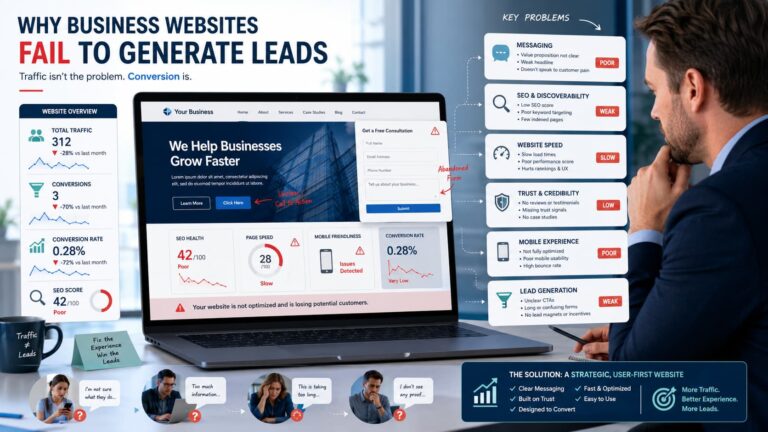
For more insight, you can read this article on why most business websites fail and how to fix yours.
Steps to Turn Your Website Into a Digital Platform
Start by defining your business goals.
Do you want more leads, better customer support, online bookings, content visibility, automation, or internal reporting?
Next, review your current website. Check the structure, speed, SEO, content quality, user journey, and conversion points.
Then, improve your core pages. Your home page, service pages, about page, contact page, and landing pages should clearly explain your value.
After that, build a content strategy. Publish blogs and guides that answer the questions your customers are already asking.
In addition, add tools that support action. This may include forms, WhatsApp buttons, booking systems, email automation, lead tracking, or dashboards.
Finally, measure performance and improve continuously. Scaling online is not one step. It is a process.
Where Google Business Profile Fits In

A digital platform should not only depend on your website.
For businesses with a local or physical presence, Google Business Profile can help customers find them on Google Search and Maps. Google explains that Business Profile allows businesses to manage how they appear on Search and Maps, share updates, list products or services, and connect with customers. Google Business Profile can support visibility when combined with a strong website.
However, your website should remain the main digital asset that you control.
Social media pages and business profiles are important, but they should lead people back to your professional website or platform.
You can also read this related guide on website vs social media to understand why businesses should not rely on social media alone.
How Harun Lucas Helps Businesses Build Scalable Digital Solutions
Harun Lucas helps businesses move beyond basic websites by building digital solutions that support growth, visibility, and efficiency.
This may include professional websites, SEO-ready pages, custom software systems, automation workflows, business dashboards, AI integration, and digital strategy.
For example, a business may start with a WordPress website and later add custom dashboards or automation. Another business may need a custom web system from the beginning because its operations are more complex.
The goal is not just to build something attractive. The goal is to build a digital platform that supports real business results.
Final Thoughts
A website is a good starting point, but a digital platform is a stronger growth tool.
If your business wants to scale online, your website should do more than display information. It should attract visitors, convert leads, support customers, organize data, and improve operations.
However, you do not need to build everything at once.
Start with a strong foundation. Improve your content. Add SEO. Build useful systems. Automate repetitive tasks. Then scale step by step.
In the end, the best digital platform is one that matches your business goals, supports your customers, and grows with you.
Work With Harun Lucas
If your website is not supporting your business growth, it may be time to turn it into a stronger digital platform.
Harun Lucas can help you build a professional website, improve your SEO, create automation workflows, develop custom systems, and design scalable digital solutions for your business.
Visit Harun Lucas to explore digital solutions that can help your business grow online.
Frequently Asked Questions
A digital platform is an online system that helps a business manage visibility, communication, customer actions, data, automation, and growth. It can include a website, dashboards, forms, portals, SEO content, and integrations.
A website mainly shares information about a business. A digital platform goes further by helping users take action and helping the business manage leads, bookings, reports, automation, and customer interactions.
Yes. A small business can start with a professional website and add features over time. For example, it can begin with service pages and blogs, then later add booking forms, automation, CRM integration, or dashboards.
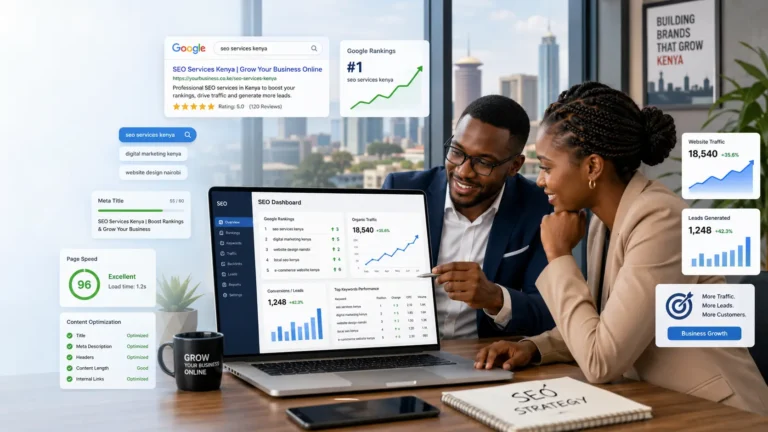
SEO helps people discover your business through search engines. A digital platform with strong SEO content can attract consistent traffic, build trust, and generate leads over time.
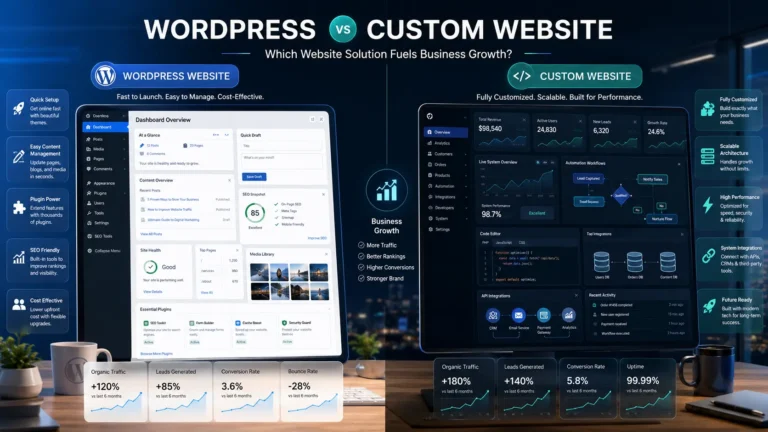
Not always. Some businesses can start with WordPress and plugins. However, custom development becomes useful when the business needs advanced features such as portals, dashboards, automation, integrations, or unique workflows.