Website vs social media, is one of the biggest questions many Kenyan business owners are asking in 2026. With Facebook pages, Instagram shops, TikTok videos, WhatsApp Business, and LinkedIn profiles becoming popular, many businesses wonder whether they still need a website
The truth is simple: Kenyan businesses should not choose one and ignore the other.
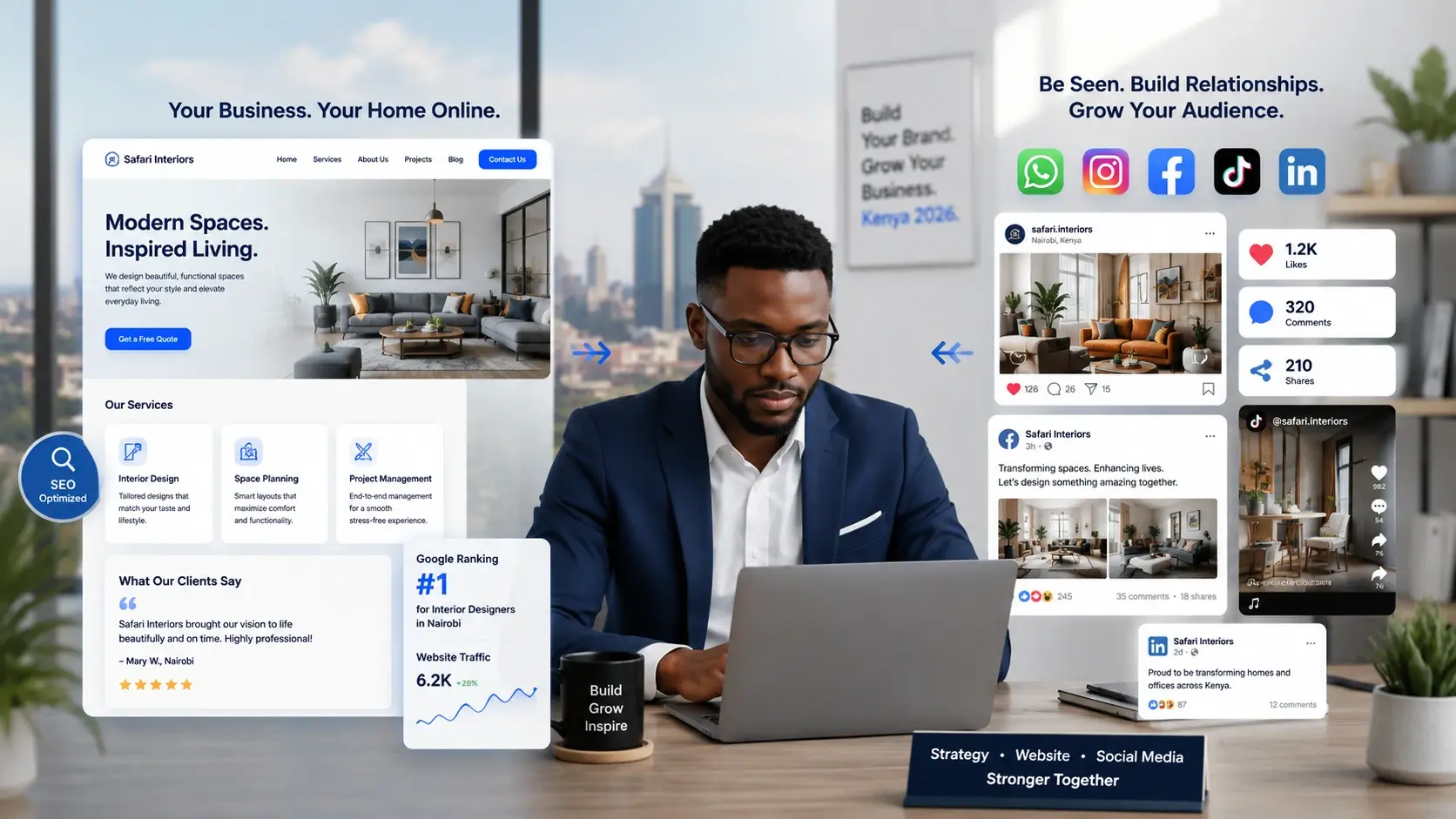
A website and social media serve different purposes. Social media helps businesses reach people, create conversations, and remain visible. A website helps businesses build trust, explain services clearly, appear on Google, and convert visitors into customers.
According to DataReportal’s Digital 2026 Kenya report, Kenya had 23.4 million internet users at the end of 2025 and 18.4 million social media user identities in October 2025. This shows that both search and social platforms matter for businesses that want to grow online.
In 2026, the strongest Kenyan businesses will not depend only on social media. They will use social media to attract attention and a website to build credibility, organize information, and generate leads.
Why Kenyan Businesses Depend on Social Media
Social media is often the first online step for many Kenyan businesses.
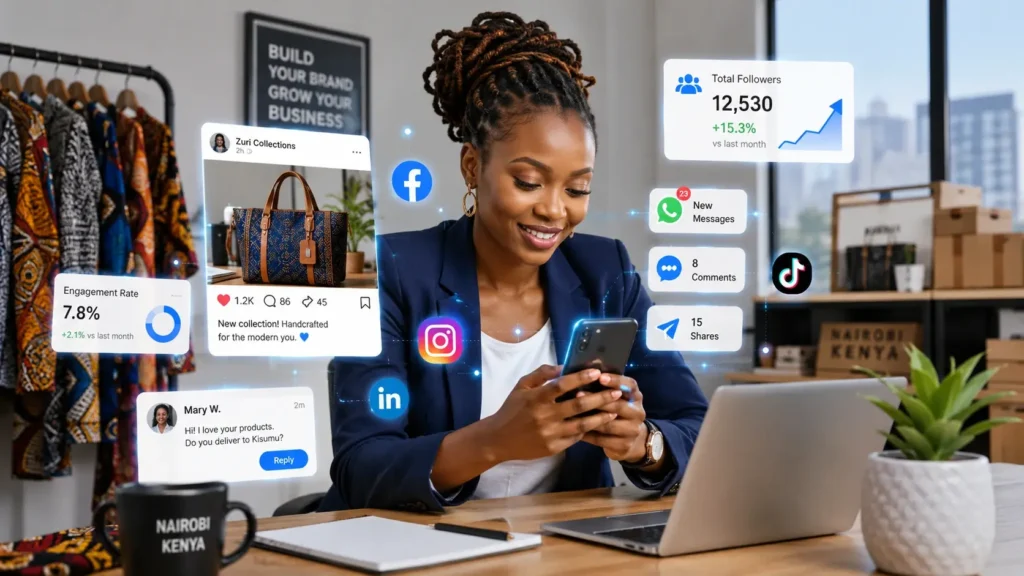
It is easy to start, affordable, and familiar to both business owners and customers. A small business can create a Facebook page, Instagram account, TikTok profile, or WhatsApp Business account without paying for a full website.
Social media helps businesses share updates, post products, answer questions, advertise offers, build community, and communicate directly with customers.
For example, a salon can post hairstyles on Instagram. A restaurant can share daily meals on Facebook. A boutique can use WhatsApp statuses to show new stock. A consultant can use LinkedIn to share professional advice.
This makes social media powerful for visibility and engagement.
However, social media alone is not enough for a serious long-term digital strategy.
The Problem With Depending Only on Social Media
The main problem with relying only on social media is that the platform is not fully yours.
Your Facebook page, Instagram account, TikTok profile, or WhatsApp Business account exists inside another company’s platform. That means your reach, visibility, rules, and account access are controlled by the platform.
A business depending only on social media may face problems such as reduced reach, account restrictions, hacked pages, changing algorithms, poor content organization, limited search visibility, and difficulty building long-term trust.
A customer may visit your social media page but fail to quickly find your services, prices, location, portfolio, testimonials, or full contact details.
Another customer may search for your business on Google and only find scattered posts instead of a professional business website.
That can reduce trust.
In 2026, customers are more careful. Before they buy, book, call, or request a quote, they want to confirm that a business is real, professional, and reliable.
Social media can attract attention, but a website strengthens trust.
What a Website Does Better Than Social Media
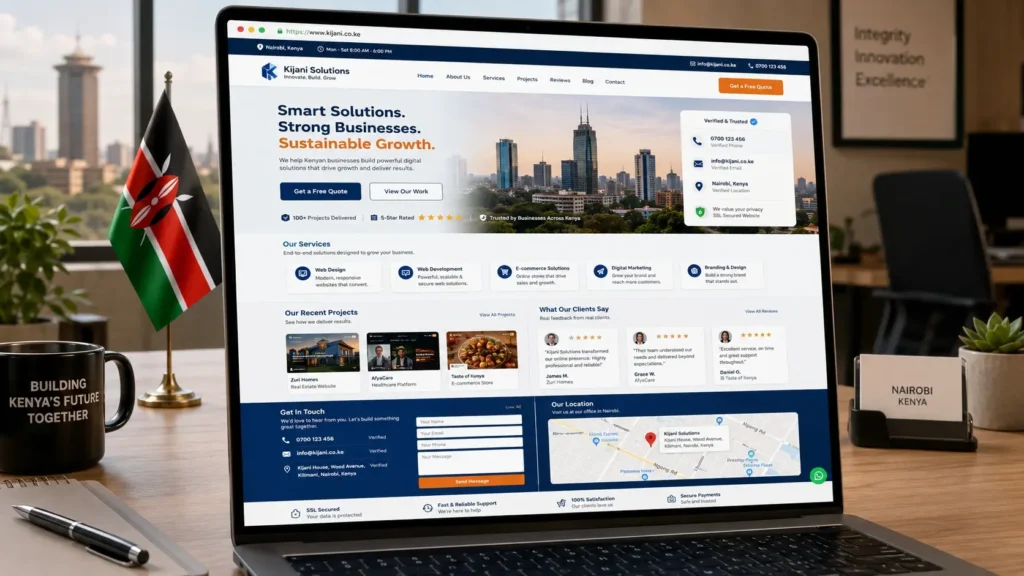
A website gives your business a professional digital home.
Unlike social media, a website allows you to control your message, structure, design, content, and customer journey.
A professional business website can clearly show who you are, what you offer, who you serve, your services, your portfolio, testimonials, contact details, blog articles, FAQs, and calls-to-action.
This makes it easier for visitors to understand your business and take action.
A website also helps your business appear more professional on Google. When someone searches your brand and finds a well-structured website, it creates confidence.
This is why Harun Lucas has already explained why Kenyan businesses still need a website in 2026. You can read more in this related article: Do You Still Need a Website in 2026 in Kenya?
Website vs Social Media: The Main Difference
Website vs social media becomes easier to understand when you look at their roles.
Social media is where people discover and interact with your business.
Your website is where people understand, trust, and take action.
Social media is good for attention. A website is good for structure.
Social media is good for conversations. A website is good for credibility.
Social media is good for quick updates. A website is good for long-term visibility.
Social media is good for engagement. A website is good for conversion.
The best question is not, “Should I use a website or social media?”
The better question is:
How can I use social media to bring people to a website that converts them into customers?
Why a Website Builds More Trust
Trust is one of the biggest challenges for online businesses in Kenya.
Customers often worry about fake pages, scams, poor service, unclear pricing, and unreliable sellers. A professional website helps reduce that doubt.
A good website provides trust signals such as clear business information, professional design, real contact details, service explanations, project samples, client testimonials, FAQs, Google Maps location, and a direct way to request a quote.
When this information is properly arranged, customers feel safer contacting the business.
This is especially important for service-based businesses such as consultants, agencies, web developers, photographers, construction companies, clinics, law firms, training providers, and SMEs.
A social media page may attract attention, but a website helps customers feel that the business is serious.
Why Social Media Still Matters
Website vs social media does not mean websites are important and social media is useless.
Social media still matters.
Many Kenyan customers spend time on Facebook, Instagram, TikTok, WhatsApp, and LinkedIn every day. These platforms help businesses show personality, build community, and remain active in front of their audience.
Social media is useful for daily updates, short videos, customer conversations, promotions, announcements, paid ads, behind-the-scenes content, and brand awareness.
For many small businesses, social media is also a good place to test content.
If people engage with a post about website cost, customer trust, AI websites, SEO, or business automation, that topic can later become a full blog post on the website.
Social media should not replace your website.
It should support your website.
How Websites and Social Media Work Together
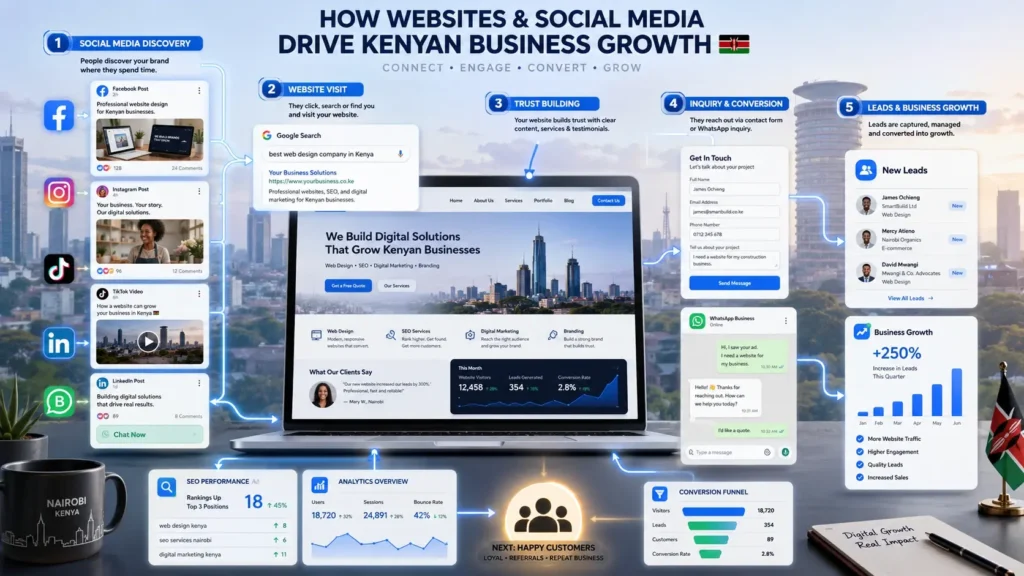
The best digital strategy is not website alone or social media alone.
The best strategy is both.
A business can use social media to attract attention, then use the website to provide full information and convert visitors.
For example, a Facebook post can introduce a service, while the website explains the service in detail.
An Instagram reel can show a project, while the website presents the full case study.
A TikTok video can answer a customer question, while the website turns that answer into an SEO blog.
A WhatsApp status can promote an offer, while the website provides the full package details.
A LinkedIn post can share an idea, while the website hosts the full article.
This creates a better digital flow.
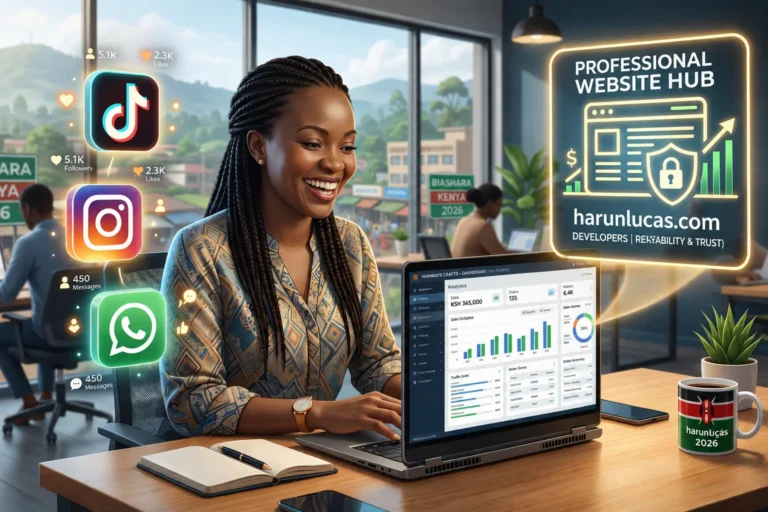
Social media brings people in. The website organizes the information. SEO helps people discover the business through search. WhatsApp or contact forms help convert visitors into leads.
That is how a modern business should use website vs social media in 2026.
Why SEO Makes Websites More Valuable
One major advantage of a website is SEO.
SEO, or Search Engine Optimization, helps your business appear on Google when people search for services.
For example, a customer may search for website developer in Kenya, how much does a website cost in Kenya, SEO services in Kenya, business website for SMEs, AI websites in Kenya, or digital solutions for businesses.
If your website has helpful pages and blog content, it has a better chance of appearing in search results.
Google’s SEO Starter Guide explains that SEO helps search engines understand your content and helps users find your site through search.
This is where websites become more valuable than social media alone.
A well-written blog post can continue attracting visitors for months or even years.
For example, Harun Lucas has already written a useful guide on how much it costs to build a website in Kenya. That kind of article can attract business owners who are already searching for website services.
When Social Media Alone May Be Enough
There are a few cases where social media alone may work temporarily.
A new business testing an idea may start with WhatsApp, Facebook, TikTok, or Instagram before investing in a website.
This may be enough if the business is still small, has a limited audience, or is not yet ready for a full online presence.
However, this should be treated as a starting point, not a permanent strategy.
As the business grows, it needs stronger structure, better trust, search visibility, and a professional platform that customers can visit anytime.
That is where a website becomes necessary.
When a Website Becomes Necessary
A website becomes necessary when a business wants to grow beyond casual social media visibility.
You need a website if customers often ask the same questions, you want to appear on Google, you offer professional services, you need a portfolio, you want to run serious ads, you want to publish blog content, or you want to explain your services clearly.
A website is also important when your business has several services.
For example, if a business offers web development, SEO, automation, software systems, and AI integration, a social media page alone may not explain everything clearly.
A website allows each service to have its own page, structure, and call-to-action.
That makes the customer journey easier.
Why Some Business Websites Still Fail
Having a website is not enough.
A poorly built website can fail just like a weak social media page.
Many business websites fail because they have unclear messaging, slow loading speed, poor mobile experience, weak calls-to-action, poor SEO, generic content, no trust signals, and no clear customer journey.
This is why the question should not only be, “Do I need a website?”
The better question is:
Do I have a website that actually supports business growth?
Harun Lucas has already covered this in detail in the article Why Most Business Websites in Kenya Fail and How to Fix Yours.
The Best Digital Setup for Kenyan Businesses in 2026
The best setup for Kenyan businesses in 2026 is a connected digital system.
A serious business should have a professional website, active social media pages, Google Business Profile, WhatsApp Business, SEO-optimized service pages, helpful blog content, contact forms, analytics tracking, and a clear lead follow-up process.
This setup allows the business to attract customers from different channels.
Some customers will find you on Facebook. Some will search on Google. Some will come from referrals. Some will click from WhatsApp. Some will discover your blog. Some will visit your website after seeing an ad.
A strong website gives all these visitors one reliable place to land.
Website vs Social Media: What Should Come First?
For a new business, social media may come first because it is fast and easy.
But for a serious business, a website should follow as early as possible.
The best approach is to start with social media for visibility, build a simple professional website for credibility, use social media to drive traffic to the website, use blog content to attract Google traffic, and use WhatsApp or contact forms to convert leads.
This creates a system instead of random online activity.
Businesses should avoid depending only on likes, views, and followers. Those numbers are useful, but they do not always mean customers are buying.
A website helps move people from attention to action.
What Kenyan Businesses Actually Need in 2026
Kenyan businesses do not only need a website.
They also do not only need social media.
They need a clear digital strategy.
That strategy should answer important questions.
Where do customers discover the business? Where do they learn more? Where do they build trust? Where do they ask questions? Where do they make decisions? Where do they take action?
Social media can handle discovery and engagement.
A website can handle trust, structure, SEO, and conversion.
Together, they create a stronger digital presence.
That is the real answer to website vs social media for Kenyan businesses in 2026.
Final Thoughts
Website vs social media should not be treated as a battle.
Both are important.
Social media helps your business stay visible, active, and connected to people. A website helps your business look professional, build trust, appear on Google, explain services clearly, and convert visitors into customers.
If your business only uses social media, you may be visible but not fully trusted.
If your business only has a website but no social media activity, you may look professional but miss daily engagement.
The strongest businesses use both.
A website gives your brand a home. Social media brings people to the door. A smart digital strategy turns visitors into customers.
Ready to Build a Stronger Online Presence?
If your business depends only on social media, it may be time to build a professional website that supports real growth.
Harun Lucas helps Kenyan businesses create modern, strategic, and scalable digital solutions through web development, SEO, software systems, automation, and digital strategy.
Whether you need a business website, portfolio website, SEO support, or smarter digital system, the goal is simple: to build an online presence that attracts trust and supports business growth.
Visit harunlucas.com to explore digital solutions built for the future.
Frequently Asked Questions
Yes. Social media is useful for visibility, but a website gives your business a professional online home that you fully control. It helps customers find your services, understand your brand, contact you easily, and trust your business.
Social media can help a business attract attention, but it may not be enough for long-term growth. A business website helps organize your services, pricing, portfolio, testimonials, contact details, and blog content in one professional place.
A website is a digital platform owned by your business, while social media pages depend on third-party platforms like Facebook, Instagram, LinkedIn, or TikTok. With a website, you control the content, structure, SEO, branding, and customer journey.
Yes. The best approach is to use both. Social media can attract attention, while your website converts visitors into serious leads or customers. For example, a Facebook post can direct people to your service page, portfolio, blog, or contact form.
A website makes a business look more professional and established. Customers can check your services, past work, location, contact details, and useful information before deciding to reach out.