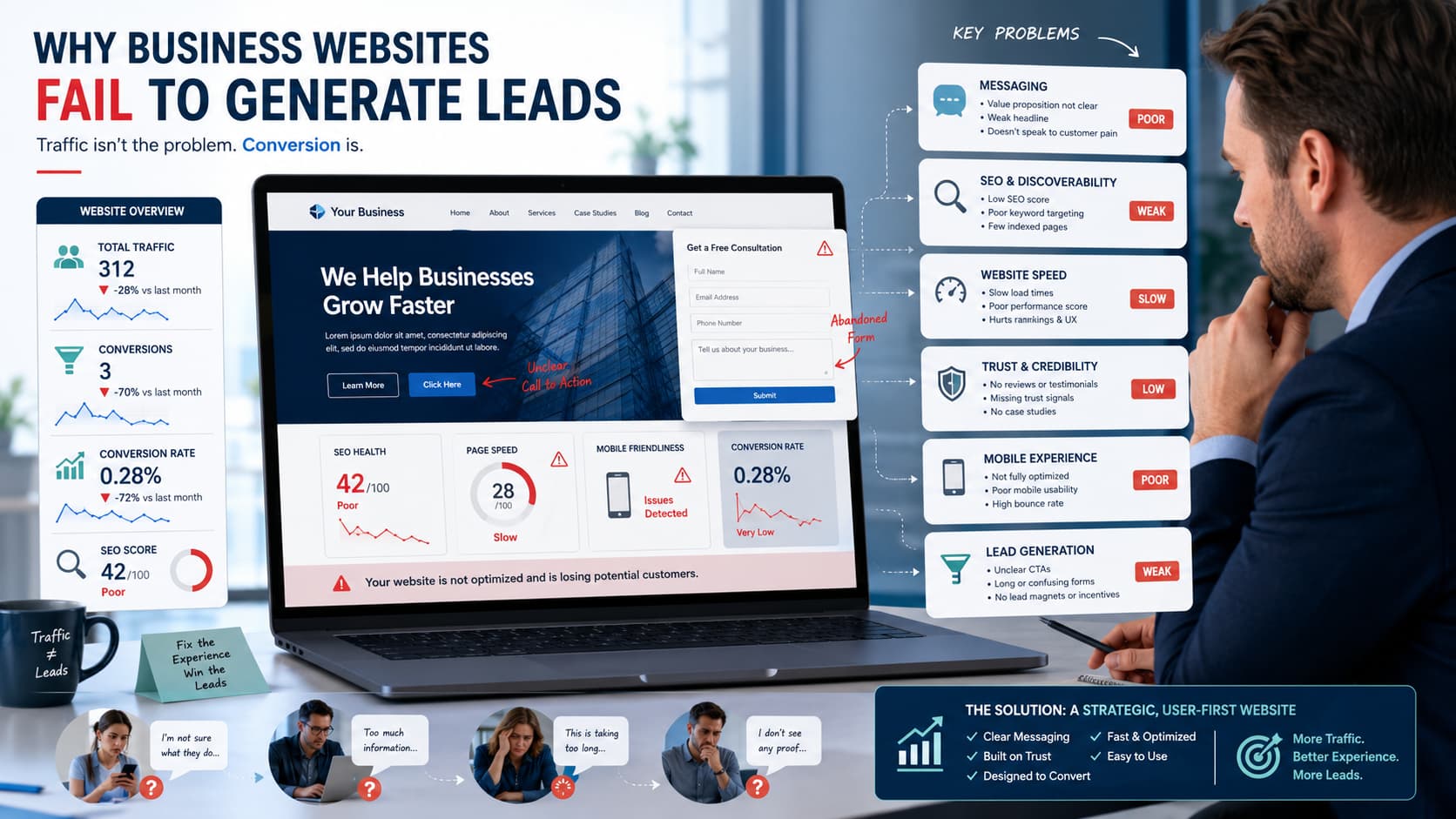
Many business websites fail to generate leads because they are built to look good, not to guide visitors toward action. A website may have attractive colors, nice images, and modern sections, but if it does not explain the business clearly or make it easy for people to take the next step, it will not bring results.
A business website should do more than exist online.
It should attract the right visitors, build trust, answer key questions, and encourage people to contact you, request a quote, book a service, or make an inquiry.
However, many websites miss this goal because they are built without strategy, SEO, clear messaging, or proper conversion planning.
Why Business Websites Fail to Generate Leads
One major reason business websites fail is that many owners treat the website as a digital poster. They focus on appearance but forget user journey, content, search visibility, page speed, and trust.
A visitor arrives on the website with a question in mind.
They want to know what you offer, whether you can solve their problem, why they should trust you, and what they should do next.
If your website does not answer these questions quickly, the visitor may leave.
In simple terms, a lead-generating website must be clear, helpful, fast, trustworthy, and easy to use.
For better planning, you can also read this guide on business website strategy.
The Website Has No Clear Message
A weak message is one of the biggest reasons websites fail.
When visitors land on your homepage, they should immediately understand who you help, what you do, and why it matters.
For example, saying “We provide innovative solutions” is too general. It does not explain the exact problem you solve.
A stronger message would be:
“We build professional websites, SEO systems, and digital platforms that help businesses attract customers and grow online.”
That statement is clearer because it explains the service, audience, and benefit.
Your website message should not force visitors to guess.
If people cannot understand your value within a few seconds, they may move to another provider.
The Website Looks Good but Has No Strategy
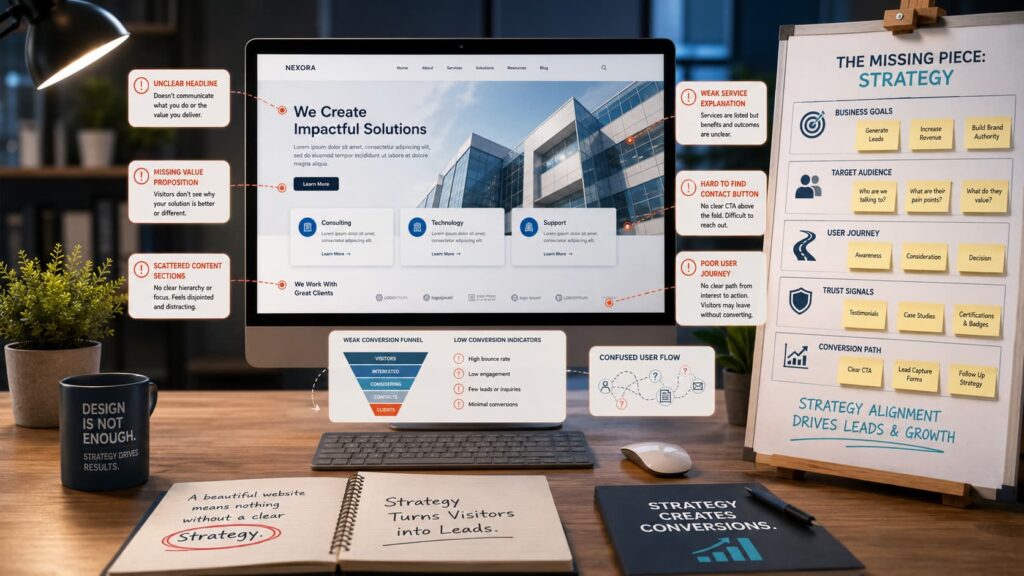
A beautiful website can still fail if it does not have a clear strategy.
Good design is important. However, design should support business goals.
A lead-focused website needs planned sections, strong service pages, clear calls-to-action, trust signals, internal links, and content that answers customer questions.
For example, a service page should not only say what the business offers. It should explain the problem, the solution, benefits, process, proof, and next step.
Without this structure, the website may look professional but still fail to convert visitors into leads.
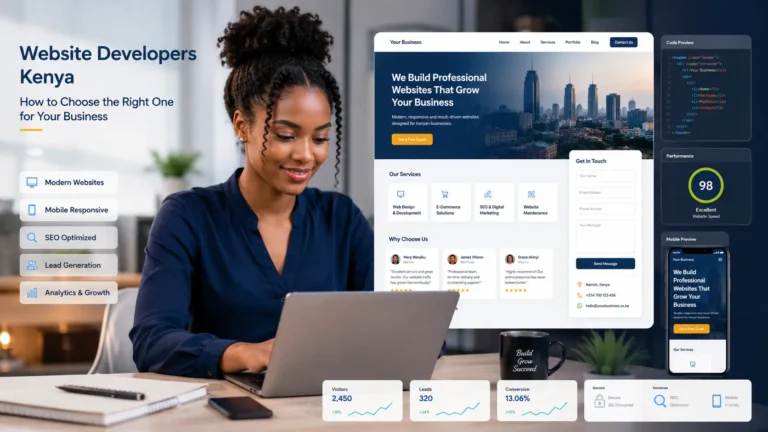
This is why working with skilled website developers matters. A good developer should understand not only design, but also business goals, SEO, user experience, and conversion.
Poor SEO Limits Website Visibility
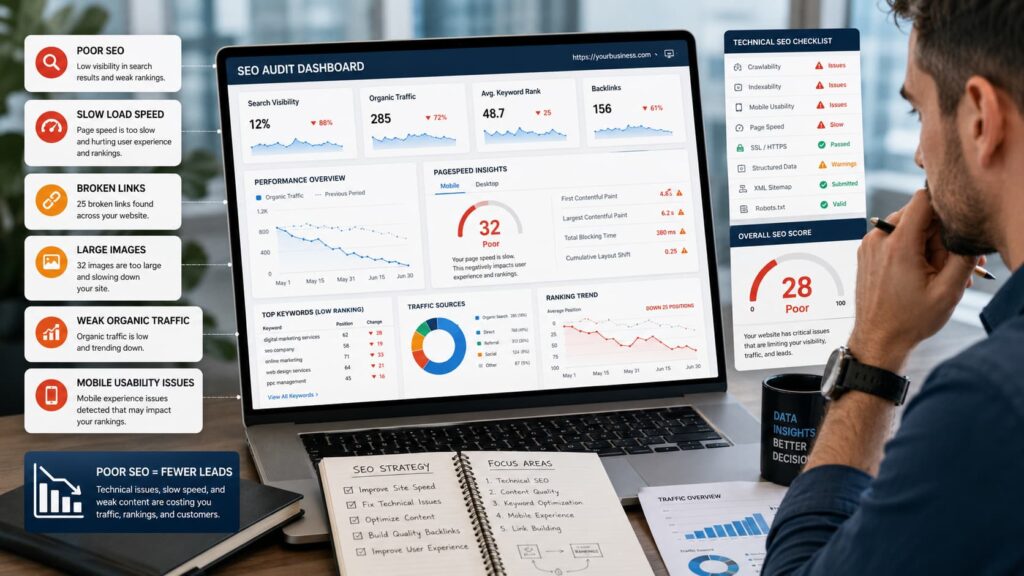
Many websites fail because people cannot find them on Google.
A website may be well designed, but if it has weak SEO, it will struggle to attract organic traffic.
SEO helps search engines understand your pages and show them to users searching for relevant services. Google Search Central explains that SEO can help search engines crawl, index, and understand website content more effectively. You can learn more from the official Google SEO Starter Guide.
Strong SEO includes keyword research, optimized page titles, helpful content, internal links, mobile usability, good page structure, and fast loading speed.
For example, a business offering web development should have pages and blogs that answer common search questions. These may include website cost, SEO services, website strategy, WordPress vs custom websites, and how to improve online visibility.
If your website does not target what customers are searching for, it may remain invisible.
You can also explore SEO services to understand how search visibility supports business growth.
Slow Loading Speed Pushes Visitors Away
Another reason websites fail is poor loading speed.
Visitors are impatient. If your website takes too long to load, they may leave before reading your content or submitting a form.
A slow website can also affect user experience and search performance.
Large images, weak hosting, too many plugins, poor coding, and heavy page builders can all slow down a site.
You can test your website speed using Google PageSpeed Insights. This tool helps identify performance issues that may affect users.
A fast website creates a better experience. As a result, visitors are more likely to stay, read, trust your business, and take action.
The Website Has Weak Calls-to-Action
A call-to-action, also known as a CTA, tells visitors what to do next.
Many business websites fail because they do not guide users clearly.
Some websites hide the contact button. Others use weak CTAs such as “Submit” or “Learn More” without context.
A stronger CTA is specific and action-focused.
For example:
“Request a Website Consultation”
“Get a Free Project Quote”
“Book a Digital Strategy Call”
“Talk to Harun Lucas”
These CTAs tell visitors what action they are taking and what outcome to expect.
In addition, CTAs should appear naturally across the website. They should be visible on the homepage, service pages, blog posts, contact page, and landing pages.
The Website Does Not Build Trust
People do not easily contact businesses they do not trust.
A website should include trust signals that help visitors feel confident.
These may include testimonials, project examples, case studies, client logos, certifications, clear contact details, professional images, FAQs, and helpful blog content.
For example, a web development business can show previous projects, explain its process, and share useful guides about websites, SEO, and digital growth.
A visitor who sees proof and helpful content is more likely to believe that the business understands their needs.
Without trust signals, the website may feel incomplete or risky.
The Website Is Not Mobile-Friendly
Many people browse websites using mobile phones. Because of this, a business website must work well on smaller screens.
If text is too small, buttons are hard to tap, images are poorly arranged, or forms are difficult to complete, visitors may leave.
Google also provides guidance on making websites mobile-friendly and easy for users to access across devices. You can review the official Google mobile-friendly guidance.
A mobile-friendly website should have readable text, fast loading speed, clear navigation, simple forms, and easy contact options.
For businesses, this is especially important because many leads come from mobile users who want quick answers.
The Website Has Poor Content
Some websites fail because they have very little useful content.
A few short sentences on the homepage are not enough to convince serious customers.
Visitors need answers.
They want to know what services you offer, how your process works, what problems you solve, what makes you different, and how they can work with you.
Helpful content also supports SEO.
For example, blog posts can answer customer questions and attract people from search engines. Service pages can explain solutions in detail. FAQs can remove doubts before a visitor contacts you.
You can read this related article on website vs social media to understand why a website should act as a strong content and conversion platform, not just an online profile.
The Website Does Not Track Results
A website that does not track performance is difficult to improve.
Many businesses do not know how many people visit their site, which pages they view, where traffic comes from, or why users leave.
Because of this, they make decisions based on guesswork.
Tools like Google Analytics can help businesses understand visitor behavior, traffic sources, page performance, and conversions. You can learn more from the official Google Analytics platform.
Tracking helps you know what is working and what needs improvement.
For example, if many people visit your services page but do not contact you, the page may need a better CTA, stronger proof, clearer pricing guidance, or a simpler contact form.
The Contact Process Is Too Complicated
A visitor may be interested, but if contacting the business is difficult, the lead can be lost.
Some websites have long forms, broken buttons, hidden phone numbers, or contact pages that load slowly.
Others do not include WhatsApp, email links, booking options, or clear inquiry steps.
A good contact process should be simple.
Visitors should easily know how to reach you, what information to provide, and what will happen next.
For example, a web development business can use a short inquiry form asking for name, email, project type, budget range, and project goal.
This makes the process easier for both the visitor and the business.
Common Website Mistakes That Reduce Leads
Several small mistakes can make a website less effective.
These include unclear headlines, weak service descriptions, slow pages, poor navigation, missing CTAs, outdated content, bad mobile layout, broken links, low-quality images, and no SEO structure.
Another mistake is copying competitor websites without understanding your own business goals.
Your website should reflect your brand, audience, services, process, and value.
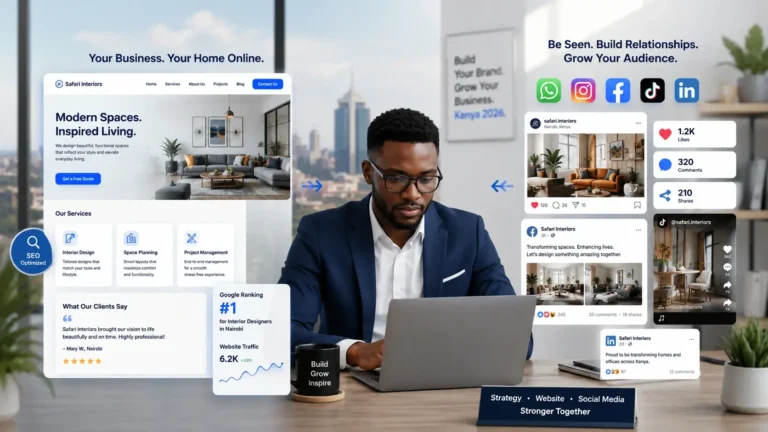
In addition, many businesses use social media as their main digital presence and ignore their website. Social media is useful, but it does not replace a professional website that you control.
How to Fix a Website That Is Not Generating Leads
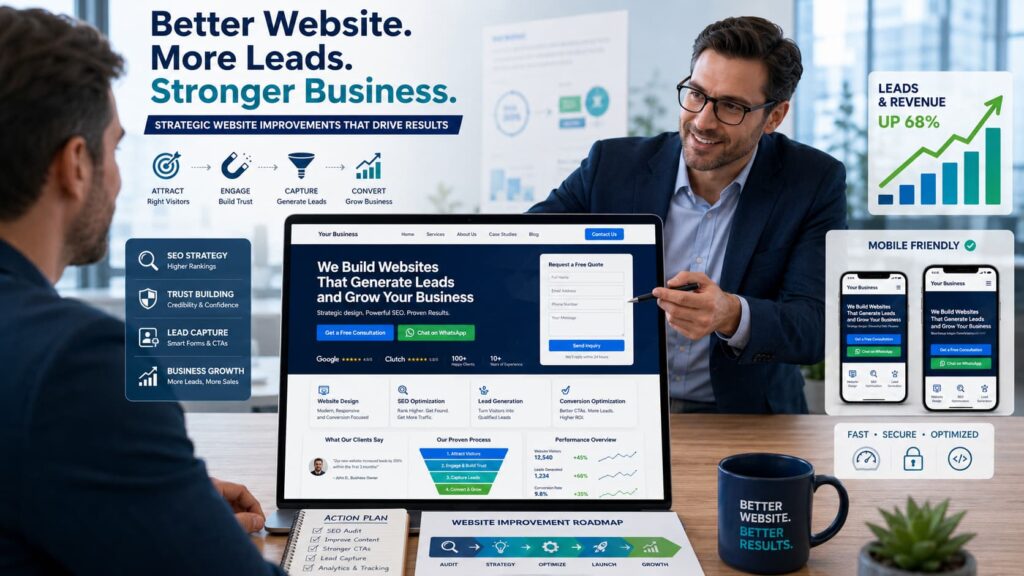
Start by reviewing your homepage.
Does it clearly explain what you offer and who you help?
Next, review your service pages. Each service should have its own page with a clear explanation, benefits, process, FAQs, and CTA.
After that, improve your SEO. Choose the right keywords, write helpful content, add internal links, optimize meta titles, and improve page structure.
Then, check your website speed and mobile experience. Compress images, remove unnecessary plugins, improve hosting, and simplify heavy sections.
In addition, strengthen trust. Add project examples, testimonials, professional images, certifications, and clear contact details.
Finally, make the contact process simple. Use clear buttons, short forms, WhatsApp links, email links, and direct CTAs.
A website does not need to be perfect before it generates leads. However, it must be clear, useful, trustworthy, and easy to act on.
How Harun Lucas Helps Businesses Build Lead-Generating Websites
Harun Lucas helps businesses create professional websites that go beyond appearance.
The goal is to build websites that support visibility, trust, user experience, SEO, and business growth.
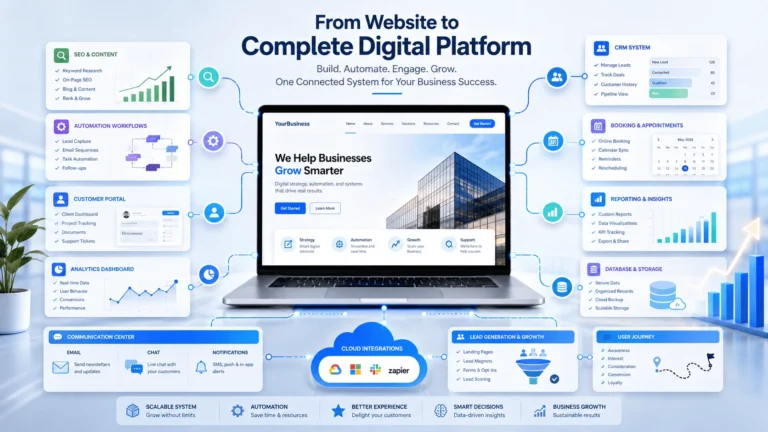
This may include website development, SEO-ready pages, content strategy, automation workflows, custom systems, digital strategy, and scalable online solutions.
For example, a business may need a WordPress website with strong SEO pages. Another may need a custom digital platform with forms, dashboards, automation, and CRM integration.
The right solution depends on the business goal.
If your current website is not generating leads, it may not need a full rebuild immediately. Sometimes, it needs better messaging, stronger SEO, improved CTAs, faster loading, and a clearer user journey.
Final Thoughts
Most business websites fail to generate leads because they are not planned as business tools.
They may look good, but they do not guide visitors, build trust, answer questions, or make action easy.
A successful website should attract the right people, explain your value clearly, support SEO, load fast, work well on mobile, and encourage visitors to contact you.
Finally, remember that a website is not just something your business owns. It is something your business should use to grow.
Work With Harun Lucas
If your website is online but not bringing leads, it is time to improve the strategy behind it.
Harun Lucas can help you build or upgrade a professional website that supports SEO, lead generation, automation, and long-term digital growth.
Visit Harun Lucas to explore web development and digital solutions for your business.
Frequently Asked Questions
Most business websites fail because they have unclear messaging, weak SEO, slow speed, poor mobile experience, missing CTAs, and little trust-building content.
You can generate more leads by improving your homepage message, creating strong service pages, adding clear CTAs, improving SEO, speeding up your site, and making it easy for visitors to contact you.
Yes. Website design affects trust, navigation, readability, and user experience. However, design must work together with strategy, SEO, content, and conversion planning.
SEO helps your website appear when people search for your services. Without SEO, your website may not attract enough visitors to generate consistent leads.
Yes. A small business website can generate leads if it is clear, fast, mobile-friendly, SEO-ready, and focused on solving customer problems.