Building a Kenyan tech personal brand is one of the best ways to stand out in today’s digital economy. Skills matter, but people also need to understand who you are, what you do, and the problems you can solve.
Many Kenyan tech professionals are talented. Some build websites, design systems, work with data, create digital tools, use AI, or solve real business problems through technology. However, one challenge remains: people do not always know what they can do.
That is where personal branding comes in.
Through personal branding, people can understand your skills, your work, your values, and the results you can deliver. As a result, you become easier to remember, trust, and recommend.
For Kenyan tech professionals, this is becoming more important because employers, businesses, and clients now search for talent online. According to DataReportal’s Digital 2026 Kenya report, Kenya had 23.4 million internet users in October 2025. Therefore, digital visibility is now important for professionals and businesses in Kenya.
Whether you are a software developer, engineer, designer, researcher, technology educator, digital creator, or AI enthusiast, your online presence can become one of your strongest career assets. You can also explore how Harun Lucas connects engineering systems, software development, and technology education through practical digital solutions.
What Is a Personal Brand?
A personal brand is the professional image people associate with you. For a Kenyan tech professional, it should clearly show your skills, projects, values, and the problems you solve.
It answers simple but important questions:
- What do you do?
- What problems do you solve?
- What skills are you known for?
- What kind of work can people trust you with?
- What makes you different from others in your field?
Your brand may be built around web development, software development, AI integration, engineering systems, automation, data analysis, technical education, cybersecurity, or digital transformation.
However, a strong personal brand does not mean pretending to be someone you are not. It means presenting your real skills, experience, projects, and ideas in a clear and professional way.
In short, people should not struggle to understand what you do. Your brand should make your value easy to see.
Why a Kenyan Tech Personal Brand Matters
Kenya’s tech space is growing fast. More people are learning coding, design, digital marketing, AI tools, cybersecurity, data analysis, and other technology skills.
This growth is good. However, it also means competition is increasing.
A strong personal brand can help you:
- Attract job opportunities
- Get freelance clients
- Build trust with employers
- Showcase your projects
- Grow your professional network
- Position yourself as an expert
- Create long-term career visibility
As a result, many opportunities today begin online. Someone may discover your work through Google, LinkedIn, your portfolio website, GitHub, a blog post, or a shared project.
Therefore, if your online presence is weak or unclear, you may miss opportunities even when you have the right skills.
Personal branding should not be treated as decoration. Instead, it should be part of your career strategy.
Start With a Clear Professional Identity
Before creating content or designing a portfolio website, start by defining what you want to be known for.
Avoid trying to be everything at once. Instead, choose a clear professional direction.
For example, you can position yourself in one of these ways:
- “I build business websites and digital systems for SMEs.”
- “I help organizations use AI and digital tools to improve efficiency.”
- “I design automation solutions using software and engineering systems.”
- “I create content around technical education and digital innovation.”
- “I build scalable software platforms that solve real-world problems.”
A clear identity helps people understand you quickly.
Harun Lucas’ own brand is a good example of this type of positioning. His work connects engineering systems, software development, technology education, and innovation. Because of this clarity, visitors can quickly understand what he does and the kind of value he brings.
That matters because people do not want to guess what you do.
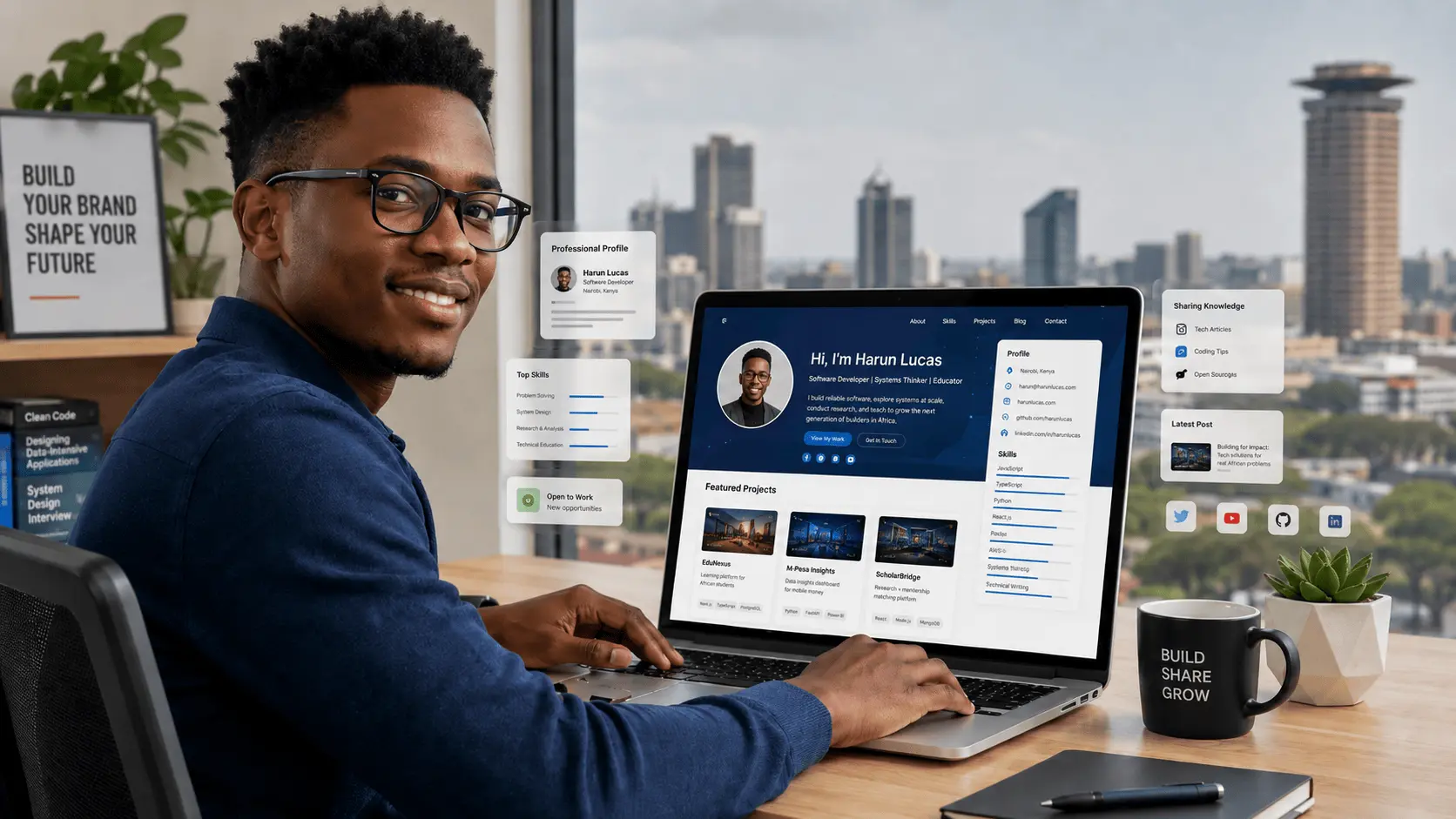
Build a Professional Portfolio Website
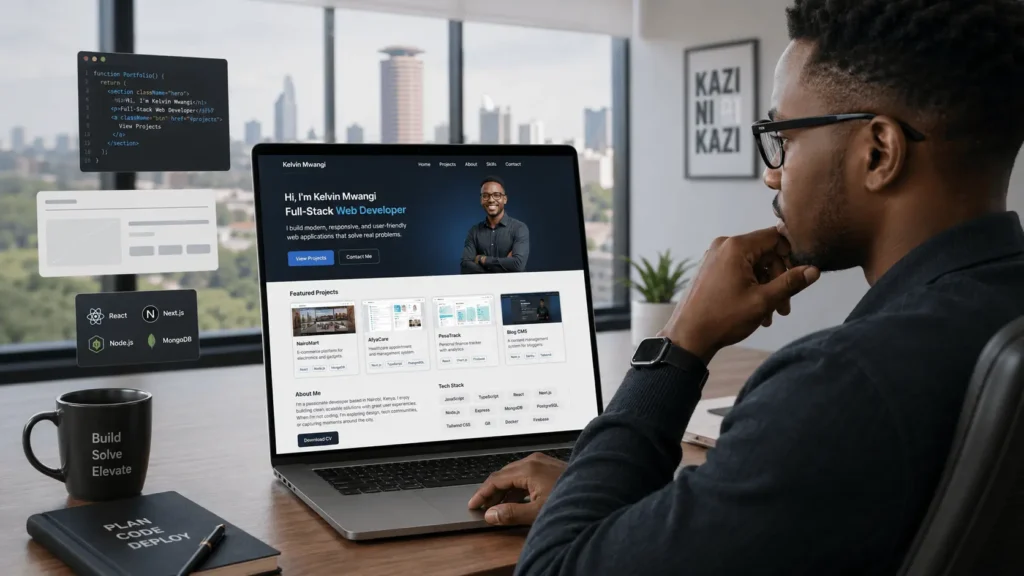
Social media platforms are useful, but they are not fully yours. A website gives you a professional home where people can learn about you, view your work, read your ideas, and contact you directly.
A good portfolio website should include:
- Your name and professional title
- A clear hero section
- Your services or areas of expertise
- Selected projects
- A short About section
- Blog articles
- Testimonials, if available
- A contact section
For a tech professional, a website should not only look beautiful. More importantly, it should prove your thinking, your skills, and your ability to solve problems.
Instead of only saying, “I am a software developer,” show what you have built. Explain the tools you used, the problem you solved, and the results created.
For example, you can show projects such as:
- “I built a business website that helped a client improve online visibility.”
- “I created a digital safety reporting system where workers can report hazards online.”
- “I designed an AI-assisted chatbot to help website visitors get quick answers.”
- “I developed a dashboard to help a business track leads and performance.”
A strong portfolio gives people proof of what you can do.
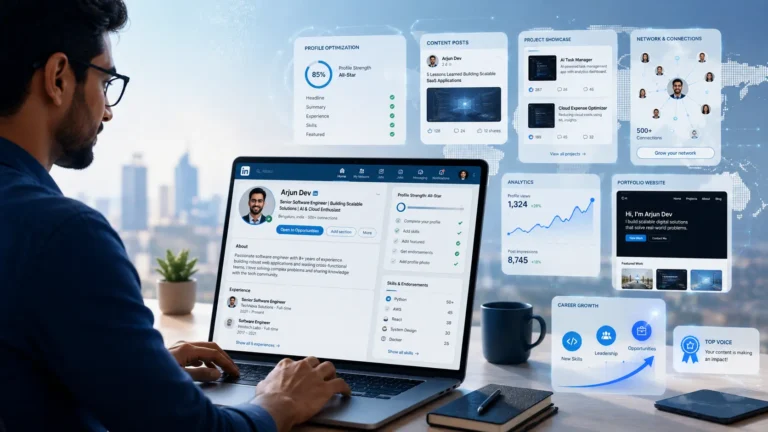
Optimize Your LinkedIn Profile
LinkedIn is one of the most important platforms for professional visibility.
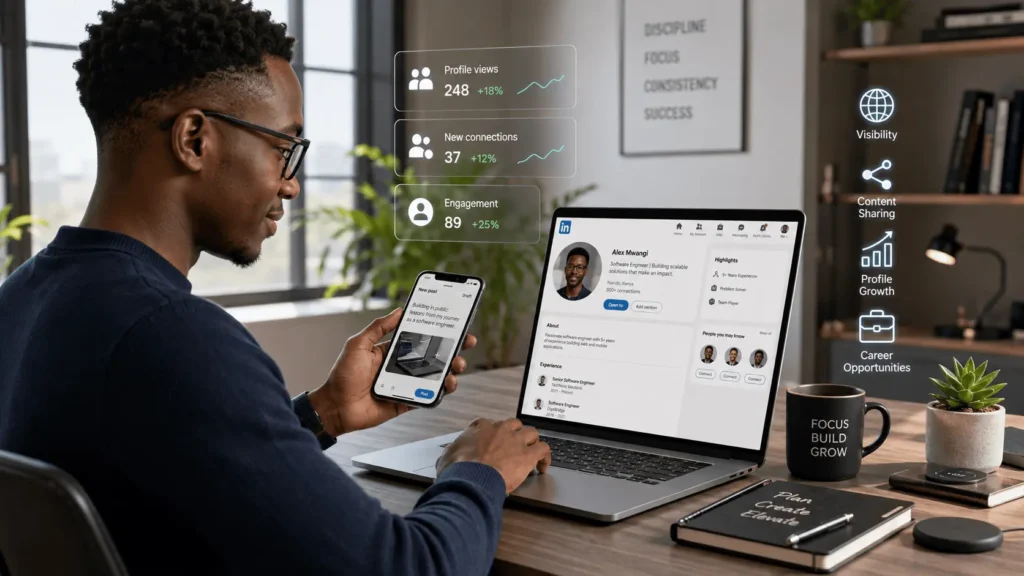
A strong profile should clearly explain who you are, what you do, and the value you offer. Instead of reading like a random CV, it should position you professionally.
Start by improving these areas:
- Use a clear and professional profile photo.
- Write a headline that explains your expertise, not only your job title.
- Use the About section to tell your professional story in a simple way.
- Highlight achievements and projects in your experience section.
- Add your portfolio, articles, best posts, or project links in the Featured section.
Instead of writing:
Software Developer
You can write:
Software Developer | Web Systems | AI Integration | Building Smart Digital Solutions for Businesses
This gives people a clearer reason to connect with you. In addition, it helps visitors understand your value within a few seconds.
Share What You Know Through Content
Content creation is one of the best ways to build authority.
You do not need to post every day. However, you should share helpful ideas consistently. The goal is not to look perfect. Instead, the goal is to show your thinking, your experience, and your ability to solve problems.
As a Kenyan tech professional, you can create content around:
- Lessons from your projects
- Web development tips
- AI tools for business
- Software development mistakes
- Portfolio building
- Digital transformation in Kenya
- Automation ideas
- Career lessons
- Beginner-friendly tech education
For example, a web developer can write posts such as:
- “Why most business websites fail to generate leads.”
- “How AI chatbots can help small businesses respond faster.”
- “What every Kenyan business should know before building a website.”
- “How to prepare your portfolio before applying for tech jobs.”
These topics show expertise while attracting the right audience.
However, avoid posting content that sounds too generic or copied. Many people are now using AI to create content, but the best content still needs your real experience, examples, opinions, and local context.
AI can help you write better. Still, your voice should remain human.
Show Projects, Not Just Skills
In tech, people trust what they can see.
Listing skills such as HTML, CSS, JavaScript, Python, WordPress, React, SEO, or AI tools is useful. However, it is more powerful to show how you use those skills to solve real problems.
A good project case study should include:
- The problem
- Your role
- The tools used
- The process
- The final solution
- The impact
For example, you can show projects such as:
- “I built a website for a small business to improve visibility and customer inquiries.”
- “I developed a digital safety reporting system where workers can report hazards online.”
- “I created an AI-powered chatbot to help users get instant answers.”
- “I designed a performance dashboard to help a business track website leads.”
As a result, your skills become more practical and believable.
Projects are especially important for students, interns, junior developers, self-taught professionals, and early-career tech professionals who may not yet have many years of experience.
In many cases, your projects can speak for you before you even enter the interview room.
Choose a Niche, But Stay Flexible
A niche helps people remember you.
Instead of branding yourself only as a “tech professional,” you can become known for a specific area such as:
- Web development for Kenyan SMEs
- AI integration for small businesses
- Engineering and automation systems
- Digital safety systems
- SEO-focused websites
- Technical education content
- Software solutions for business operations
However, a niche does not limit you. It simply gives people a clear reason to remember you.
As you grow, your brand can expand naturally. For example, someone may start with web development, then grow into SEO, automation, AI integration, and digital strategy.
That is okay.
The important thing is to make the connection clear so your audience understands your journey. Your brand should grow with you, not confuse people.
Build Trust Through Consistency
Personal branding is not built in one day. It grows through consistency.
Consistency means using the same professional message across your website, LinkedIn, CV, GitHub, social media profiles, and email signature.
Your name, title, tone, colors, profile photo, and core message should feel connected.
For example, if your website says you are a software developer, your LinkedIn says you are a digital marketer, and your CV says you are a general IT assistant, people may become confused.
Although your brand does not have to look exactly the same everywhere, your professional identity should still be clear.
People should be able to move from your LinkedIn to your website and still feel like they are dealing with the same person.
Network With Purpose
A powerful personal brand is not only about being seen. It is also about building meaningful relationships.

Networking can help you meet employers, mentors, collaborators, clients, and other professionals in your industry.
You can network by:
- Commenting thoughtfully on LinkedIn posts
- Joining tech communities
- Attending local tech events
- Contributing to open-source projects
- Collaborating with other creators
- Sharing your work publicly
- Reaching out professionally to people in your field
When networking, however, avoid only asking for jobs or favors.
Instead, focus on learning, contributing, and building genuine relationships. A simple comment, helpful reply, shared resource, or professional message can open doors over time.
A good personal brand attracts people, but good relationships create long-term opportunities.
Use Blogging to Build Authority
Blogging is one of the most underrated personal branding tools for tech professionals.
It gives you space to explain your ideas in depth. In addition, it helps people find you through search engines when your content answers real questions.
For example, a Kenyan tech professional can write blog posts such as:
- How AI Is Changing Business Websites in Kenya
- How Much Does It Cost to Build a Website in Kenya?
- Why Every Tech Professional Needs a Portfolio Website
- How to Use SEO to Grow a Business Website
- How Systems Thinking Improves Software Development
- How to Build a Digital Safety Reporting System
These topics educate your audience and show your expertise.
If you are building a website for your personal brand, your blog can become a strong SEO asset over time. Also, a good blog gives you content to share on LinkedIn, WhatsApp, email newsletters, and other platforms.
Create a Personal Brand Statement
A personal brand statement is a short sentence that explains who you are and what you do.
It should be simple, clear, and memorable.
Here are a few examples:
- “I build smart websites and digital systems that help Kenyan businesses grow online.”
- “I help businesses use software, AI, and automation to improve efficiency.”
- “I design technology solutions that connect engineering systems, software development, and digital innovation.”
- “I create practical digital platforms that solve real-world business and learning problems.”
Your personal brand statement can appear on your website hero section, LinkedIn headline, CV summary, proposal documents, and email signature.
The best statement is not the most complicated one. Instead, it is the one people can understand quickly.
Avoid Common Personal Branding Mistakes
Many tech professionals struggle with personal branding because of simple mistakes.
One common mistake is being too general. For example, saying “I am passionate about technology” does not clearly show what you can do.
A better statement would be: “I build websites and digital tools that help small businesses improve their online presence.”
Another common issue is hiding your work. If you build projects but never publish them, people cannot discover your skills.
In addition, some professionals copy other people’s brand voice too much. Inspiration is okay, but your brand should still sound like you.
Finally, avoid focusing only on appearance. A beautiful portfolio website is good. However, it also needs strong content, clear services, real projects, and a simple way for people to contact you.
A strong personal brand is not just about design. It is about clarity, trust, value, and proof.
How to Start Building Your Brand Today
You do not need to have everything perfect before you start. Instead, begin with simple steps:
- Define what you want to be known for.
- Update your LinkedIn headline and About section.
- Create or improve your portfolio website.
- Publish at least three strong projects.
- Share useful content every week.
- Write blog posts around your area of expertise.
- Connect with people in your field.
Over time, these small actions can build a powerful brand. Most importantly, start showing your work.
The Future of Personal Branding in Kenya’s Tech Space
As Kenya’s digital economy continues to grow, tech professionals who are visible, credible, and clear about their value will have an advantage.
Employers, clients, collaborators, and communities are increasingly discovering talent online. Therefore, a strong personal brand makes it easier for the right people to find you.
However, the future belongs to professionals who combine skill with communication.
It is not enough to know how to build. You must also know how to explain what you build, why it matters, and who it helps.
For Kenyan tech professionals, this is a major opportunity.
A strong personal brand can help you move from being just another skilled person to becoming a trusted professional with a clear voice, visible work, and strong career direction.
Final Thoughts
Building a personal brand as a Kenyan tech professional is not about showing off. It is about making your value visible.
Your brand should communicate your skills, your projects, your thinking, and your ability to solve real problems.
Start with clarity. Build a professional portfolio. Optimize your LinkedIn profile. Share useful content. Show your projects. Network with purpose. Keep improving.
The more clearly people understand what you do and the problems you solve, the easier it becomes for the right opportunities to find you.
A strong Kenyan tech personal brand helps you present your skills clearly, build trust online, and attract the right opportunities.
Ready to Build a Stronger Tech Brand?
A powerful personal brand begins with a clear digital presence.
Harun Lucas helps professionals and businesses build modern, strategic, and scalable digital platforms through web development, software systems, AI integration, SEO, and technology education.
Whether you need a portfolio website, a business website, or a smarter digital system, the goal is simple: to create a platform that communicates your value and supports long-term growth.
Visit Harun Lucas’ website to explore his work, read more blog articles, or contact him for a portfolio website, business website, or smarter digital system.
Frequently Asked Questions
A personal brand is the professional image people associate with you. It shows what you do, the skills you are known for, the problems you solve, and the value you offer.
Personal branding helps tech professionals stand out, attract opportunities, build trust, showcase projects, and grow their professional network. In a competitive digital space, people need to clearly understand what you do and why they should trust your work.
Yes. A portfolio website gives you one professional place to showcase your skills, projects, blog posts, services, testimonials, and contact details. It also helps people find you through Google.
Include your name, professional title, short introduction, skills, projects, services, blog articles, testimonials if available, and a clear contact section.
LinkedIn is important, but it should not fully replace your website. LinkedIn helps with networking, while your website gives you more control over your brand, content, design, and search visibility.
Blogging helps you explain your ideas, show expertise, improve SEO, and create content that can be shared on LinkedIn, WhatsApp, Facebook, or email. Harun Lucas’ blog highlights blogging as a useful authority-building tool for Kenyan tech professionals.