Equipment reliability is becoming more important as businesses depend on machines, systems, vehicles, utilities, and production equipment to keep operations running. When equipment fails without warning, the impact can affect productivity, safety, service delivery, customer trust, and operating costs.
For many years, businesses relied mainly on reactive maintenance and preventive maintenance. Reactive maintenance means fixing equipment after it fails. Preventive maintenance means servicing equipment at planned intervals. Both approaches still have value. However, modern businesses now need smarter ways to manage assets.
This is where predictive maintenance becomes important.
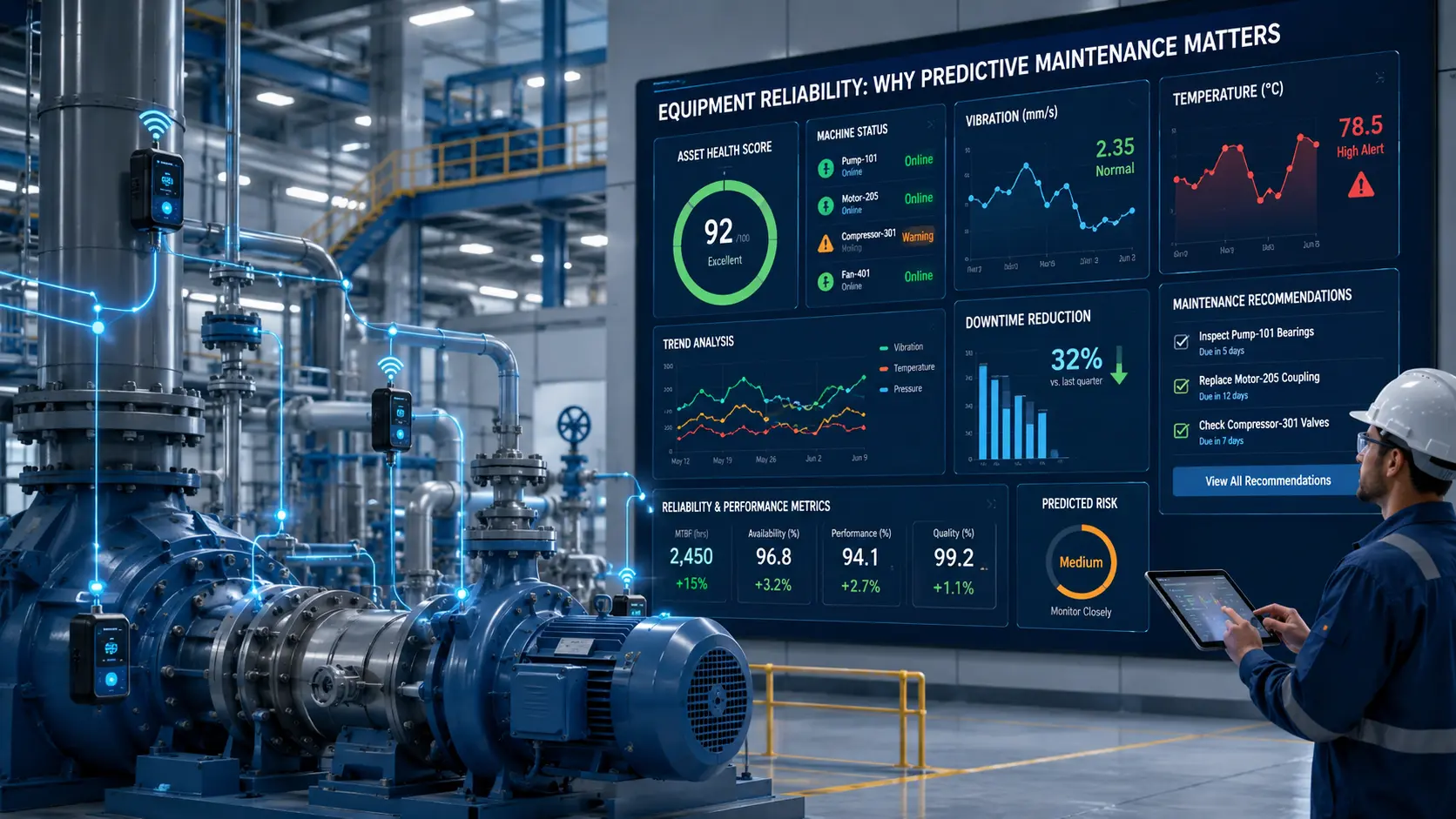
Predictive maintenance uses data, sensors, monitoring tools, and analytics to detect early warning signs before equipment fails. Instead of asking only, “When was the last service?” it asks, “What is the current condition of this equipment, and what is likely to happen next?”
In simple terms, predictive maintenance helps businesses move from emergency repairs to better planning. As a result, maintenance becomes more strategic, more accurate, and more connected to business performance.
What Is Predictive Maintenance?
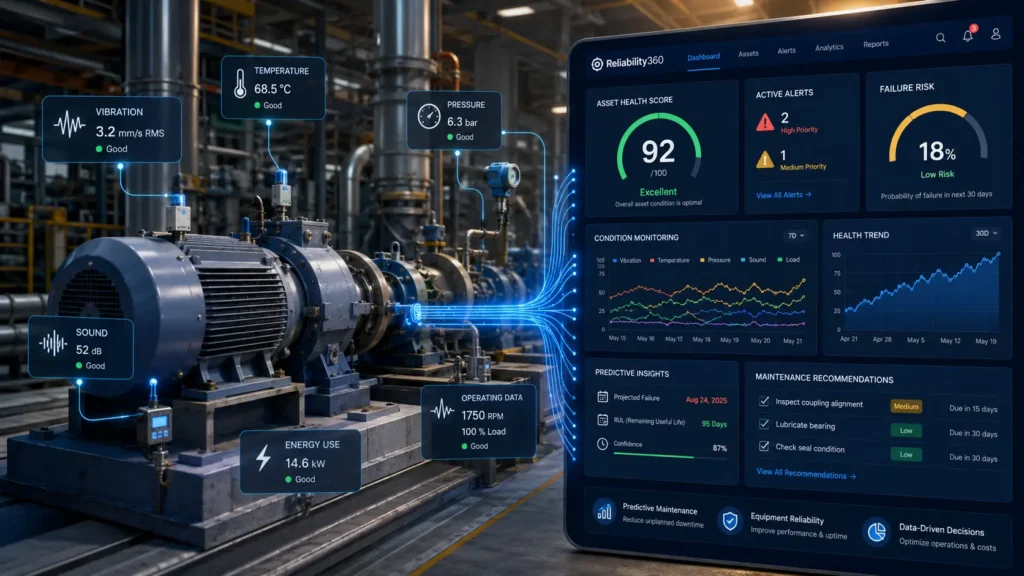
Predictive maintenance is a maintenance approach that uses equipment data to predict when a machine or system may need attention.
Instead of waiting for equipment to fail or following only a fixed maintenance schedule, the business monitors the actual condition of the equipment. If the data shows unusual behavior, the maintenance team can act before the problem becomes serious.
This approach may involve vibration monitoring, temperature monitoring, oil analysis, pressure monitoring, sound monitoring, energy tracking, IoT sensors, machine learning, and maintenance history analysis.
For example, a motor may start vibrating more than usual before a bearing fails. A pump may show pressure changes before performance drops. A machine may overheat before a major breakdown happens.
According to IBM’s guide on predictive maintenance, this method uses operational data and real-time condition monitoring to help organizations predict when assets need maintenance.
Because of this, predictive maintenance supports better equipment reliability by helping businesses detect problems before they become costly failures.
Why Equipment Reliability Matters in Modern Business
Equipment reliability matters because every business needs stable systems to operate well.
When machines fail suddenly, the business may experience production delays, emergency repairs, customer complaints, safety risks, and financial losses. In some industries, even a short period of downtime can be expensive.
For example, a factory may lose production time if a key machine stops. A logistics company may delay deliveries if vehicles break down. A hospital may face serious risks if critical support systems fail. Similarly, a service business may lose customer trust when its systems are unreliable.
This is why businesses are paying more attention to smarter maintenance systems.
The AWS predictive maintenance guide explains that predictive maintenance helps organizations estimate and plan maintenance schedules for operational equipment. Therefore, it supports better planning, asset performance, and equipment lifespan.
In other words, maintenance is no longer just a technical activity. It is part of business strategy.
Reducing Unplanned Downtime
Unplanned downtime is one of the biggest problems caused by poor maintenance.
When equipment stops unexpectedly, the business may lose production time, delay customer orders, pay overtime, or spend more on emergency repairs. In addition, teams may be forced to stop other important tasks to solve the urgent problem.
Data-driven maintenance helps reduce this risk.
For example, if a sensor detects abnormal vibration in a motor, technicians can inspect the motor before it fails completely. If temperature readings show overheating, the maintenance team can investigate the issue before serious damage occurs.
As a result, repairs can be planned during a better time.
Instead of stopping operations unexpectedly, the business can schedule maintenance during planned downtime, low-demand periods, or controlled maintenance windows.
This improves equipment reliability and makes operations more stable.
Controlling Maintenance Costs
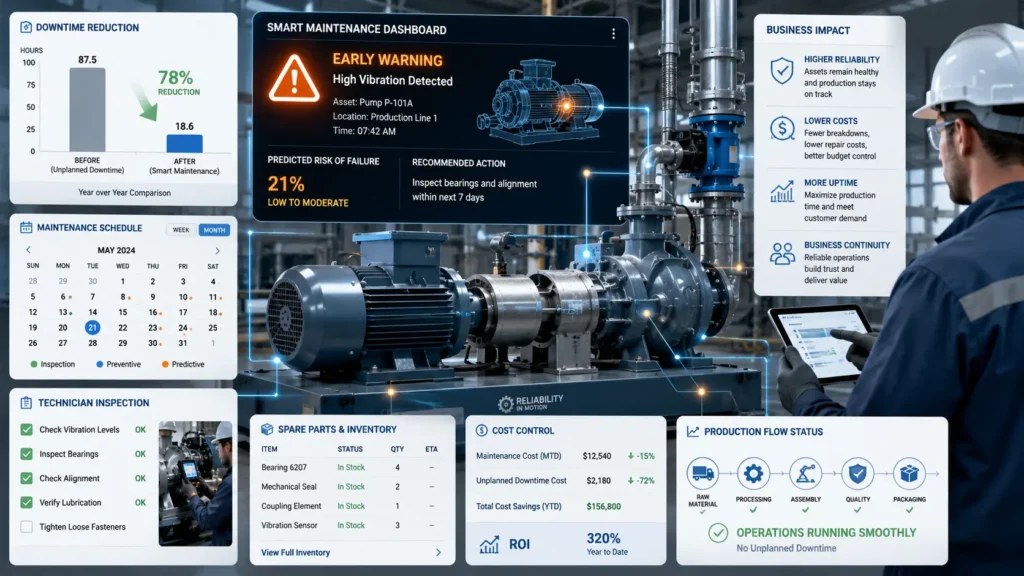
Maintenance costs can rise quickly when businesses depend on emergency repairs.
A small problem that could have been fixed early may become expensive if ignored. For example, poor lubrication may damage bearings. Bearing failure may damage the shaft. Shaft damage may then affect the entire machine.
Predictive maintenance helps identify small problems before they grow.
It can also reduce unnecessary maintenance.
In a fixed preventive maintenance system, parts may sometimes be replaced even when they still have useful life. This can waste money and increase downtime. However, when a business understands the actual condition of equipment, it can make better decisions about when to repair, replace, or continue monitoring.
This does not mean maintenance should be delayed carelessly.
Instead, the goal is to use data to make smarter maintenance decisions.
How Equipment Reliability Improves Business Performance
Reliable equipment supports reliable business operations.
When machines work as expected, teams can plan better. Production becomes smoother. Service delivery improves. Customers receive products and services on time. In addition, workers face fewer disruptions.
Equipment reliability also helps management make better decisions.
For example, when maintenance records show repeated problems with a specific machine, the business can decide whether to repair, upgrade, replace, or redesign the process.
Over time, this improves planning and reduces repeated disruptions.
In addition, reliable assets support better quality. When machines operate consistently, products and services are more likely to meet expected standards.
That is why maintenance should not be seen only as a cost. It should also be seen as a way to protect business performance.
Improving Safety Through Early Fault Detection
Equipment failure can create safety risks.
A failing machine may overheat, leak, jam, vibrate excessively, or stop suddenly. In some work environments, this can expose workers to hazards.
Early fault detection helps reduce these risks.
For example, temperature monitoring can help identify overheating equipment. Vibration analysis can help detect imbalance, looseness, or bearing problems. Pressure monitoring can show abnormal operating conditions before a system becomes unsafe.
When warning signs are identified early, the business can take corrective action before workers, equipment, or the environment are affected.
Therefore, predictive maintenance is not only about saving money.
It also supports safer and more controlled operations.
Supporting Smart Manufacturing and Digital Operations
Modern industries are becoming more digital.
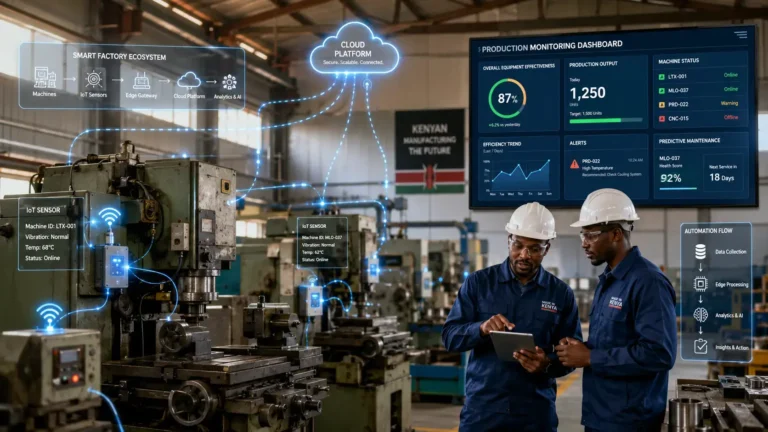
Manufacturing plants, logistics systems, energy facilities, building systems, and service operations are increasingly using sensors, connected equipment, automation, and data dashboards.
Predictive maintenance fits naturally into this shift.
It allows businesses to connect equipment performance with digital decision-making. Instead of relying only on manual inspections, teams can use real-time data to understand what is happening inside machines and systems.
This is one reason smart maintenance is connected to Industry 4.0, smart manufacturing, automation, and engineering systems.
However, technology alone is not enough.
Businesses still need good maintenance processes, trained teams, accurate records, and clear decision-making. Without these foundations, even advanced tools may fail to deliver results.
Turning Maintenance Data Into Better Decisions
Many businesses already collect data, but they do not always use it well.
Machines may produce operating data. Technicians may record maintenance history. Operators may notice changes in performance. However, if this information is not reviewed and analyzed, it may not lead to better decisions.
Predictive maintenance helps turn data into action.
Useful maintenance data may include operating hours, vibration levels, temperature readings, pressure changes, energy consumption, load conditions, failure history, repair records, and environmental conditions.
Over time, this data can reveal patterns.
For example, a machine may show a specific vibration pattern before failure. A pump may lose pressure before performance drops. A motor may overheat before a major breakdown happens.
When these patterns are understood, maintenance becomes more intelligent.
This is how data supports equipment reliability and better asset management.
Improving Maintenance Planning
Poor maintenance planning can disrupt operations.
When failures happen unexpectedly, teams may rush to find spare parts, assign technicians, stop production, or explain delays to customers.
Predictive maintenance improves planning because it gives teams earlier warning.
With better information, businesses can plan spare parts, schedule technicians, prepare tools, notify operations teams, and choose the best time for maintenance.
This creates better coordination between engineering, operations, production, finance, procurement, and management.
In addition, it helps businesses avoid panic decisions.
Maintenance becomes more organized and less reactive.
Extending Equipment Life
Equipment lasts longer when problems are detected and corrected early.
Small faults can cause major damage when ignored. For example, misalignment can increase vibration. Poor lubrication can increase wear. Overheating can damage components. Unusual pressure can affect system performance.
Condition-based maintenance helps identify these issues before they cause serious damage.
As a result, equipment can operate under better conditions for a longer time.
This can help businesses protect capital investments and reduce the need for early replacement.
However, data alone is not enough. Maintenance teams still need discipline, proper inspections, clear procedures, and timely action.
Helping Businesses Compete
In competitive markets, reliability matters.
A business that controls downtime, manages assets well, and delivers consistently has an advantage.
Smart maintenance supports competitiveness by improving operational performance. When machines run reliably, businesses can deliver faster, reduce waste, control costs, and serve customers better.
On the other hand, businesses that depend on emergency repairs may struggle with delays, high costs, and unstable operations.
Therefore, equipment reliability is important not only for engineers and technicians. It also matters to managers, business owners, customers, and investors.
Reliable systems support productivity, efficiency, customer trust, and long-term growth.
Predictive Maintenance Is Not Only for Large Companies
Many people think predictive maintenance is only for large factories or advanced industries.
That is not always true.
Large companies may have advanced systems, but smaller businesses can also start using predictive thinking.
A business can begin by improving maintenance records, tracking operating hours, monitoring repeated failures, training operators to report early signs, and using basic tools such as temperature checks, vibration meters, or oil analysis.
The goal is not to start with expensive technology.
The goal is to start making maintenance decisions based on evidence.
Over time, the business can introduce sensors, dashboards, automation, and advanced analytics where they make sense.
Combining Preventive and Data-Driven Maintenance
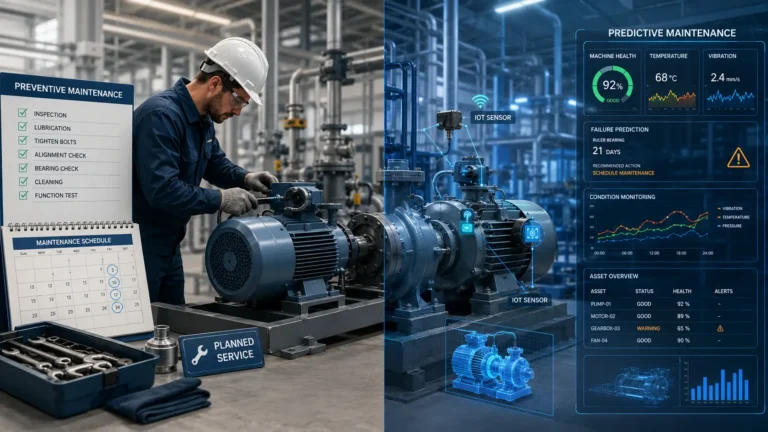
Predictive maintenance does not mean preventive maintenance should be abandoned.
Both approaches can work together.
Preventive maintenance provides structure. It ensures that inspections, cleaning, lubrication, servicing, and safety checks happen regularly.
Data-driven maintenance adds intelligence. It helps teams understand the actual condition of equipment and decide when deeper intervention is needed.
For example, a business may still inspect machines weekly while using sensors to monitor vibration and temperature continuously.
This combination creates a stronger maintenance system.
Preventive maintenance keeps the routine in place. Meanwhile, predictive tools provide early warning and better decision-making.
Common Mistakes Businesses Make
Predictive maintenance can fail when businesses implement it without a clear plan.
One common mistake is buying sensors or software before understanding the maintenance problem. Technology should support strategy, not replace it.
Another mistake is collecting data without using it. If data does not lead to decisions, alerts, or actions, it has limited value.
Some businesses also ignore the people side of maintenance. Technicians, operators, engineers, and managers must understand how the system works and what actions should follow.
In addition, poor data quality can weaken results. If sensors are poorly installed, records are incomplete, or equipment history is unclear, predictions may not be reliable.
Because of this, predictive maintenance should be introduced step by step.
How Businesses Can Start
Businesses can start by focusing on the most important assets first.
First, identify critical equipment. These are the machines or systems that would cause serious problems if they failed.
Next, review maintenance history. Look at repeated breakdowns, repair costs, downtime patterns, and common failure causes.
After that, decide what data would be useful. For some machines, vibration data may be important. For others, temperature, pressure, oil condition, or energy use may matter more.
Then, choose simple monitoring methods before moving to advanced systems.
In addition, train operators and technicians to notice early warning signs. Human observation is still valuable, especially when combined with data.
Finally, create a clear response process. When the data shows a problem, the team should know who reviews it, who acts, and how the decision is recorded.
Best Areas to Apply This Approach
Predictive maintenance is most valuable where failure is costly, risky, or disruptive.
It can be useful for motors, pumps, compressors, generators, conveyors, turbines, HVAC systems, production machines, fleet vehicles, industrial boilers, and critical facility systems.
For example, a hospital cannot afford unexpected failure of key support systems. A factory cannot afford repeated production line stoppages. A logistics company cannot ignore vehicle reliability.
In such cases, smarter maintenance provides strong value because equipment performance directly affects service delivery.
The Role of AI in Modern Maintenance
AI is making maintenance more powerful.
Traditional condition monitoring can detect abnormal readings. However, AI can analyze large amounts of data, identify patterns, and support more advanced failure predictions.
IBM explains how AI in predictive maintenance can use real-time data, IoT sensors, and analytics to help forecast when a machine may need attention.
For example, AI can compare current equipment behavior with historical patterns. If the system detects a pattern that previously led to failure, it can alert the maintenance team early.
This does not mean AI replaces engineers or technicians.
Instead, AI supports better decision-making. Human expertise is still needed to interpret results, inspect equipment, choose corrective actions, and improve the maintenance process.
Equipment Reliability in Engineering Systems
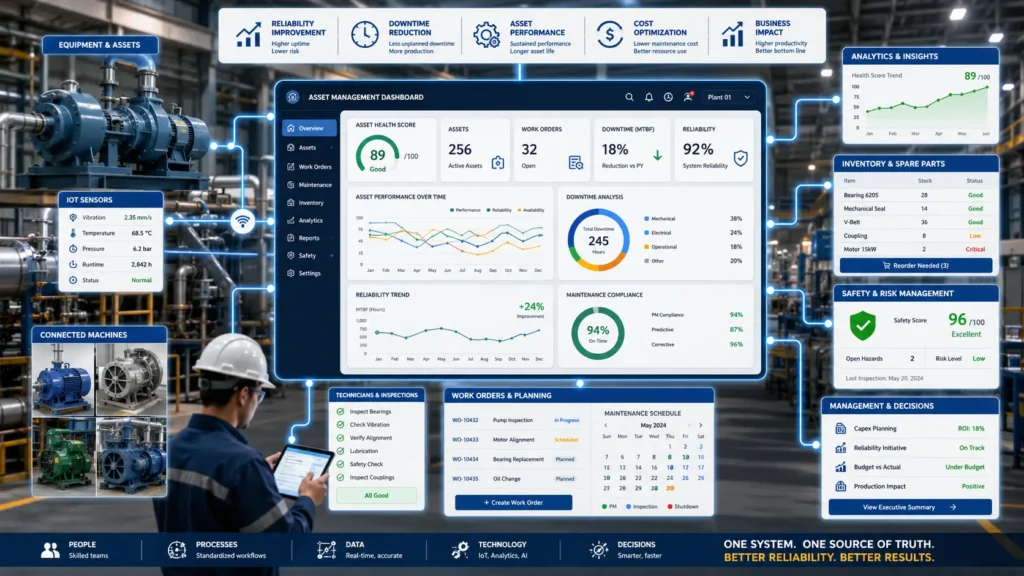
Engineering systems are not only about machines.
They include people, processes, data, tools, decisions, and business goals.
A strong engineering system connects all these parts.
For example, sensors may collect data. Software may analyze that data. Technicians may inspect the machine. Managers may plan downtime. Procurement may order spare parts. Operators may adjust machine use. Leadership may review performance.
Predictive maintenance brings these parts together.
This aligns with Harun Lucas’ work around engineering systems, software solutions, digital tools, automation, and practical technology-driven improvement. You can explore more about this direction at harunlucas.com.
Why This Maintenance Approach Will Keep Growing
Smarter maintenance systems will continue growing because businesses need reliability, efficiency, and better use of data.
Technology is also becoming more accessible. Sensors are becoming more affordable. Cloud platforms are improving. Analytics tools are becoming easier to use. In addition, businesses are under more pressure to reduce downtime, improve safety, and control costs.
As a result, predictive maintenance is moving from being an advanced industrial concept to a practical business strategy.
However, success will depend on more than technology.
Businesses will need clear goals, good data, trained people, strong processes, and continuous improvement.
That is what turns maintenance from a technical task into a real business advantage.
Final Thoughts
Equipment reliability is one of the most important goals for businesses that depend on machines, systems, and engineering assets.
Predictive maintenance helps businesses detect warning signs early, reduce downtime, improve safety, control costs, and make better decisions.
Instead of waiting for machines to fail, businesses can use data to understand asset condition. Instead of replacing parts only because of a fixed schedule, they can make decisions based on actual performance.
This makes maintenance more strategic.
However, predictive maintenance should not be treated as a quick technology upgrade. It works best when combined with good maintenance records, preventive maintenance, trained teams, and clear decision-making.
In the future, businesses that use data to manage engineering systems will be better prepared to compete, grow, and operate reliably.
Ready to Build Smarter Engineering Systems?
If your business depends on equipment, machines, processes, or digital systems, maintenance should be part of your growth strategy.
Harun Lucas helps businesses and professionals think strategically about engineering systems, software solutions, automation, digital tools, and technology-driven improvement.
Whether you need smarter systems, engineering-focused digital content, automation support, or practical technology solutions, the goal is simple: to create systems that improve reliability, efficiency, and growth.
Visit harunlucas.com to explore digital solutions built for the future.
Frequently Asked Questions
Equipment reliability is important because it helps businesses reduce downtime, improve safety, control maintenance costs, protect productivity, and deliver products or services more consistently.
Predictive maintenance improves equipment reliability by using data, sensors, and monitoring tools to detect early warning signs before equipment fails.
Predictive maintenance can be better for critical equipment because it uses real condition data. However, preventive maintenance is still useful for routine inspections and scheduled servicing. Many businesses benefit from using both.
Motors, pumps, compressors, generators, conveyors, turbines, HVAC systems, production machines, fleet vehicles, boilers, and critical facility systems can benefit from predictive maintenance.
Yes. Small businesses can start by keeping better maintenance records, tracking failures, monitoring operating hours, training operators to report early signs, and using simple condition monitoring tools.