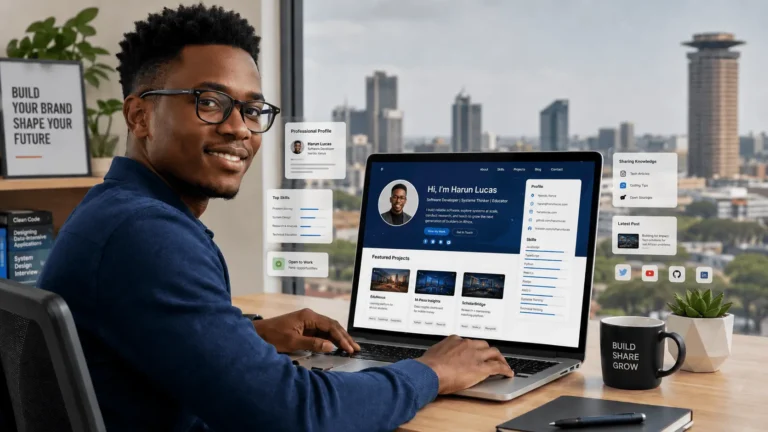
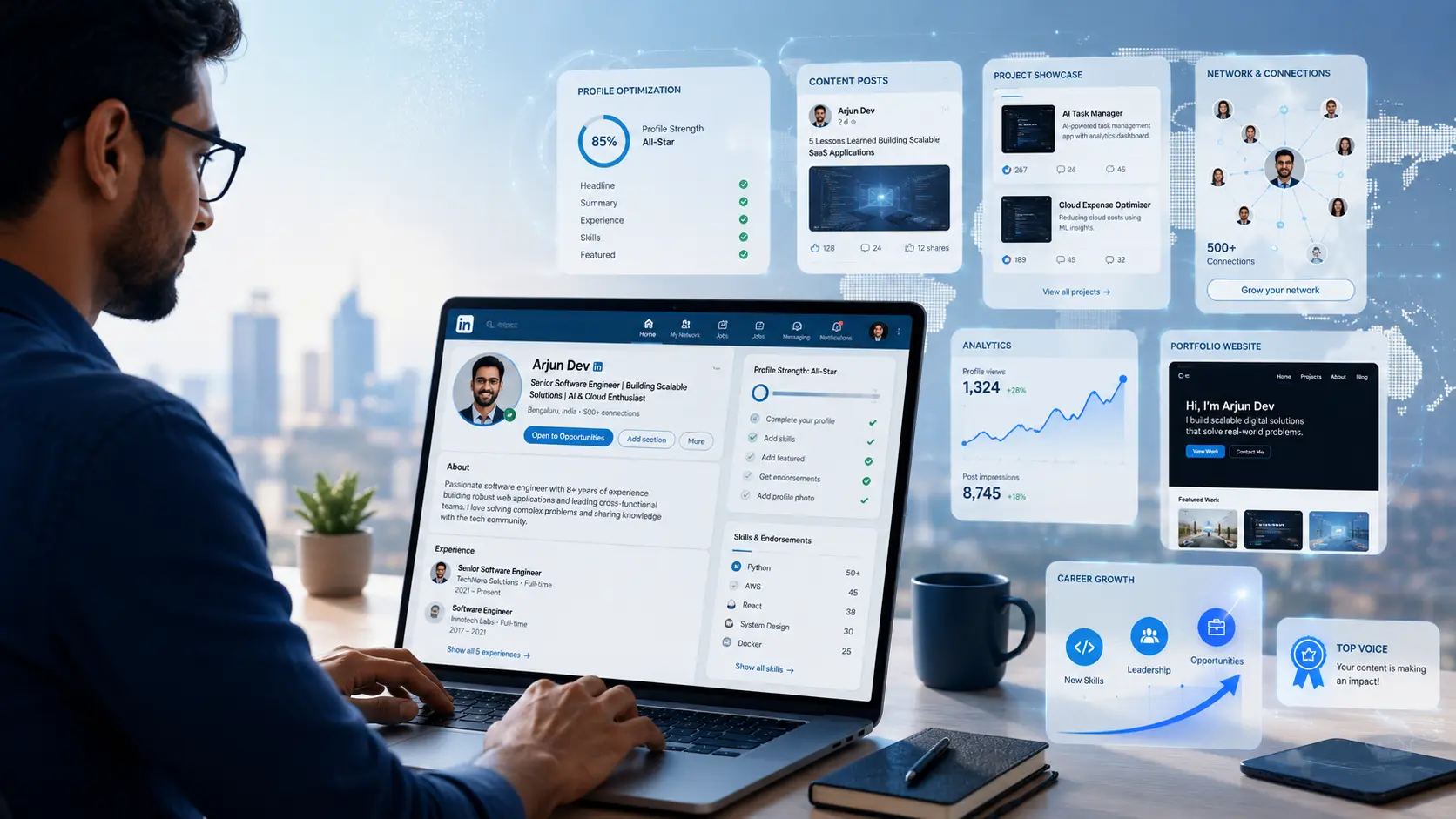
LinkedIn tech career growth is no longer just about having an online CV. Today, LinkedIn has become a powerful platform for visibility, networking, learning, and personal branding.
For tech professionals, this matters a lot. Whether you are a software developer, web developer, engineer, data analyst, AI enthusiast, designer, cybersecurity professional, student, or technology educator, LinkedIn can help people understand your skills and your value.
However, simply creating a LinkedIn account is not enough. To grow your career and personal brand, you need a clear profile, useful content, visible projects, professional networking, and consistent engagement.
According to LinkedIn’s profile guidance, a LinkedIn profile helps professionals manage their personal brand and showcase their experience, achievements, and skills. Therefore, your profile should not only list your background. It should also communicate your value clearly.
In a competitive digital world, the tech professionals who stand out are not always the ones with the most skills. Often, they are the ones who know how to show their skills, explain their work, and build trust online.
Why LinkedIn Tech Career Growth Matters
LinkedIn tech career growth matters because many opportunities now begin online.
Before someone invites you for a job, freelance project, collaboration, speaking opportunity, or consultation, they may first check your LinkedIn profile. Through your profile, they can quickly understand your skills, experience, projects, communication style, and professional direction.
For tech professionals, this is important because skills alone are not always visible. You may know how to build websites, write code, design systems, use AI tools, analyze data, or solve technical problems. Still, if your online presence does not show that clearly, people may not know what you can do.
That is why LinkedIn is useful. It gives you a place to show your expertise through your profile, posts, comments, projects, articles, and professional interactions.
As a result, a strong LinkedIn presence can support career growth, client attraction, professional networking, and long-term personal branding.
Start With a Clear Personal Brand
Before posting content, define your personal brand.
Your personal brand is the professional image people associate with you. It answers important questions such as what you do, what problems you solve, who you help, and what makes your work different.
Instead of presenting yourself only as “a tech professional,” become more specific.
For example, you can say:
“I build SEO-friendly business websites.”
“I help businesses use AI and automation to improve efficiency.”
“I create software systems that solve operational problems.”
“I combine engineering thinking with digital systems.”
“I help professionals build strong portfolio websites.”
A clear personal brand makes your LinkedIn profile easier to understand. In addition, it helps the right people remember you for the right reasons.
Harun Lucas’ brand direction is a good example of clear positioning. His work connects web development, software systems, engineering systems, AI integration, SEO, and technology education through practical digital solutions. You can explore this positioning through harunlucas.com.
LinkedIn Tech Career Profile Setup
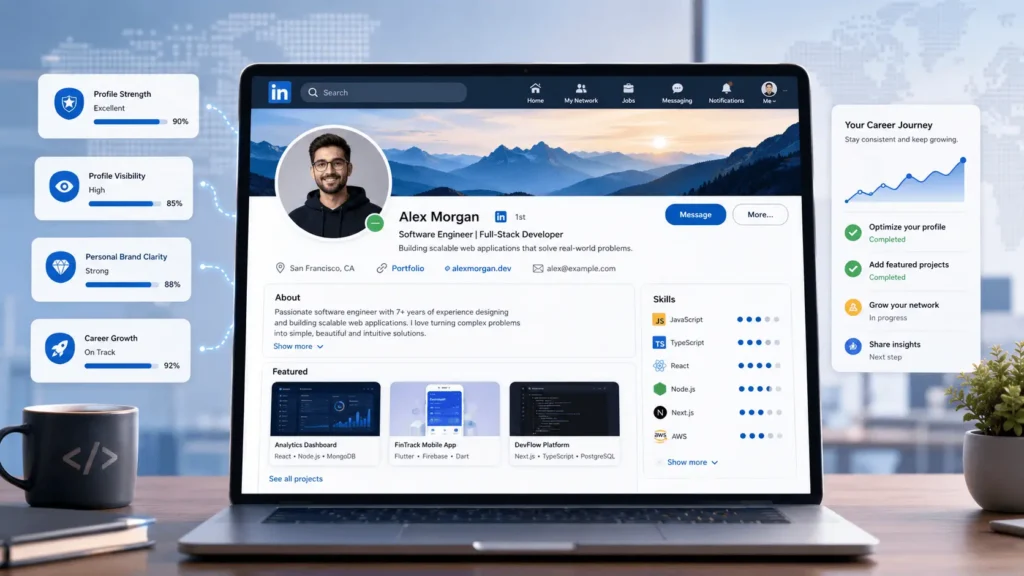
A strong LinkedIn tech career starts with a strong profile.
Your LinkedIn profile should quickly tell people who you are, what you do, and why they should connect with you. Therefore, every major section should support your professional direction.
Start by improving your profile photo, banner image, headline, about section, experience section, featured section, skills, and contact details.
Your profile photo should look clear and professional. Meanwhile, your banner image should communicate your field or services. Your headline should show your expertise, not just your job title. In the same way, your about section should tell your story and explain your value.
For example, instead of writing:
“Web Developer”
You can write:
“Web Developer | SEO-Friendly Websites | Digital Systems | Helping Businesses Build Strong Online Platforms”
That headline tells people more about your value. As a result, visitors can understand your direction faster.
Write a Strong LinkedIn Headline
Your headline is one of the first things people see.
A weak headline only states a title. A strong headline communicates value.
For a tech professional, your headline can include your role, area of expertise, and the type of people or businesses you help.
Here are a few examples:
Software Developer | Building Scalable Web Applications
Web Developer | SEO Websites and Digital Systems
AI Integration Specialist | Helping Businesses Automate Workflows
Engineering Systems Professional | Software, Automation and Technology Education
Frontend Developer | React, WordPress and User-Friendly Interfaces
Keep your headline clear and simple. Instead of using too many buzzwords, use words that people can quickly understand.
A clear headline supports LinkedIn tech career growth because it helps recruiters, clients, collaborators, and other professionals understand your direction immediately.
Improve Your About Section
Your about section should not read like a boring CV.
Instead, it should tell your professional story.
A good about section can explain who you are, what you do, what problems you solve, your main skills, your projects, your interests, and how people can contact you.
For example:
“I am a web developer and digital systems professional focused on building modern, SEO-friendly websites and practical software solutions. My work connects web development, automation, AI tools, and systems thinking to help businesses improve visibility, efficiency, and growth.”
This kind of introduction is clear and professional. After that, add a simple call-to-action such as:
“Connect with me to discuss web development, SEO, automation, AI integration, or digital systems.”
That makes your profile more useful and easier to act on.
Use LinkedIn Content to Show Your Thinking
Content is one of the most powerful ways to grow your personal brand on LinkedIn.
A good LinkedIn tech career strategy should include content that shows how you think, what you know, and how you solve problems. You do not need to post every day. However, you should post consistently.
Good LinkedIn content for tech professionals can include project lessons, coding tips, web development advice, AI tool insights, SEO lessons, career reflections, portfolio updates, case studies, mistakes you learned from, and simple explanations of technical topics.
For example, Harun Lucas can share content around website strategy, business websites, SEO, AI websites, automation, engineering systems, and software development.
A post can later become a full blog article. In the same way, a blog article can later become several LinkedIn posts. Therefore, LinkedIn and a personal website can support each other.
Post Content That Attracts the Right Audience
Not every post needs to go viral.
For personal branding, the goal is not only attention. The real goal is attracting the right people.
A tech professional can post about how to choose a website developer, why business websites fail, how SEO improves visibility, why AI is changing websites, how automation helps businesses, how to build a strong portfolio, lessons from a project, or tools used in a recent solution.
For example, if you write a blog on SEO Services in Kenya: How to Rank Higher and Attract More Customers, you can turn it into a LinkedIn post about why SEO matters for business visibility.
Also, if you write about Website Developers Kenya: How to Choose the Right One for Your Business, you can create a LinkedIn post explaining common mistakes businesses make when hiring developers.
This makes your content work harder across platforms.
Share Projects, Not Just Opinions
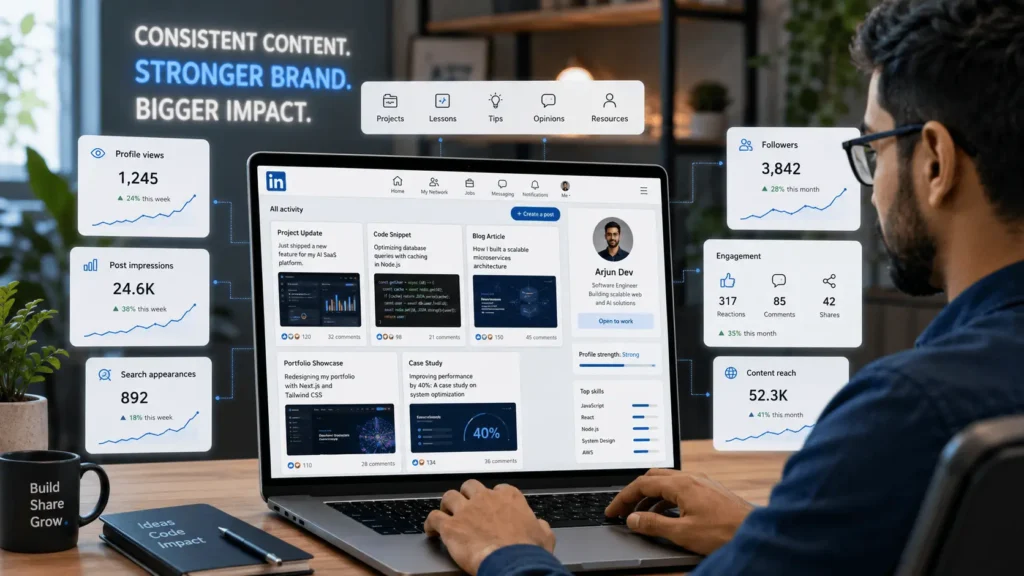
In tech, proof matters.
People want to see what you can do. That is why your LinkedIn tech career strategy should include project updates.
You can share websites you have built, systems you have designed, dashboards you have created, apps you are developing, tools you are learning, or problems you have solved.
A good project post can explain the problem, the solution, the tools used, the challenge faced, the lesson learned, and the result created.
For example:
“I worked on a business website redesign focused on improving trust, mobile experience, and lead generation. The goal was not only to improve the look of the website, but also to make the customer journey clearer.”
This kind of post shows practical thinking. It also builds credibility.
Use the Featured Section Properly
The Featured section is one of the most valuable parts of your LinkedIn profile.
Many tech professionals ignore it, yet it can act like a small portfolio.
You can use it to display your portfolio website, best LinkedIn posts, blog articles, GitHub projects, case studies, project videos, certificates, presentations, or service pages.
For Harun Lucas, useful Featured links may include:
harunlucas.com
Business Website Strategy
AI Websites in Kenya
Website vs Social Media
These links help profile visitors move from LinkedIn to the website, where they can learn more and contact you.
Build Relationships Through Engagement
Posting is important, but engagement is also powerful.
If you only post and never interact with others, your growth may be slow. LinkedIn is a professional network, so you should comment on posts, respond to people, join conversations, and connect with others in your field.
Good engagement includes thoughtful comments, useful questions, personal experience, support for other professionals, replies to comments, and meaningful connection requests.
Avoid comments like “Great post” or “Very true” only. Instead, write comments that add value.
For example:
“This is important, especially for businesses that build websites but forget SEO and customer journey. A website should not only look good; it should help users take action.”
That kind of comment shows your thinking and can attract profile visits.
Build a Strong Professional Network
Your network affects your visibility and opportunities.
A strong LinkedIn tech career does not grow through random connections only. It grows through relevant relationships.
You can connect with developers, designers, engineers, founders, recruiters, business owners, technology educators, digital marketers, students, mentors, and industry professionals.
When sending connection requests, avoid sounding desperate or generic. A simple message works better:
“Hi, I came across your work in digital strategy and would like to connect. I share content around web development, SEO, automation, and tech career growth.”
This feels professional. Over time, your network can lead to referrals, collaborations, job leads, partnerships, and learning opportunities.
Use LinkedIn Analytics to Improve
LinkedIn provides post analytics that help you understand how your content performs. According to LinkedIn post analytics guidance, members can use analytics to understand reach, trends, and audience demographics.
This is useful because you should not post blindly.
Review your analytics and ask which posts get more impressions, which topics attract comments, which content brings profile visits, which posts lead to messages, and which audience responds most.
If your posts about websites, SEO, AI tools, or career lessons perform well, create more content around those topics.
Analytics help you improve your strategy. They also help you understand what your audience values.
Avoid Generic AI Content
AI tools can help you write faster, but they should not replace your voice.
Many LinkedIn posts now sound similar because people copy generic AI-generated content without adding real experience. That can weaken your personal brand.
Instead, use AI as a support tool. You can use it to organize ideas, improve grammar, generate outlines, or create content drafts.
However, the final post should include your own examples, lessons, opinions, and practical experience.
For tech professionals, this is very important. People trust real thinking more than polished but empty words.
If you are building a LinkedIn tech career, make your content sound like a real person with real experience.
Connect LinkedIn With Your Portfolio Website
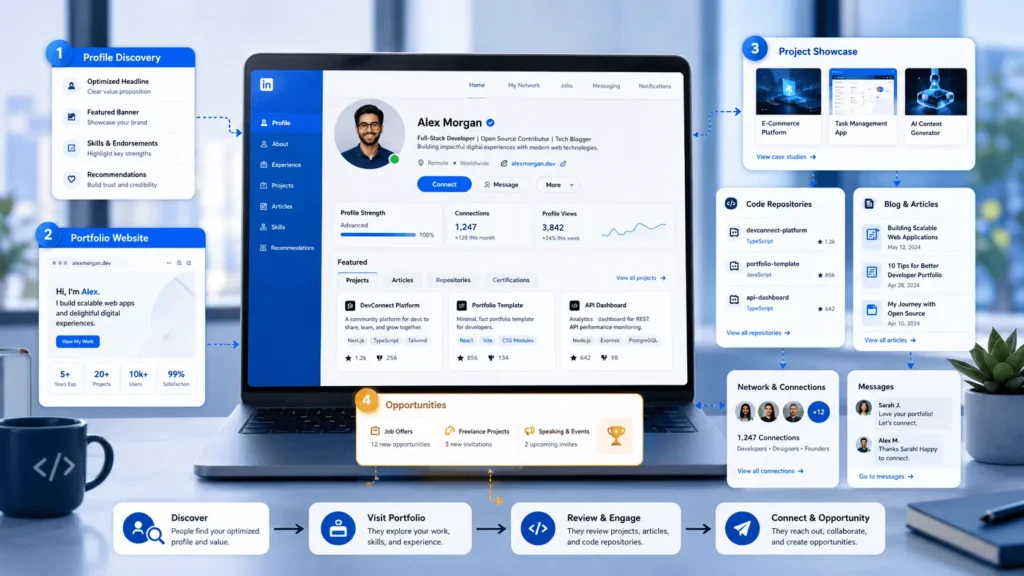
LinkedIn is powerful, but it should not stand alone.
A serious tech professional should also have a portfolio website. LinkedIn helps people discover you, while your website gives them a deeper place to understand your work, services, projects, and professional story.
This is why personal branding works better when LinkedIn and a website support each other.
A portfolio website can include your homepage, about page, services, projects, blog articles, testimonials, contact form, and downloadable CV or profile.
A strong website gives your brand more control.
Harun Lucas has already explained why a website is still important in Do You Still Need a Website in 2026 in Kenya?. Although that article focuses on businesses, the same idea applies to tech professionals building a personal brand.
Turn LinkedIn Posts Into Blog Content
One smart way to grow your personal brand is to connect LinkedIn content with blog content.
For example, you can write a short LinkedIn post about why websites fail. If the post performs well, turn it into a full blog article.
You can also write a blog first, then break it into several LinkedIn posts.
A blog about SEO can become five LinkedIn posts. A blog about personal branding can become a carousel. A blog about AI websites can become a short video script. Meanwhile, a project case study can become a LinkedIn story.
This approach helps you stay consistent without always starting from zero. In addition, it improves both your LinkedIn visibility and website traffic.
LinkedIn Tech Career Content Ideas
A strong LinkedIn tech career does not depend on random posting.
You need content pillars.
A simple content plan can include five pillars: projects, lessons, tips, opinions, and resources.
Under projects, show what you are building. Under lessons, explain what you learned from work or practice. Under tips, help your audience avoid mistakes.
For opinions, share your view on trends in tech, AI, websites, SEO, or digital systems. For resources, share tools, templates, guides, or useful articles.
This structure makes content creation easier. It also helps your audience understand what to expect from you.
Build Authority Through Educational Content
Educational content works well for tech professionals because it helps people understand your expertise.
You can teach what you know in simple language.
For example, explain what SEO means, show how a website should be structured, break down how AI can help businesses, share common mistakes in website projects, or teach lessons from software development.
When you educate people consistently, they begin to associate you with useful knowledge. That is how authority grows.
Your goal should not be to sound complicated. Instead, make useful ideas easier to understand.
Show Your Learning Journey
You do not need to be perfect before sharing.
Many tech professionals stay silent because they feel they are not yet experts. However, sharing your learning journey can also build trust.
You can post about what you are learning, what you struggled with, what you built, what you fixed, what tool helped you, what mistake taught you something, and what concept you now understand better.
For example:
“This week I improved my understanding of responsive design. One lesson I learned is that a website should not only look good on desktop. Most users experience it first on mobile.”
That kind of post is honest, practical, and relatable. It also shows growth.
Common LinkedIn Mistakes Tech Professionals Make
Many tech professionals make simple mistakes on LinkedIn.
One common mistake is having an unclear profile. If your headline, about section, and experience do not explain what you do, visitors may leave quickly.
Another mistake is posting only when looking for a job. Personal branding works better when it is built before you urgently need an opportunity.
Some people post too much generic content without showing projects, examples, or real lessons. In addition, others connect with many people but never engage meaningfully.
Another mistake is hiding behind technical terms. If your audience includes business owners, recruiters, or non-technical decision-makers, explain your work in simple language.
A strong LinkedIn tech career strategy avoids these mistakes by focusing on clarity, consistency, usefulness, and proof.
Best Weekly LinkedIn Content Plan
You do not need to post every day to grow.
A simple weekly plan can work well.
On Monday, share educational content. On Wednesday, post a project lesson. On Friday, write a career or personal branding insight. Then, on Saturday, share a simple reflection, useful tool, or learning update.
For example:
Monday: “Why a business website needs SEO from the beginning.”
Wednesday: “A project lesson I learned from improving a website homepage.”
Friday: “How tech professionals can use LinkedIn to build trust.”
Saturday: “One tool that helped me work faster this week.”
This keeps your content balanced and sustainable.
LinkedIn Tech Career Growth Takes Time
Personal branding is not built in one week.
It grows through repeated proof. Every optimized profile section, helpful post, thoughtful comment, project update, and blog link contributes to your brand.
At first, growth may feel slow. However, consistency builds recognition.
People may not contact you after the first post. After seeing your ideas several times, they may begin to remember your name, your work, and your value.
That is why consistency matters.
A strong LinkedIn tech career is built through patience, clarity, and continuous improvement.
Final Thoughts
LinkedIn can help tech professionals grow their careers and personal brands, but only when used intentionally.
A strong profile helps people understand who you are. Helpful content shows your thinking. Projects prove your skills. Engagement builds relationships. In addition, a portfolio website gives people a deeper place to explore your work.
Together, these elements create a powerful professional presence.
If you are a tech professional, do not wait until you need a job or client before improving your LinkedIn presence. Start now.
Define your brand. Improve your profile. Share your work. Teach what you know. Connect with the right people. Keep learning and showing progress.
That is how LinkedIn becomes more than a social platform. It becomes a career growth tool.
Ready to Build a Stronger Tech Brand?
If you want to grow your tech career, your online presence must communicate your value clearly.
Harun Lucas helps professionals and businesses build modern digital platforms through web development, SEO, software systems, automation, AI integration, and digital strategy.
Whether you need a portfolio website, business website, SEO support, or a smarter digital system, the goal is simple: to create a platform that helps people understand your value and trust your work.
Visit harunlucas.com to explore digital solutions built for the future.
Frequently Asked Questions
Yes. LinkedIn helps people discover you, but a portfolio website gives you more control over your brand, projects, services, blog content, and contact process.
Improve your profile photo, headline, about section, featured section, experience, projects, skills, and contact details. Your profile should clearly explain who you are, what you do, and what value you offer.
LinkedIn can help your tech career by improving your professional visibility, showing your skills, connecting you with relevant people, and helping recruiters, clients, or collaborators discover your work.
A tech professional can post project updates, career lessons, coding tips, web development insights, AI tool experiences, SEO advice, portfolio updates, and simple explanations of technical topics.
You can start with two to four posts per week. The most important thing is consistency, not posting every day. A simple schedule with educational posts, project lessons, and career reflections can work well.