Bridging Traditional Industry with Smart, Connected Automation
Legacy manufacturing systems form the backbone of many industries. Across factories, workshops, and production lines, machines that are decades old still perform critical operations reliably. However, these systems were not designed for today’s demands—real-time data, predictive maintenance, automation, and digital integration.
The question facing engineers and organizations today is not whether to replace legacy systems entirely, but:
How can we modernize existing manufacturing systems using IoT without disrupting operations?
This article explores how Internet of Things (IoT) technologies can transform traditional manufacturing environments into intelligent, connected, and efficient systems—without the need for complete system replacement.
Why Modernization Matters
Modern manufacturing requires:
- Real-time monitoring
- Data-driven decision-making
- Predictive maintenance
- Process optimization
- Remote control and visibility
Legacy systems, however, often suffer from:
- Lack of connectivity
- Manual monitoring
- Reactive maintenance
- Limited data availability
- High downtime risks
Without modernization, industries risk inefficiency, increased operational costs, and inability to compete in Industry 4.0 environments.
Understanding Legacy Manufacturing Systems
Legacy systems typically include:
- CNC machines without network interfaces
- Analog sensors and gauges
- Standalone PLCs with limited communication
- Paper-based logging systems
- Manual inspection processes
These systems are reliable but isolated. They operate independently, making it difficult to collect, analyze, and act on production data.
How IoT Enables Modernization
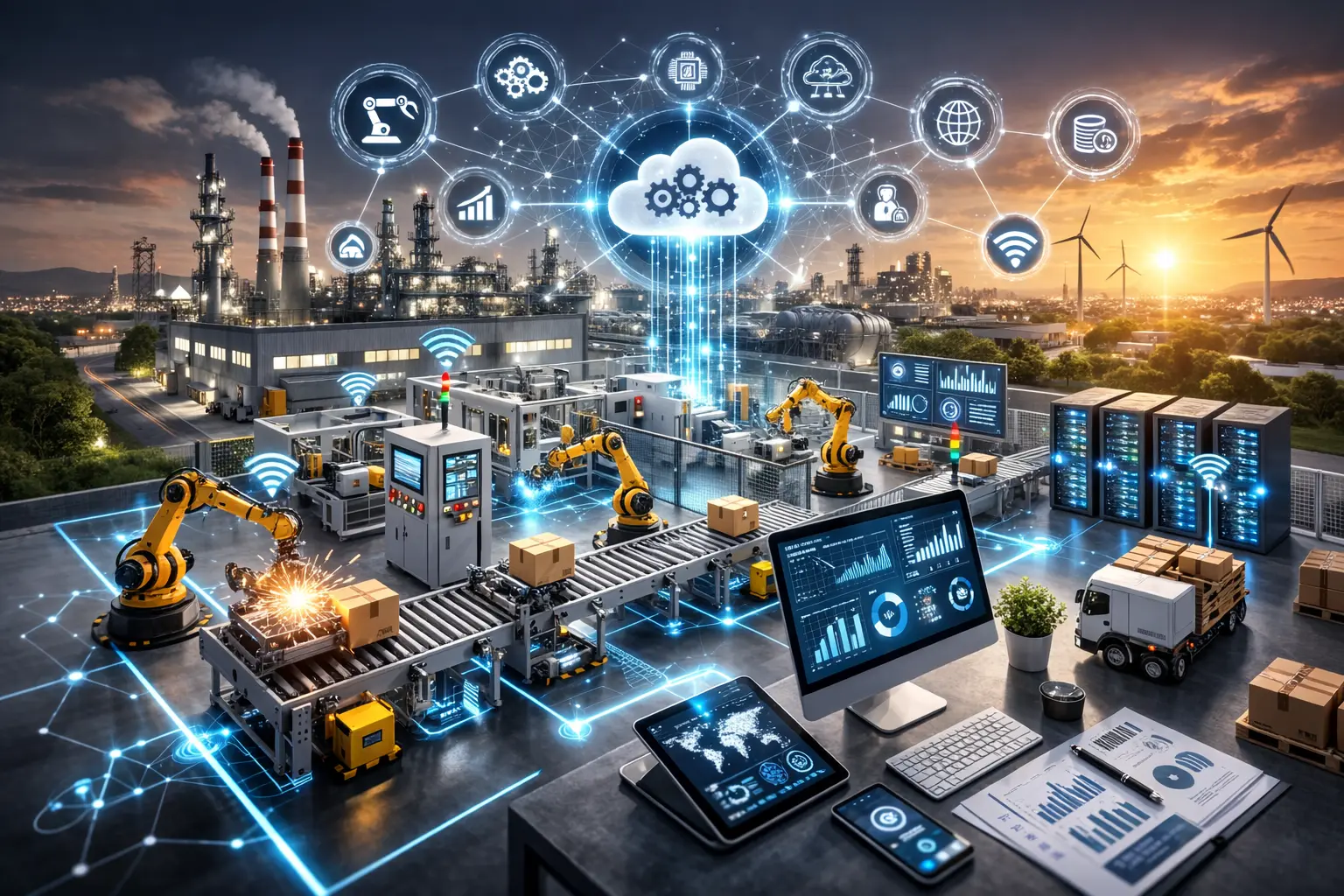
IoT introduces connectivity, data flow, and intelligence into existing systems. Instead of replacing machines, IoT acts as a bridge between physical equipment and digital systems.
Core Idea:
Sense → Connect → Analyze → Act
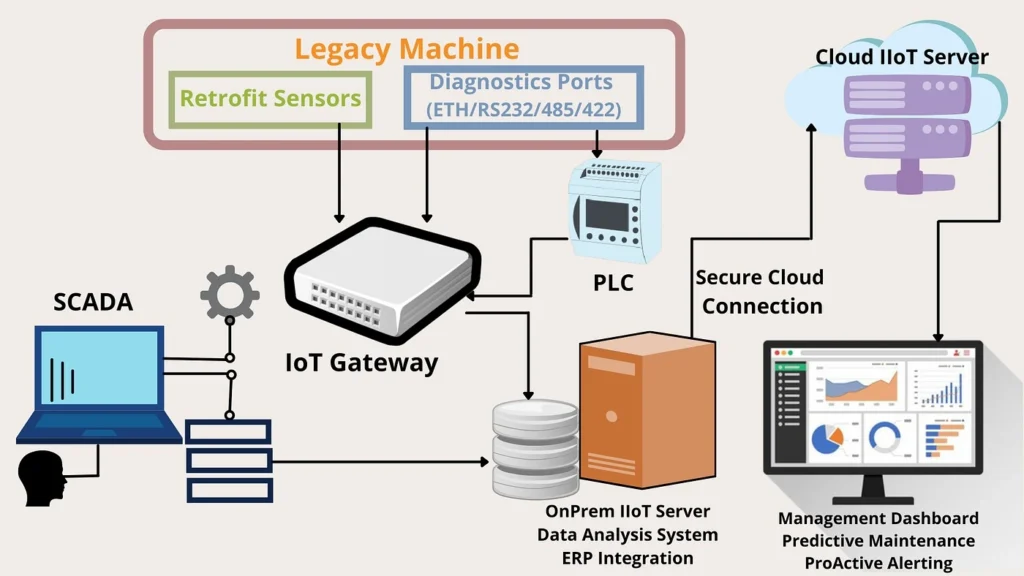
Explanation of the Architecture
- Sensor Layer (Data Collection)
Sensors are attached to legacy machines to collect:- Temperature
- Vibration
- Pressure
- Machine status
- Edge/Gateway Layer (Connectivity)
IoT gateways connect sensors to networks:- Convert analog signals to digital
- Communicate using protocols (MQTT, OPC-UA)
- Enable local processing
- Data Processing Layer (Edge or Cloud)
Data is filtered and processed:- Noise reduction
- Feature extraction
- Event detection
- Analytics Layer (Intelligence)
Systems analyze data using:- Machine learning models
- Predictive maintenance algorithms
- Performance analytics
- Application Layer (Action & Visualization)
Results are presented through:- Dashboards
- Alerts
- Control systems
Practical Modernization Approach
Step 1: Retrofitting Existing Machines
Instead of replacing machines:
- Install external sensors
- Add IoT modules
- Use microcontrollers (e.g., Arduino, Raspberry Pi)
This allows old machines to “communicate” without altering their internal design.
Step 2: Data Acquisition and Connectivity
Legacy systems can be connected using:
- PLC integration
- Serial-to-Ethernet converters
- Industrial IoT gateways
This enables real-time data flow from machines to monitoring systems.
Step 3: Data Processing and Monitoring
Collected data is processed to provide:
- Machine health insights
- Production efficiency metrics
- Fault detection
Operators can now monitor systems remotely.
Step 4: Predictive Maintenance
One of the biggest benefits of IoT:
- Detect anomalies before failure
- Reduce downtime
- Extend machine lifespan
Example:
A vibration sensor detects unusual patterns in a motor, triggering maintenance before breakdown.
Step 5: Automation and Control Integration
IoT systems can send feedback to machines:
- Adjust speed
- Optimize performance
- Trigger safety responses
This creates a closed-loop intelligent system.
Real-World Engineering View
In practice, modernized manufacturing systems combine multiple technologies rather than relying on a single solution.
Hybrid System Structure:
- IoT devices collect and transmit data
- Edge systems handle real-time processing
- Cloud systems perform deep analytics
- Control systems execute decisions
Example 1: CNC Machine Modernization
A traditional CNC machine can be upgraded using IoT.
IoT Integration:
Sensors:
- Vibration sensors
- Temperature sensors
- Power consumption monitors
System Capabilities:
- Real-time machine health monitoring
- Predictive tool wear detection
- Production tracking
Example 2: Smart Assembly Line
An assembly line with legacy machines can be transformed into a smart system.
IoT Enhancements:
Monitoring:
- Track machine performance
- Identify bottlenecks
Automation:
- Adjust workflow dynamically
- Optimize production speed
Analytics:
- Detect inefficiencies
- Improve quality control
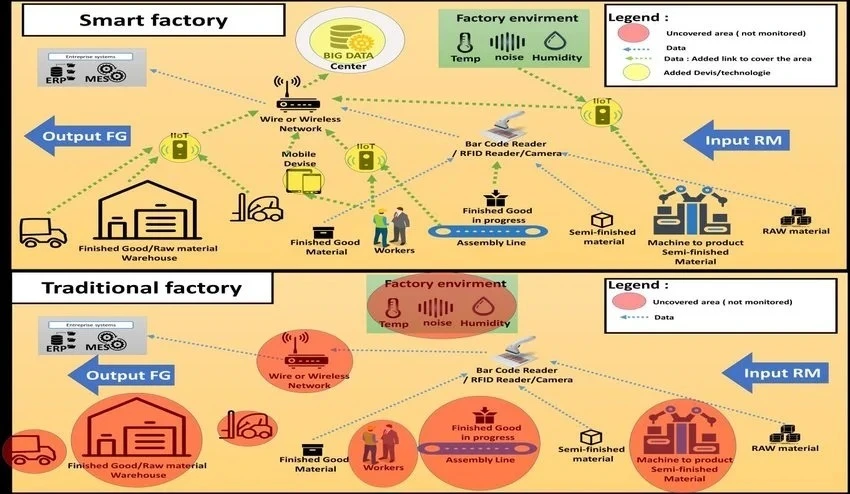
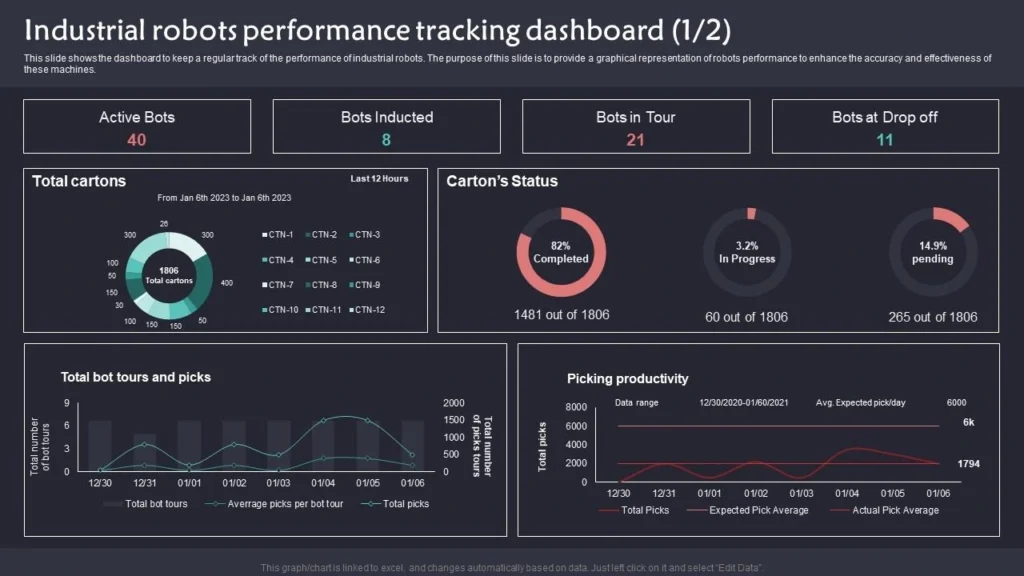
Legacy systems do not need to be discarded. With IoT integration, they become part of a larger intelligent ecosystem where data drives decisions and automation improves efficiency.
Benefits of IoT in Legacy Manufacturing
- Reduced downtime
- Improved efficiency
- Real-time monitoring
- Data-driven decision making
- Extended equipment life
- Enhanced safety
Challenges and Considerations
1. Integration Complexity
Connecting old systems with modern technologies requires careful planning.
2. Security Risks
IoT introduces cybersecurity concerns that must be addressed.
3. Initial Investment
Although cheaper than full replacement, retrofitting still requires investment.
4. Skill Gap
Engineers must understand both traditional systems and modern IoT technologies.
Technologies Used in IoT Modernization
- Sensors and embedded systems
- PLC integration
- Edge computing
- Cloud platforms (AWS IoT, Azure IoT)
- Communication protocols (MQTT, OPC-UA)
- Data analytics and AI
Which Skills Should You Learn?
To work in this field, focus on:
- IoT fundamentals
- Embedded systems programming
- Python (data processing and analytics)
- C++ (low-level control and embedded systems)
- Industrial automation systems (PLC, SCADA)
Conclusion
Modernizing legacy manufacturing systems is not about replacing what already works. It is about enhancing it.
IoT provides a practical path to transform traditional systems into smart, connected, and efficient operations. By integrating sensors, connectivity, analytics, and control, industries can unlock the full potential of their existing infrastructure.
The future of manufacturing lies not in abandoning the past, but in intelligently upgrading i